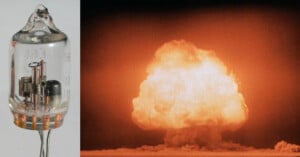
What Your Camera Flash Has to Do With an Atomic Bomb
On July 16th, 1945, 35 miles southeast of Socorro, New Mexico, the White Sands Proving Ground was rocked by a massive explosion.
On July 16th, 1945, 35 miles southeast of Socorro, New Mexico, the White Sands Proving Ground was rocked by a massive explosion.
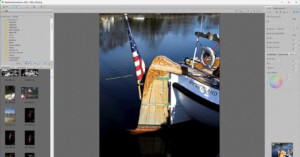
Digital photo editing has come a long way in the past two decades, and two software programs that have impacted the field are RawShooter and Lightroom.
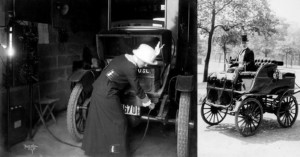
Electric vehicles seem like a new invention, but these fascinating photos from over 100 years ago show that EVs existed long before Elon Musk and Tesla.
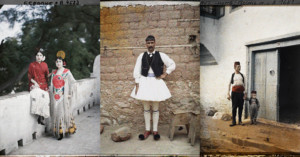
Stunning color images recently made available in high resolution by a French museum capture much of the world as it was transformed by technology and geopolitics 100 years ago.
1990 marked the release of one of my all-time favorite movies: Teenage Mutant Ninja Turtles. I was nine years old and that warm fuzzy feeling of nostalgia is burned deep within me whenever I re-watch it.
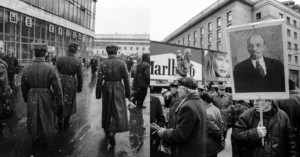
Australian photographer Dean Sewell spent 15 months in Russia after the breakup of the former USSR. When Russia invaded Ukraine, he was suddenly reminded that he still had more than two dozen undeveloped B&W film rolls from 1996 to 1997.
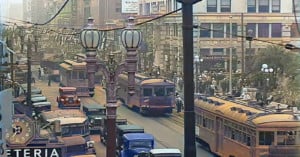
Video restoration expert NASS colorized and enhanced footage from nearly a century ago to create this 7-minute video that reveals what downtown Los Angeles looked like in the 1930s.

The Cold War is the conventional name for the period of political and military competition between two blocs led by the US and the USSR. This rivalry was mainly ideological and economic, intensified by the conventional and nuclear arms race.
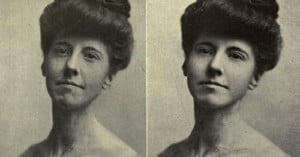
If you're tired of the unrealistic beauty standards set by all the edited pictures on Instagram and long for a return to "the good old days," here is some bad news: people have been "Photoshopping" portraits for just about as long as photography has been around.
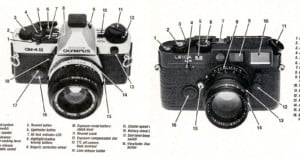
1991. What a great time to be alive. Seeing movies like Robin Hood and Hook in the theatres, and hearing hits like "Joyride" by Roxette or "Losing My Religion" by REM are some of my favorite pop culture memories of that time. Not to mention watching TV shows like Home Improvement, America’s Funniest Home Videos, and The Fresh Prince of Bel-Air.
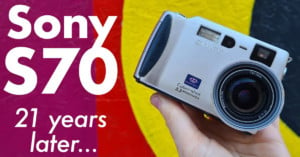
For me, the year 2000 was when digital cameras really started to become useful. A wealth of cameras arrived sporting Sony’s latest 3 megapixel CCD sensor at a sub-$1,000 price, with enough resolution to make 7x5-inch prints and more than enough for online use.
1982. Michael Jackson releases Thriller, E.T. hits the movie theatres and Cats opens on Broadway. It was a great time to be a fan of movies, music, and theater. But it was also an amazing time to be a photographer -- there were innovations with every release and more around every corner.
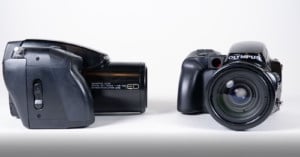
Do you know what ZLR stands for? How about ED, or ESP? And what in the world is Fuzzy Logic? In this article, we'll learn all about the Olympus IS-1, a pivotal model in a whole new category of camera released in the 1990s, and all the strange acronyms that come with it.

This historical 1885 photograph depicts three women doctors who all graduated and each became the first woman from their respective countries (India, Japan, and Syria) to obtain a degree in Western medicine.
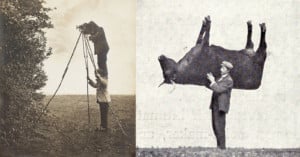
Throughout photography history, determined, creative, and brave photographers have gone to extreme lengths to capture the perfect shot. Here's a curious photo from the 1890s that shows a crazy tripod setup used by wildlife photography pioneers in the 1890s.
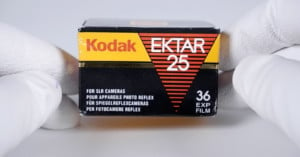
Can you preserve a 30-year-old roll of color film and shoot it like the day it was purchased? Today I’m going to answer that question as well as give an in-depth history of one of Kodak’s most pivotal films, Ektar 25. I think that some of its history as well the results may surprise you.
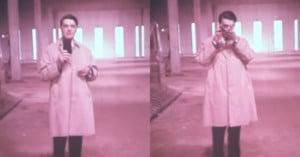
Polaroid founder Edwin Land was a visionary tech titan of his time, and as is common with pioneering entrepreneurs, Land had unusual foresight into where technology was headed. Here's a neat video from 1970 in which Land accurately predicts the coming age of smartphone cameras in everyone's pocket.

You didn’t ask to learn about bellows extension factors, but we're going to cover it with the most absurd camera that you may ever see!
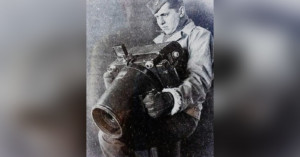
Check out this absolute unit of a camera that was used to do aerial photography during World War II. Mounted on the front of the camera is a massive 2-foot long 610mm f/6 lens.
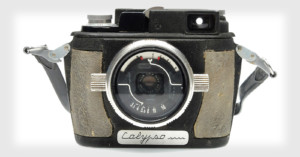
Camera West recently received an unusual camera through a customer trade-in. In this 3-minute video, the camera shop takes a hands-on look at the Calypso, the first 35mm underwater film camera that didn't require a bulky housing.
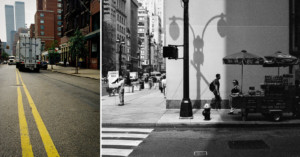
The streets of New York City as a photo studio. That is the idea. Nearly 9 million people live in New York and another nearly 2 million travel to New York every day, so the streets are bursting with people.

1940s NYC is a new online interactive map created by NYC-based software engineer Julian Boilen. It's like Google Street View, except every photo taken shows New York City between 1939 and 1941.
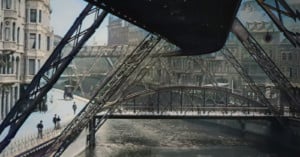
Here's a fascinating 4-minute video that offers a tiny window into what life in one German town was like back in 1902.

Portrait photos from over a century ago rarely show subjects smiling, but this 19th century photo is an exception, and it's been going viral online for that reason.
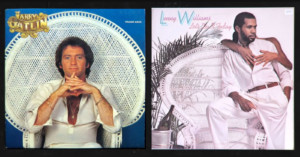
If you look at album covers from the 1970s, one of the things you'll repeatedly see is a particular type of wicker chair commonly referred to as a peacock chair. Here's an interesting 7.5-minute video by Vox that looks into the history of this photography trope, which was 100 years in the making.
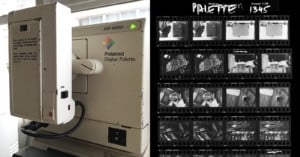
The hybrid processes from the transition to digital photography generated lots of garbage, cheap stuff to experiment with. This story is about one of these discoveries.

Back in the Tsarist era, a fad for posing in fake boats, planes, and automobiles resulted in some of Russia’s quaintest portraits.
The folks over at The Phoblographer have uncovered a great "blast from the past" on YouTube: a compilation of old Kodak camera commercials from the 1950s and 60s that'll have you yearning for simpler times ... when it was much more complicated to take an actual photograph.
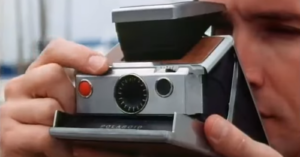
If you're a fan of instant photography, Polaroid, or you just like the history of photography, you'll love this Polaroid SX-70 Land Camera ad that resurfaced online over the weekend. The 11-minute ad gives an in-depth look at every aspect of this iconic, folding instant film camera that is still beloved today.
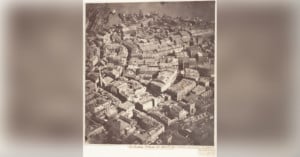
To mark the 159th anniversary of the first aerial photo in the United States, CBS Sunday Morning aired this 2-minute Almanac segment about the landmark photo by photographer James Wallace Black and how aerial photography has developed since then.
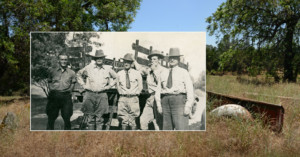
It was, for most of them, the first happy time in their lives, and for some, the last and only. In 1933, President Franklin D. Roosevelt, as part of his New Deal, penned the Civilian Conservation Corps into existence. Its primary goal was job creation: young men, aged 17-28, could sign up to work as unskilled laborers, usually on projects to develop the nation’s national parks and forests.
Here's a commercial Vivitar ran about a decade ago to convince older picture-takers to switch back to simple film cameras from the frustrating world of digital.
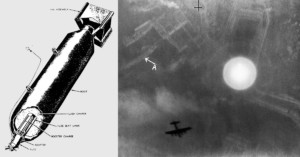
Digital cameras can see in color in near darkness these days, but decades ago, there were very different solutions for capturing usable photos at night. One example is the photoflash bomb, a special type of bomb that was designed specifically to explode in midair and illuminate the world below for aerial photos.
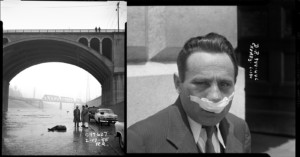
A new exhibition in Los Angeles will feature crime scene photos captured by police officers in the Los Angeles Police Department from between 1925 and the 1970s.
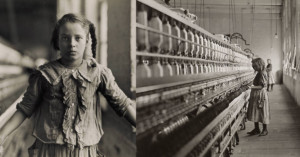
Photographs have the power to bring issues to the forefront of public consciousness and spark change in society. Here's a 6.5-minute video by Vox that tells the story of how photographer Lewis Wickes Hine helped end child labor in the United States.

In my work travels, I recently met someone who gave me an interesting gift. Several years back he had been driving down a back road in Virginia and came across an old, abandoned farmhouse. He stopped and peeked in to see if anyone was using the place (you can’t be too careful about what you run across that looks abandoned these days), and saw only cobwebs.
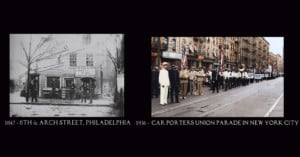
YouTuber Guy Jones created this 20-minute video that offers a brief history of street photography. It's a slideshow of 182 photos -- one photo for every year between 1838 and 2019.
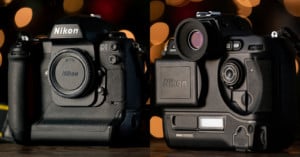
It is June 15th, 1999. The box office is being dominated by the release of the first new Star Wars in 16 years, even though it is tainted by one Jar Jar Binks. Until this day, photography was largely dominated by a technology that had existed for over a hundred years. It was a technology pioneered by George Eastman in his invention called, the Kodak. Over the many years from 1885 onward, it became known to the photographic community and to the world as “film.”
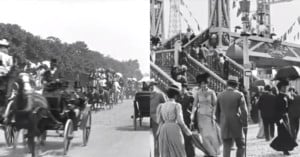
Want to see what life in the streets of Paris was like over a century ago in the late 1890s? Film restorer Guy Jones collected old footage shot between 1896 and 1900, slowed it down to a natural speed, and added sound for ambiance. This beautiful 6-minute experience is what resulted.
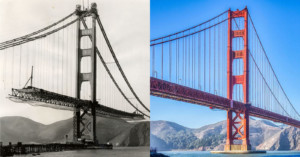
Want to see how the city of San Francisco has transformed over the past century? Here's a neat set of then-and-now photos showing old shots of The City by the Bay next to modern pictures shot in the same locations.