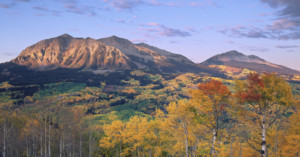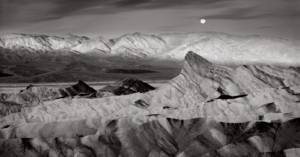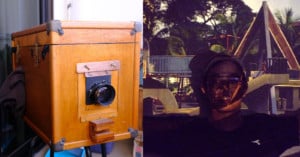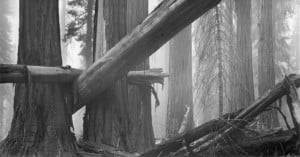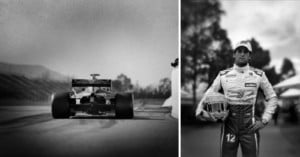
Samuel Burns is a photographer based in Sydney, Australia who specializes in shooting minimalist landscape photographs using a large format camera. While the scenes chosen for his photographs are already simple and bare, Burns captures them with extremely long exposure times in order to give the locations a blurry and dreamy look.
Read more…

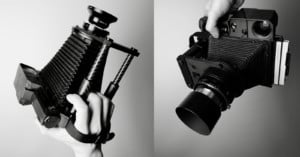
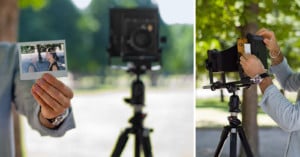
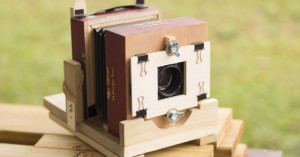
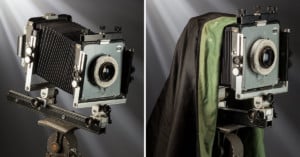
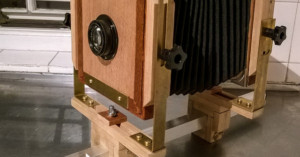
Many photographers want to give large format a shot, but carrying a massive 4×5 camera around with you isn’t always practical or realistic. Fortunately for those people, the folks of Wanderlust Cameras have hit Kickstarter with a new invention: the Travelwide 4×5. It’s an affordable, ultralight large-format camera that you can take with you anywhere. Read more…

Nachtfluge is a series of photograph by US landscape photographer Kevin Cooley showing long exposure photos of airplane light trails streaking across the sky.
Read more…

“Lights Edge” is a series of beautiful pictures by photographer Kevin Cooley that show beams of light rising up from various winter landscapes. They’re simple long-exposure photographs that aren’t the result of any digital trickery. Instead, Cooley simply opened up his 4×5 camera and launched military-grade emergency flare into the night sky.
Read more…

Last August, we wrote about how renowned photojournalist David Burnett was spotted using a large format camera at the London Olympics. If you’ve been wondering how the photographs turned out, today’s your lucky day.
Here’s an inside look at how Burnett’s project came to be, and the beautiful images that resulted.
Read more…

For his project titled Take Refuge, Los Angeles-based photographer Kevin Cooley shot nighttime landscape photographs with an interesting choice of lighting: military-grade flares — the kind you find in emergency kits. Each image in the series features the same red glow, whether the flare is held in a subject’s hand or hidden behind a feature in the landscape.
Read more…

London-based photographer Tony Ellwood has a project called In No Time that deals with our perception and awareness of our passage of time. All the photographs are of the same pier on a beach that Ellwood visited over a period of six months. His technique, which took him 18 months to develop and perfect, involves visiting the location multiple times for each photo — sometimes up to three times a day for multiple days. Using a 4×5 large format camera, Ellwood creates each exposure across multiple sessions, as if he were doing multiple exposure photography, but of a single subject and scene. Each exposure time ranges from a few seconds to multiple hours.
Read more…

If you were given the task of shooting gymnastics at the Olympics, what camera would you use? The Canon EOS-1D X for its 14fps capabilities?
At least one Olympic sports photographer chose something much slower, much larger, and much older.
Read more…

The subjects in portrait projects are often selected for something they all have in common. The people seen in Brooklyn-based photographer Caroll Taveras‘ project You Are Here have this in common: they were lost at the Olympics. Commissioned by Mother London, Taveras finds tourists at the Olympic games who are hopelessly lost, and then guides them to their desired destinations in exchange for a portrait.
Read more…

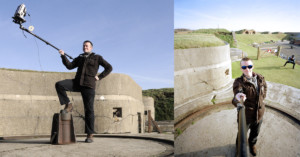
Los Angeles Times Jay L. Clendenin spent four weeks leading up to the Olympics traveling around Souther California, making portraits of athletes on the US Olympic Team. While he certainly wasn’t the only one shooting the athletes, Clendenin chose an interesting way of capturing them: in addition to using Canon 5D Mark IIs for digital photos, he also used a 4×5-inch field camera and a 100+-year-old Petzval lens. When displayed side-by-side, the photos show an interesting contrast between “old” and “new”.
Read more…