5 Toys and Tricks to Improve Your Light Painting
It's easy to plateau when you're experimenting with light painting photography, and as a result, this fun genre can often turn into a flash in the pan hobby.

It's easy to plateau when you're experimenting with light painting photography, and as a result, this fun genre can often turn into a flash in the pan hobby.
One of the biggest hurdles we must overcome when we begin any creative endeavor is getting past the honeymoon phase of, "look at this awesome thing I created" and on to the more realistic and productive phase of, "just because I created it doesn't make it awesome."
There are a few photos that every photographer takes in their lifetime. It doesn't matter who you are or where you came from, you've taken these photos or will take them one day in the future. They're mostly tired shots we're all probably best avoiding, yet none of us can. Even having read this, someday you'll catch yourself mid click, snapping off one of these photos.
Gabe L'Heureux isn't just one of the busiest men in the business, take one look through his work and you'll quickly realize he's one of the best. His photos expertly showcase stunning forces of nature and athletes brave enough to endure them. Yet, despite the rugged qualities of his subject matter, his work tends to have an ethereal quality to it, lending a particular brand of beauty to the harsh environments he captures.
As with most fields that are technology driven, in photography, if you don't keep moving you'll quickly find yourself dead in the water. This is why seasoned pros and amateur hobbyists alike should always be learning and expanding their abilities. It's really the only way to stay competitive. And I don't even mean that in a financial sense, I mean that just in terms of your skill set.
Let me start this off by saying that one of my biggest pet peeves is inconveniencing people, or being inconsiderate to those around me. I've always hated the idea of being a burden on others, and thus, I often go above and beyond to avoid being a nuisance to anyone around me.
In my last post, I said that Adventure Photography doesn't get much attention; however, based on all of your feedback and reactions it seems I may have been mistaken. Perhaps it's just quiet attention? Regardless, I wanted to go ahead and compile a second list because, as I said in the first post (and as many of you pointed out) there were clearly some people missing.
New Year's resolutions can be very bittersweet. Everybody loves the sweet sensation of starting off a new year fresh, cleaned of your bad habits and motivated to charge in with high hopes and grand goals. But unfortunately there's that slight bitter taste as well. It's that knowledge that we often shoot too high and end up falling flat on our faces and that this year likely won't be any different.
Over the years I've tried to get better about reflecting on my work and life at the end of each year. Sure lots of people will claim to do this, but that usually just boils down to reviewing their Facebook page for a quick ego boost.
Adventure Sports Photography often doesn't get a lot of attention in the photography world. While street, portrait, and wedding photography seem to reign supreme, this small genre is usually only appreciated in the respective sports it covers.
First, I'd like to start this article off with a little bit of a warning. This post is primarily aimed at people just starting to get into photography or people just beginning to make the jump from hobbyist to professional. That said, hopefully there's something below that can be appreciated by photographers of all levels.
No matter how much energy you have going into a project, it's likely that at some point you'll run out of steam. When you're hours in to editing your photos and are beginning to have an existential crisis about the real meaning of the words "tone curve," you'll suddenly stop and wonder why you're doing this in the first place.
One of the joys of photography is the interesting cast of characters you meet along the way. I'm not talking about the subject's you're shooting here, I'm talking about the other photographers you'll run in to.
Being a photographer can sometimes be a lonely prospect. Even photographers that often work with people as subjects or on crowded streets will have to put in countless hours alone, editing their work. This fact only makes it even more important for photographers to actively reach out and form communities, if not for the sake of their work then at least for the sake of their social lives and sanity.
I've met a lot of bitter photographers over the years, especially as high-end cameras have become cheaper and more accessible. They complain that Photographer A gets more work than Photographer B even though Photographer B's work is clearly better; or that Photographer C doesn't get any work even though their work is the best of the three (Side Note: often times the photographer complaining IS Photographer C).
Whenever somebody asks me if they should take a free job I answer with a resounding, no. Don't do it. Just don't. It should be a hard and fast rule in your book: do not work for free! That said, everybody breaks the rules, especially their own. Case in point, I just came off of a job this past weekend where, you guessed it, I worked for free.
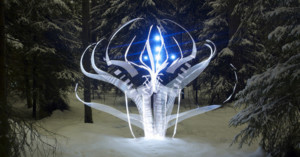
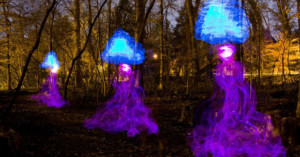
Light Painting goes as far back as Pablo Picasso, and since the true formation of the medium with pioneers such as Dean Chamberlain, Eric Staller and Vicki DaSilva, there has been a mass of people trying their hand at the world of light painting photography. The advent of the digital camera and the popularity of DSLRs has only made this number grow exponentially.
In my experience there seems to be a common misconception that shooting production photography and behind the scenes videos/documentaries are an easy task. While it's true that these sometimes don't require the normal spit and polish, photographers are used to, especially in terms of video work, I can assure you they're no walk in the park.
Quite a few years ago I took a solo trip down to Key West, FL. It was the first time I had gone on a vacation by myself, and since I was free of the distraction of friends and family, I decided it would make a great opportunity to expand upon my photography skills.
Every day it feels like there are another hundred or so timelapses posted online. While some of this is just the illusion of more exposure and access caused by the Internet, some of it is definitely real. The abundance of rapidly evolving technology and constantly dropping DSLR prices have created the perfect atmosphere for even the least experienced photographers to churn out a decent timelapse. And while some people will complain about this fact, it's really just the natural order of things.
The smartphone has not only revolutionized the way we live but also completely altered the landscape of modern photography. If you have any doubts just go to a concert and try to see past the ocean of glowing screens snapping shots or filming their own shaky and out of focus rendition of the show.
It seems the perfect storm of affordable cameras, constant updates in technology, and adventurous artists has hit us and brought with it a large wave of time lapses. I'm not sure when time lapses really became as popular as they are right now but they show no sign of slowing down anytime soon.
We've all been there, when you make that one mistake. The mistake your obnoxious friend warned you about a hundred times. The mistake they'll never let you live down. Or worse the mistake you bragged to everybody about, saying, "Oh, I'll never do that. I know better." But now here you are, in a big puddle of embarrassment.
I've never been a huge fan of the social networking video service, Vine. Not for any real good reason, mostly just because I was already perfectly content with the amusing feed of static images my friends provided through Instagram. Also the Twitter inspired 6 second time limit, while somewhat alluring considering my short attention span, also meant there would be no videos of any real significance. Or so I thought.
Many of us know that feeling. That gut punch of shock and denial as we watch our camera fall from our grip or swing to the earth from an unsecured tripod. We've watched as it impacted with the ground with a hard thud or bounced amongst the rocks collecting more damage with every tumble as it travels farther away from the safety of your hands.
Have you ever wanted to make the video you shot on your DSLR look like it's playing at 1000fps, or make people warp in and out of your time lapse, on perhaps contort faces like putty? Then come explore the glory that is Twixtor. If you're not already familiar with the software plug-in created by RE:Vision Effects then I highly suggest you check out the information below, study up, and dive in.
The advent of the GoPro has brought about a real surge in adventure and sports photography/videos. Suddenly amateurs have been able to capture some of their pro-level tricks and treks and share them with their friends and the Internet.
If you’ve ever harbored interest in trying light painting, there’s no better time than now. Summer is here and the weather is perfect for you start messing around with lights in the late evening, but where do you get started? Luckily I’m here to help!
While some people still regard Instagram as a hipster gimmick bound to eventually wear out its welcome, most people have come around and found it to be much more than just another spoke in the social media wheel. Instagram is perhaps the most simplistic of the social media applications but much like Twitter, it has used that to its advantage rather than let it become a hindrance.