High-Resolution Thermal Satellite Takes Earth’s Temperature
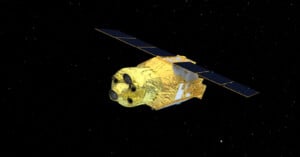
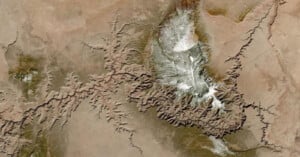
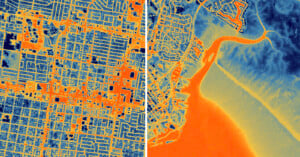
A new high-resolution thermal satellite camera has beamed back its first set of spectacular images.
A new high-resolution thermal satellite camera has beamed back its first set of spectacular images.
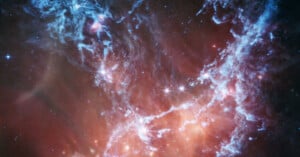
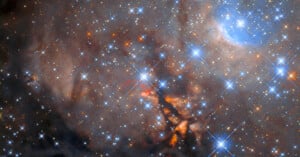
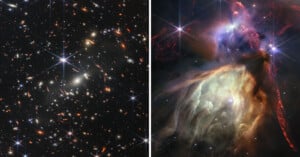
Among the James Webb Space Telescope's many scientific objectives are providing astronomers and physicists unprecedented looks at areas where stars are being born. These stellar nurseries are not only of great scientific importance, but they are also visually spectacular.
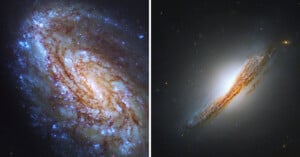
Each day this week, NASA has been publishing a new galaxy image captured by the venerable Hubble Space Telescope. In addition to sharing fascinating information about some of the most interesting galaxies in the universe, each post has also been a visual treat.
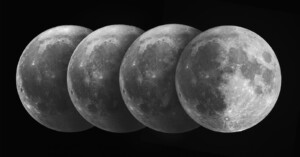
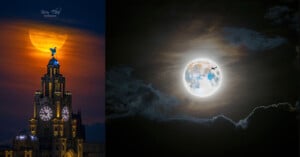
A photographer has put together a stunning sequence of pictures after he captured all four supermoons in 2023.
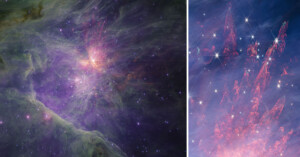
The James Webb Space Telescope (JWST) has captured new images of the Orion Nebula that are visually stunning and a treasure trove for astronomers that shows cosmic objects that defy explanation.
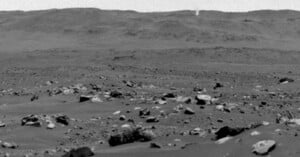
NASA's Perseverance Mars rover has captured an amazing sight on the Martian surface, a dust-filled twister.
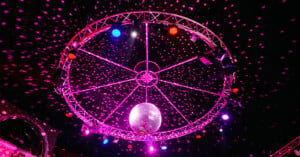
A group of astronomers have called for more disco balls to be installed in observatories and scientific facilities to better observe the Sun.
National Geographic's special Space issue is available now, full of amazing stories and images all about space. From articles about how the James Webb Space Telescope is rewriting astronomy and astrophysics to humankind's return to the Moon as part of the NASA Artemis mission, the NatGeo space issue has something for everyone with interest in the universe.
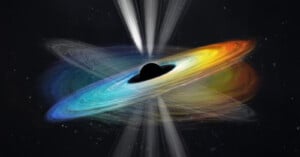
Analyzing more than two decades of observational data collected by more than 20 telescopes, an international team of scientists says that the black hole at the center of the nearby M87 galaxy is spinning.
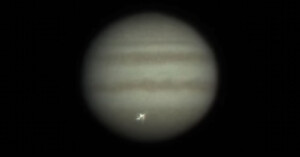
An amateur astrophotographer captured a rare fireball hitting Jupiter marking one of the brightest flashes ever recorded on the planet.
NASA's Parker Solar Probe, the first spacecraft to "touch the Sun," sailed directly through a coronal mass ejection (CME).
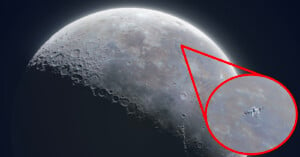
Backyard astrophotographer Andrew McCarthy captured an amazing view of the International Space Station (ISS) crossing the Moon.
Although the James Webb Space Telescope gets a lot of attention for its impressive technology and many discoveries, the Hubble Space Telescope has remained very busy, and researchers have been using the observatory to perform incredible science.
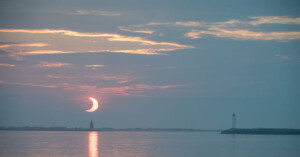
Next month will see an annular solar eclipse viewable from parts of the United States, which means all but an outer ring of the sun will be covered by the moon. The event will offer a stunning opportunity for photographers. When is the solar eclipse? The eclipse will take place on Saturday, October 14. It will begin in Oregon at 9:13 AM PT and make its way over to Texas, where it will end at 12:03 PM CT. It will last two and a half hours in total, with four to five minutes of duration of the …
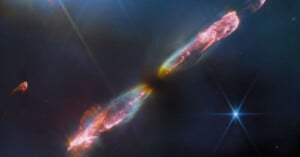
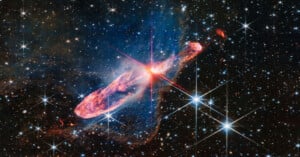
The James Webb Space Telescope (JWST) has captured an image of Herbig-Haro 211 that is an "infantile analog" of the Sun when it was just a baby star with a mass of about one-twelfth the present-day Sun.
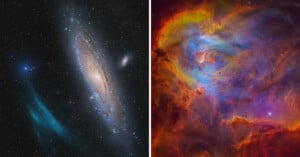
Royal Observatory Greenwich has revealed that photographers Marcel Dreschler, Xavier Strottner, and Yann Sainty have been named "Astronomy Photographer of the Year" for their stunning image, Andromeda, Unexpected.
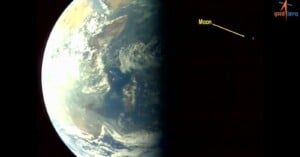
The Indian Space Agency (Isro) has shared the first-ever photographs sent by the country's solar observation mission as it makes its way toward the Sun.
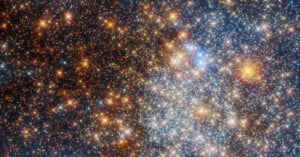
Approximately half a century ago, Turkish-Armenian astronomer Agop Terzan discovered 11 globular clusters. Today, the Hubble Space Telescope views Terzan's clusters in details he could have only dreamed of at the time.
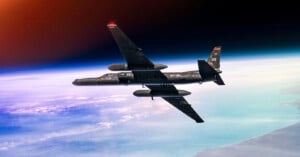
Eight years of discussions. Six months of training. Two days of final preparations. Much was required to give photographer Blair Bunting two hours at the edge of Earth's atmosphere to conduct the first-ever photo shoot at near-space where he captured images that have never been made before and will likely never be made again.
While the James Webb Space Telescope may get the lion's share of the attention these days, the venerable Hubble Space Telescope is still performing vital science and capturing beautiful images.
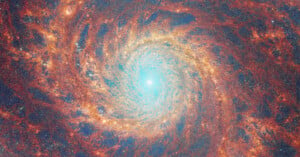
The James Webb Space Telescope's Mid-InfraRed Instrument (MIRI) and Near-InfraRed Camera (NIRCam) have captured the graceful, well-defined bending arms of the grand-design spiral galaxy M51, also known as NGC 5194.
These photos only come around once in a blue Moon, literally. The rare sight of a "blue supermoon" attracted photographers from all across the world last night.
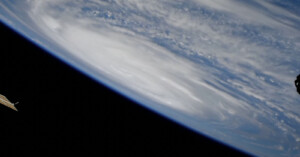
The International Space Station (ISS) has captured breathtaking footage of Hurricane Idalia and Hurrican Franklin from space.
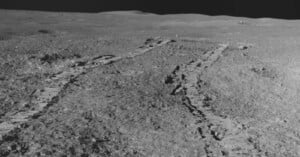
The Indian Space Research Organization (ISRO) has shared new photos and videos captured by its Chandrayaan-3 lunar lander following its successful landing on the Moon's south pole on August 23, a momentous occasion that made India the fourth country to ever land on the Moon successfully and the first to do so near the lunar south pole.
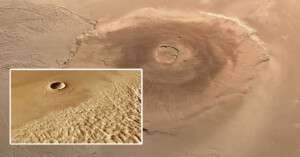
The European Space Agency (ESA) has released new photos captured by the Mars Express satellite that show evidence of landslides and a turbulent past around the most imposing volcano in the Solar system: Olympus Mons.
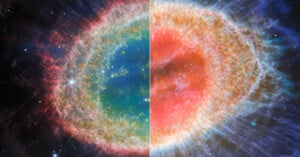
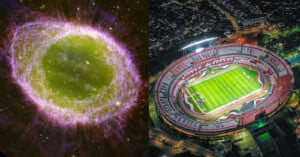
The James Webb Space Telescope has observed the Ring Nebula in spectacular, unprecedented detail using its Near-InfraRed Camera (NIRCam) and Mid-InfraRed Instrument (MIRI) imagers.
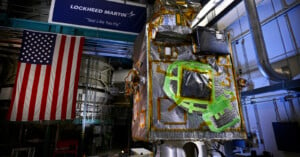
NASA's Lunar Trailblazer satellite has been equipped with a new Thermal Mapper instrument that was developed by scientists at Oxford and will play an important role in the satellite's goal of searching for signs of water on the Moon.
Like all cameras, the sophisticated imaging instruments used in telescopes detect wavelengths of light. While some telescopes see in visible light, as human eyes do, others work in wavelengths that people cannot see.
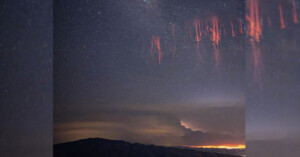
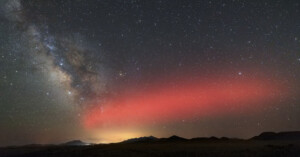
A photographer looking for storms to capture instead caught the sight of rare red lightning sprites in the night sky above Arizona.
The Perseids meteor shower peaked this past weekend with photographers out in force capturing the annual cosmic show.
"It is a very common misconception amongst people that the night sky has been explored in its entirety by the great professional space observatories like James Webb, Hubble, NASA, and ESA. People think there is nothing left for the average person to go out and discover in space. But this couldn't be further from the truth," says astrophotographer Bray Falls.
The James Webb Space Telescope YouTube channel released a fascinating new video this week that explains how Space Telescope Science Institute (STScI) science visuals developers Joe DePasquale and Alyssa Pagan transform Webb's black-and-white image data into full-color composites.
Backyard astrophotographer Andrew McCarthy has always wanted to get a shot of the entire Milky Way Galaxy, but living in Arizona makes it impossible.
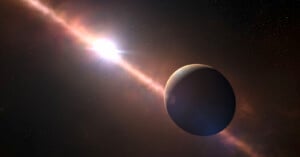
Northwestern University astrophysicist Jason Wang led a project to create the longest timelapse of an exoplanet ever assembled. The video compresses 17 years of real data of an exoplanet orbiting its star down to just 10 seconds -- and that 17 years was only enough for the planet to travel about 75% of a single 23.6-year orbit.
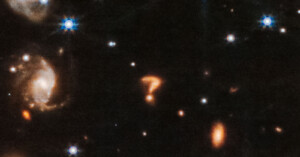
The James Webb Space Telescope recently photographed the Herbig-Haro 46/47, a pair of newly forming stars. The beautiful composite is vast and full of rich detail, including a cosmic question mark.
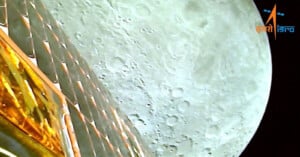
India's Chandrayaan-3 rover reached lunar orbit on August 5 and has sent its first images of the Moon to Earth. Successfully entering lunar orbit is a critical step in the Indian Space Research Organization's (ISRO) historic mission to the Moon.
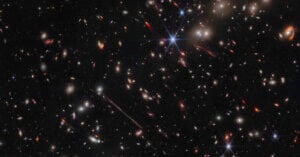
Webb's new infrared image of the galaxy cluster "El Gordo" ("the Fat One") showcases hundreds of galaxies, some of which have never been seen before in such detail. Using its Near-Infrared Camera (NIRCam), Webb has used the gravitational lensing created by El Gordo to see distant background galaxies more clearly, offering scientists a unique look at the distant universe.
IBM and NASA have teamed up to develop an open-source, geospatial foundational model that will enable researchers and scientists to utilize artificial intelligence (AI) to track the effects of climate change, monitor deforestation, predict crop yields, and analyze greenhouse gas emissions.
A new James Webb Space Telescope (JWST) image of the Ring Nebula that boasts an exquisite green looks like a sports stadium lit up at night at first glance.
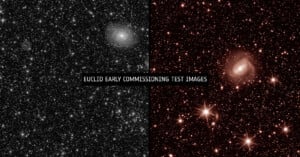
Nearly a month after launching from Cape Canaveral, the European Space Agency's new space probe, Euclid, has sent its first test images to Earth, and they are spectacular.
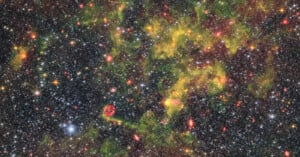
The James Webb Space Telescope recently captured a colorful image of the irregular galaxy NGC 6822. Using its Near InfraRed Camera (NIRCam) and Mid-InfraRed Instrument (MIRI), Webb observed different aspects of NGC 6822, including gas-rich regions and specific organic compounds critical for star and planetary formation.
NASA is launching its very own on-demand streaming platform. Called NASA+, it will incorporate all of the live broadcasts it already does but will also show original documentaries.
The James Webb Space Telescope has captured an amazing image of Herbig-Haro 46/47 using its near-infrared instrument, NIRCam. The image, processed by Joe DePasquale of the Space Telescope Science Institute (STScI), showcases a "tightly bound pair of actively forming stars" in brilliant detail and color.
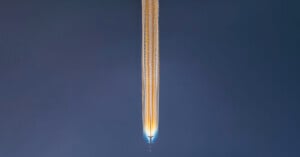
A photographer who zoomed in on an airplane flying overhead couldn't believe his eyes after he saw a bright rainbow contrail coming out of the back of it.
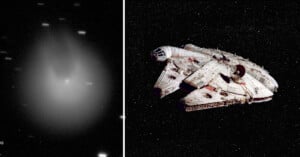
A comet in the night sky has unexpectedly brightened 100-fold and grown swept-back horns so it resembles the Millennium Falcon -- the fictional starship from the Star Wars movies.
Since it began its full scientific operations at the second Lagrange point (L2), about one million miles (1.5 million kilometers) from Earth last year, the James Webb Space Telescope (JWST) has enchanted people around the world. Webb's photos have inspired many people to learn more about space and look at the night sky with unprecedented wonder and curiosity.
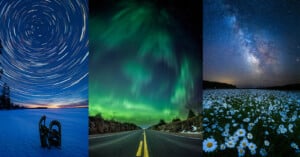
Peter Baumgarten is an award-winning nature photographer, educator, and OM SYSTEM Ambassador based on Canada’s Manitoulin Island. The island’s dark sky location provides Baumgarten with stunning nature and minimal light pollution, which allows the photographer to capture bright stars, the Milky Way, and northern lights from right outside his front door.
A photographer captured a SpaceX rocket leaving behind an aurora-like red glow after it punched a hole in the ionosphere.
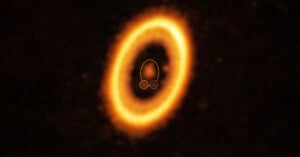
An international team of scientists has captured the first observational evidence showing that two planets can share the same orbit around a star.
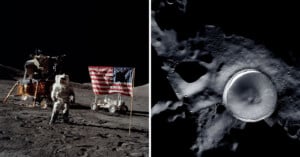
Melania Trump's latest NFT drop that celebrates the Apollo 11 lunar landing prominently uses a photo from NASA's archives, which is a violation of the space agency's image usage rules.