The High Cost of Perfection
Walking past booth after booth at the PhotoPlus Expo in New York, I often heard camera company presenters explaining to their uncomfortably-seated, yet nonetheless-enraptured, audiences how they shot the “perfect” photo.
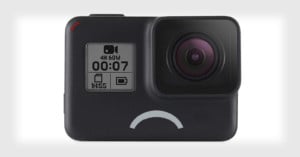
Almost every year, GoPro releases a new action camera, and for the last few years, they’ve been pretty disappointing. Also, every year I seem to fall for their marketing and buy one of their action cameras only to lament that decision. I understand it’s my fault, I should know better. Clearly, I’m operating with heaps of wishful thinking.
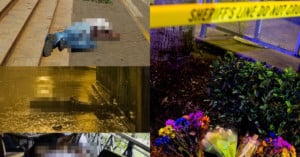
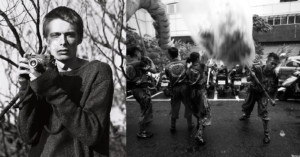
In covering the terrorist attack on a Nairobi hotel that killed at least 21 people by Shahab extremists, The New York Times decided to publish an image of a bullet-riddled body taken by Khalil Senosi. Photo Twitter was outraged, and Poynter wrote about the “hard choice” the NYT made regarding the selection.
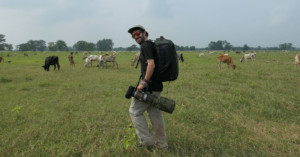
6 months ago, my girlfriend and I finally did what we had always dreamed of doing: quitting our jobs and traveling the world. This is a relatively normal narrative for western couples in their 20s, but the difference here is I am a passionate wildlife photographer.
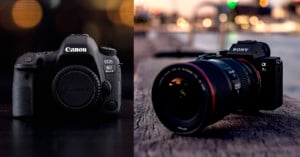
Back in May of last year, I finally made the move and got myself an a7 III. I had wanted a Sony body for quite some time but was hesitant to switch. Before getting into my long-term review, I’ll first explain what made me make the switch.
Can photography move you to tears? It seems like human emotions are difficult to unlock as a photographer, especially in our oversaturated world of Instagram; as of 2018, a staggering 95 million photos and videos are uploaded onto Instagram every single day. It’s more difficult than ever for a photograph to have an impact -- we’ve all debated it before, and we’ve probably seen still photography as a dying profession.
We are approaching the peak capacity for film photography labs. The machines are old, the parts are scarce, the demand is high. The measly Kodak Pakon Scanner, terrible it may be, fetches absurdly high prices.
One of my photography New Year's resolutions was to start to push my work to galleries and public photography showcases. In my mind, having my work in-print and in-public are some of the most significant steps in advancing my career as a fine art street photographer.
The defiant cry of the nostalgic hipster that’s become a hashtag: #filmisnotdead. But why? It’s 2019, people -- the digital camera reigns supreme; why won’t this analog trend die? Rationalism abandons the old way in recognition of the new’s superior efficiency. The combine harvester supplanted the scythe, clocks replaced the sundial, and electric lights extinguished the candle.
Photography is the bastard art. There are many reasons for this, not the least of which is that everyone owns a smartphone and many of those people are under the mistaken impression that they are “excellent” photographers.
One of the most overlooked aspects of the rangefinder method of photography, when comparing it to other systems, is the role of imagination when it comes to the focus and pre-visualisation of the composition.
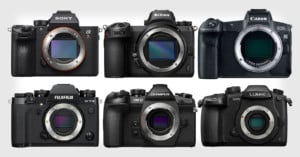
2018 was an important year for mirrorless. As we kick off the new year, it's a good time for some reflection on the market. I've written quite a bit about where we are now that all the big players are seriously in the mirrorless game. This time I thought I'd write about what I think each company will/should be doing in the coming year+.
If you are a member of any photography groups, I can guarantee you've seen the issue of pricing come up often. One of the favorite activities of some photographers seems to be analyzing/criticizing how others run their businesses. It's wonderful to be able to ask for advice in these groups, but unsolicited criticism, or random rants on how everyone else is doing it all wrong and you're doing it right, are never okay.
My name is Mattias Hedberg, and I'm a photographer based in Norrköping, Sweden. I was recently about to get the Flickr Pro upgrade and was hovering above the buy button when I decided to take a deeper look at the Adobe offer since it sounded a little too good. I was interested in other features of the plan also, but the Adobe one was very tempting.
There is a particular obstacle that stands in the way of almost all travel, documentary and cultural photographers alike and, for some reason, no one seems to be willing to talk about it -- so I'm going to.
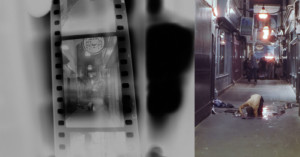
One of my images has been subjected to criticism and scrutiny in a way that none of my other work ever has. The photograph in question is of a scene in London, Chinatown; a man reaches into a sewer while shouting about how someone threw his needles down there.
The SLR has been the dominant camera type in photography for the last 70 years. SLRs are more intuitive, easy to focus, and versatile when it comes to mounting lenses of any length. So why does the rangefinder, as a design, persist into the modern era? There is not a single reason why anyone should be using these archaic and fiddly cameras when more advanced and efficient machines exist.
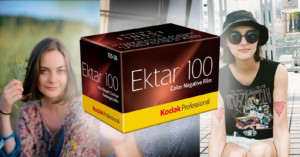
Kodak Ektar is the reason I fell in love with film photography. My first roll completely blew all of my digital shots out of the water. I was used to the ugly JPEGS that my old Nikon D40 spat out and Ektar just gave me what I wanted -- sharp pictures, with silky grain and a look that I didn’t know how to edit for.
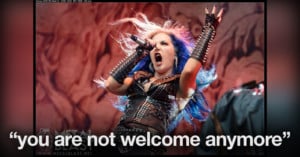
Back in June I covered Fortarock, a fantastic metal festival in Nijmegen, the Netherlands. I had the opportunity to shoot bands like Dragonforce, Watain, Týr, Alestorm and Arch Enemy, all of whom are not only really fun to photograph, but also extremely talented musicians.
Over this past year, an increasing trend in photography seems to be finding a viable alternative to Adobe Lightroom. Some have done it to get out from underneath the subscription service while others aren't pleased with what remains to be inconsistent speed and performance. It seems to be more of the latter than the former, with the Lightroom Catalog largely responsible for the latter.
Debating which camera brand is best is a sure way to create a lively discussion among photographers. It’s easy to endlessly discuss specs and online reviews and to think that the latest model will give us some missing edge. But what about when you really put images to the test with prints?
I'm Allen Murabayashi, the co-founder of PhotoShelter. We recently launched our Guide to Photo Contests 2019, an annual look at contests around the world that we think are worth your consideration. Here's an excerpt from this year’s guide that looks at the sometimes controversial world of contests.
Where is the line between acceptable photo manipulation and cheating in photography? That's the question photographer Jamie Windsor asks and explores in this new 12-minute video.
A huge part of my photo practice is not taking photos. Photography is an inner game. What comes out in our photography is the total expression of who we are, how we think, and what we see.
PetaPixel recently published an open letter from photographer Usman Dawood entitled: "Dear Camera Companies: Please Make a Fast Lens Between 50mm and 85m." Today, I am asking for the pretty much the opposite: slower, lighter prime lenses.
Having learned photography in the time of manual analog film cameras, I know digital feels different. And for me, it’s all about the "left and right of photography."
Whenever PetaPixel has published an article about chemical photography in recent months, it has been met with a plethora of malicious, if not even downright hateful, comments. They're left by photographers who claim that only they may decide on how other photographers, their colleagues, or even hobbyists who simply enjoy photography for what it is may pursue photography as their passion or job.
Alright, I don’t know if it’s the best photo I’ve ever taken, but it’s one of my favorites and it’s been the most popular photo I’ve posted recently on Facebook and Instagram.
There are two major trends in photography today. The first is the ever-increasing numbers of photos being made. I can't even be bothered to look up how many billions of photos are being uploaded to Instickrbook every minute or every day or every year. It's a lot. This is usually talked about in terms of how many photos there are, and how we are drowning in them.
While scanning through my Facebook feed, I saw that my friend Ruby had shared some pictures of a party, all taken on Kodak Ultramax. One of her friends, however, pointed out something that I had never thought of...
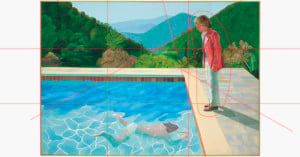
Last month, legendary British painter David Hockney's 1972 painting titled “Portrait of an Artist (Pool with Two Figures)” (shown above) sold for a jaw-dropping $90.3 million, the highest auction price ever for a living artist!
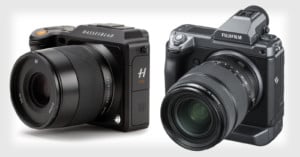
Hasselblad. The company that went to the moon. A company known for producing some of the most iconic cameras in history. Since 1948, when Hasselblad produced its first consumer camera, it has built a strong reputation within the industry. As with many companies, it has had a few bumps in the road, but for the most part, it remains a highly respected organization.
Beware: instant cameras that produce Zink photos may not be a good option for preserving memories long term.
For some time now, my favourite portrait lens has been the Sigma 85mm f/1.4 art. This lens, as many of you may know, is simply incredible when it comes to performance. Even the price of this lens isn’t unreasonable when you compare it to some alternatives currently available.
Here's a thought-provoking 9-minute video by UK photographer Jamie Windsor regarding the ethics of street photography.
Recently I've been thinking a lot about how to keep my self-hosted photography website alive after I’m gone (no, I’m not dying anytime soon, though -- hopefully). My website is where all my passions are combined into one (travel, photography, web design and development), and I treasure it like my child. I really want it to last beyond my time on this planet, but the problem is how.

22-year-old professional drone racing pilot Johnny Schaer has built a strong social media following on Instagram and YouTube with visually stunning video capture from his custom built drones.
In this 11-minute video, I’m going to be telling you the biggest rip-offs that I think are happening in photography and giving you my tips on how to avoid them. Hopefully this will save you some money on your photography journey and make you aware of the traps a lot of learning photographers fall into.
Like many professional photographers, my main camera is a bit of a beast. A Fuji X-T2, usually with a big lens, and always with a battery grip on it. It’s a bit big to go traveling with, and although it’s not as big as my Nikon D600 and grip that I used to use, it still warrants the travel/side-arm camera I bought in the D600 days.
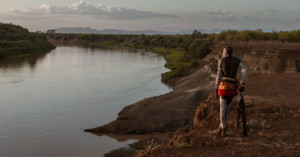
This is the story behind my Han River project. Boredom helped me to become creative, develop a vision and a style. It also made me start my first photo project. If you’re struggling with starting your own photo project or developing your own vision and style, this blog post might be of help to you.
I’ve had many cameras in my 36 plus years as a photographer. I started with a Pentax K1000 (a brilliant camera) then I moved on to my beautiful Hasselblad and many Canons. The cameras come and go, either from wear and tear or the demands of needing new technology. But in all my time my as a photographer, I’ve only had 3 tripods.
In the U.S. and most industrialized nations, we have a collective infatuation with technology but a poor understanding of its effects – both intended and unintended. We love asking Siri to play our favorite song, but don’t fully consider the privacy implications of allowing the device to persistently listen to us.
People often ask me, given the improvement and ubiquity of cell phones, whether DSLRs survive. This actually entails two slightly different questions: will standalone large-ish cameras survive, and will the particular reflex design (the R in DSLR) survive? I am cautiously optimistic about the former and very pessimistic about the latter. In this piece, I will discuss DSLR vs. mirrorless.
I'm going to do one of my end-of-year assessments a little earlier this year. Many of you will be struggling with buying decisions this holiday season because of all the higher-end mirrorless cameras that appeared in and around Photokina. I've now had the chance to use virtually every new camera—some for less time than others, obviously—and I am ready to deliver a quick assessment of The State of the ILC.
I guide photography workshops around the world and what I often see with my students is that they bring a great camera and a great set of lenses in combination with a very low-quality tripod. I can’t stress enough how important a good tripod is. If you want to level up your landscape photography, you need a good tripod. Please don’t go cheap on this. I’d argue it’s even more important than your camera!
Yesterday Flickr made their first big restructuring announcement since recently being purchased by SmugMug. Beginning next year on January 8th, Flickr will limit free accounts to 1,000 photos. The previously offered free 1 terabyte of storage goes away.
I first heard of KitSplit about a year ago and thought it was a great idea. Especially living in New York, everything is so accessible. Browsing through the site and seeing what type of equipment was available, I saw that there were a lot of high-end RED Epic cameras and digital cameras, but there wasn’t a lot of film equipment. I have such a big collection of film photography equipment that I figured why not -- I could possibly corner the film camera rental market on KitSplit.
When I read or watch reviews of lenses by folks in the photographic community, it often seems like one of the most important qualities to them is how the lens renders bokeh. It’s often made me wonder, do we sometimes forget that bokeh is just background? And is this fixation healthy? Or most importantly, how much does it matter to an average person who has never heard the term “bokeh”?
In this article, we're going to briefly look at the subjectivity of color. This is a colossal subject, but I wanted to share some of my thoughts on how color is perceived by each of us and whether it's really that important.
There are few things in life I treasure more than the photographs I have. Some are on the walls, some in albums and many hundred are in shoe boxes in the cupboard and each one has it’s own story. As I get a little older and maybe a little wiser, the value of these photographs to me has increased. These people, these moments in my life are priceless. And if we had to evacuate due to an alien invasion, they would be amongst the few things I would want to scoop up before fleeing to the safe zone, aside from the wife and kids.