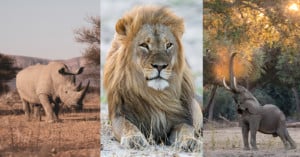
Africa’s Best Wildlife Photography Locations and When to Visit Them
When photographers begin to plan for a safari adventure in Africa, the first question they might ask will often be the most important: “Where in Africa should I go, and when?”

When photographers begin to plan for a safari adventure in Africa, the first question they might ask will often be the most important: “Where in Africa should I go, and when?”
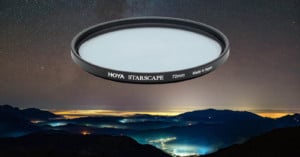
Astrophotography still is one of the most popular photographic genres in the world and as we are in the middle of the Milky Way season, it is a very good opportunity to take an in-depth look in a very helpful accessory for better night sky photos.

There are lots of misconceptions about street photography made by people starting out or itching to try this ultimately most challenging (unless you want to take boring photos), most rewarding, and most accessible of photographic genres.
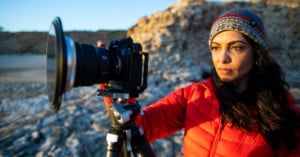
There are many passionate and talented photographers who wonder whether they should quit their full-time job to pursue photography professionally. Sapna Reddy is a photographer who proves you don't need to -- she has dual careers as both a full-time physician as well as a professional landscape photographer.
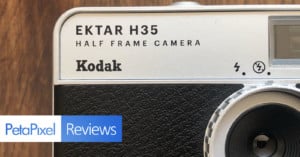
Despite rising film costs, Kodak hopes to keep film shooters snapping by offering a way to shoot film on a shoestring budget. Taking a cue from a 1960's trend in camera design, Kodak has released the Ektar H35 half-frame camera.

Photography is a lucrative business when creativity meets the right finance tools. How and when you’re paid are important factors in building trust with your clients and presenting your brand in the best light.

One of the questions I get most often is, how do I price my art photography. In this article, I will share some advice and tips on things you should keep in mind when determining what you will charge for your fine art photography prints.
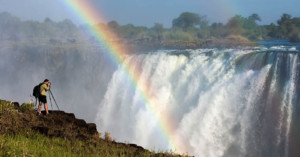
While the Victoria Falls are neither the widest nor the highest waterfalls in the world, they are undoubtedly the largest. At 1,708 meters wide and 108 meters high, they combine to form the largest single sheet of falling water anywhere on earth.
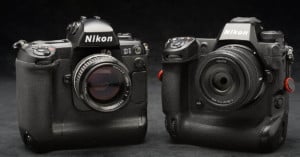
When I received my Nikon Z9 in late December 2021, I was a bit anxious. Would it live up to the hype? Was it going to be the camera that Nikon had promised (and many Nikon users had been waiting for)?
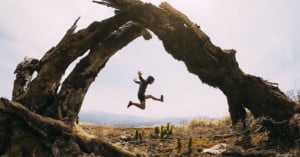
Since the early days of photography, photographers have framed photos after making a print for display. Frames help focus a viewer's attention on the subject of the photograph or on the entire picture in itself.
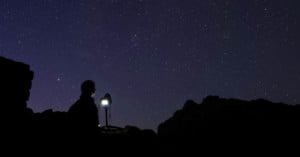
I have said it before in my all-in-one, how-to-do-everything astrophotography guide—astrophotography is more accessible than ever before. Great gear can be purchased even on a tight budget, and the advancements with compact star trackers allow for even greater detail to be captured.
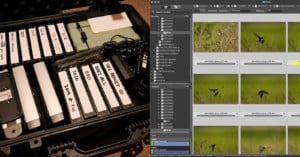
I recently heard a photographer say he’d spent 17 hours going through 10,000 images, deciding which ones were worth saving. My first thought was, “I hope he’s retired.” My second thought, though, was that he badly needed a lesson on speeding up his workflow. Which led me to write this guide on how to turbocharge your photography workflow.

As a photographer, you’ve got plenty of opportunities to gain exposure. Many opt for the social media route, and you should certainly consider creating profiles on at least one platform. Building a website to showcase your work is also a good idea, but have you thought about entering photo contests?
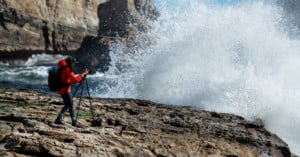
SmugMug has launched a new inspiring campaign titled "This Lens" that celebrates the power of photography to challenge perspectives and change the world. It tells the stories of real-life photographers and their passionate pursuits.
Picfair has joined forces with Adobe to bring the power of Adobe Photoshop Lightroom and Adobe Photoshop to its photographers.
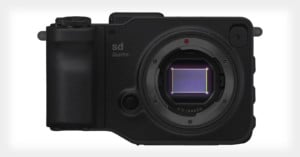
Back in the early 2000s, Sigma -- a company usually known in the photography community as a lens manufacturer -- released a new type of camera sensor named the Foveon X3. This sensor technology was first patented in 1999 by a company called Foveon, Inc. (later acquired in 2008 by Sigma) and featured an innovative color perception technology: a 3-layer stack of photosensitive diodes.
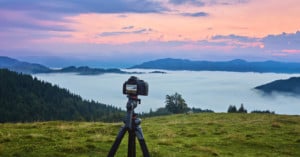
Although I’ve seriously practiced the art of landscape photography for more than two decades, I’ve never questioned the definition of the term. It’s fairly obvious, isn’t it? If I am taking most of my photos outdoors – in the landscape – then I must be a landscape photographer.

The “Napalm Girl” photograph of terror-stricken Vietnamese children fleeing an errant aerial attack on their village, taken 50 years ago this month, has rightly been called “a picture that doesn’t rest.”
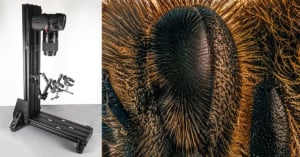
I do a fair bit of macro photography in the studio, for both scientific and artistic purposes. I’ve used tripods, boom poles, and large copy stands to get the camera in close. The setups were often complicated, and I sometimes felt I was concentrating more on the gear than the photograph.
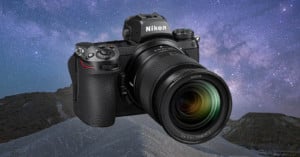
In May of 2018, I upgraded to a Nikon Z6 from my old Nikon D3200. When I was trying to decide on cameras, I made a distinct decision to go with the Z6 over the Z7. Mostly based on the technical specifications with regards to low light sensitivity. Since then, I’ve always wondered though if I would truly have noticed and also would I have preferred the higher resolution.
How does an image become an icon? It is estimated that we now produce more images in two minutes than we did in the entire 19th century. How, then, can one image be so powerful it can symbolize the horror of war and help mobilize anti-war sentiment?
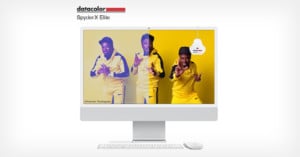
Do you own a monitor calibration device? If you do you can upgrade to Datacolor SpyderX Elite for only $149.99 today (originally $269.99). That’s an unbelievable $120 savings directly from the manufacturer. But hurry—this amazing offer ends June 24, 2022!
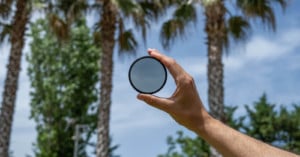
A CPL filter, or circular polarizer filter, is a popular and powerful filter that can reduce or eliminate glare and reflections from surfaces in your photographs. In this article, we will introduce this filter type and analyze its use and effects.
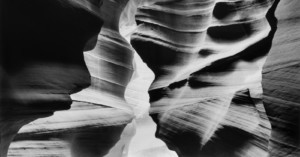
Photographers, from beginners to the most experienced, search for ways to improve their compositions. To be successful in your search, you have to compose an image based on two things above all else: light, and the relationships of forms.
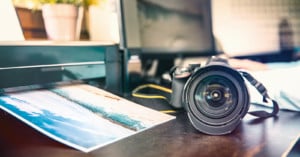
As photographers, one of the most exciting parts of our job is to print the fantastic photos we capture. As eager as we are to get the prints, we need to ensure we follow the entire pre-printing process to the T to ensure you have realistic prints. One crucial step in the process is soft proofing.
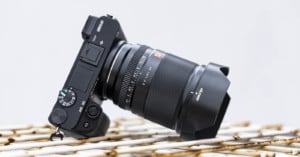
The camera equipment manufacturer Viltrox has launched a Indiegogo campaign for the Viltrox 13mm f/1.4, a large-aperture ultra-wide-angle autofocus lens that is perfect for vlogging, landscape, architecture, street, food, and astrophotography.
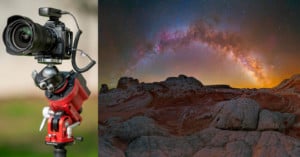
So, you have decided you want to take your astrophotography to the next level… maybe you want to capture more detail in the Milky Way core, or perhaps dabble with deep space objects like Andromeda or Orion or maybe you came from my all-in-one astrophotography tutorial. Whatever it is, you know you are looking at buying a star tracker.

Perhaps you’ve been through this scenario. You see an interesting subject doing something truly unique, you hesitate and sometimes miss the shot altogether. When you do gather enough courage, your heart races, your palms get sweaty, and a quiver can be heard in your voice as you nervously ask if you can take a person’s picture. Sounds familiar? It can be discouraging if you miss the opportunity and the shot.
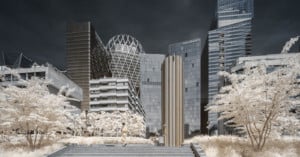
Financial districts are more known for their buildings than for their parks: from the Financial District of NYC to the City of London, these places are synonyms of concrete, steel, and glass, not parks or flowers.

A war in Europe instantly creates parallels with the world wars for people in the UK and other European countries. This connection represents what most people know and are taught about conflict on the continent.
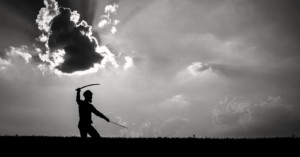
Negative space is a powerful concept in art and photography that allows you to say a lot with very little. In this article, we will look at the basics of negative space and how you can use it as a tool for creative and powerful photo compositions.

With every year that goes past, photography becomes more and more accessible to the average person. Compared to even a decade ago, even the most basic cameras – including those on your smartphone – produce excellent images. Moreover, you can find plenty of free resources and classes that give you all the information you need to succeed.
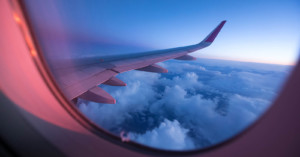
If you are a photographer and travel by air then you know that some of the views from an airplane window can be absolutely stunning. Carrying a camera with you when flying can not only work as a nice diversion to kill time but also allow you to capture some incredible images. While your fellow travelers are busy on their tablets, phones, or sleeping, you can be enjoying and capturing some amazing views!

We've all heard of the classic rule of thirds, leading lines, and other composition techniques. But going with the most common rules can get a bit boring at times.
There is a lot of discussion these days about the pros and cons of post-processing. Is it good or bad, why do we do it at all, shouldn’t photography be representative of reality? Authentic? Isn’t the image out of a camera the real thing? Isn’t editing cheating?

While most people go out of their way to avoid snakes, we’re the opposite. We’re crazy about snakes. As wildlife photographers, we’ve spent months in the Australian bush and in overseas jungles tracking down beautiful snakes.
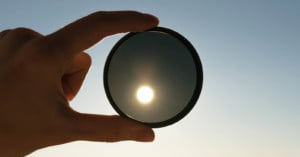
The neutral-density filter, or ND filter, is a powerful lens filter photographers use to reduce the amount of light entering a camera lens in order to select exposure combinations that would otherwise result in overexposed images. This article is a basic guide to ND filters and how they are used.
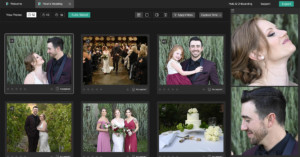
FilterPixel automates the process of looking for photographs that are not good enough to be framed and added to your portfolio of work. The software uses Artificial Intelligence to scan and automatically separate the unworthy captures, saving time and effort in browsing through hundreds of captures and inspecting them closely to check for blur and focus issues.

Creating compelling sci-fi and fantasy inspired images was once a task that required either awesome practical effects and lighting, dexterous digital paint skills, or a mastery of complex 3D animation software. Recently, Boris FX, an Academy Award-winning software company that has developed film and television visual effects tools for over 20 years, has leveled the playing field with the introduction Boris FX Optics.
If you’re new to photo printing, different print sizes may be a bit confusing to you. One that you’ll regularly come across and should know about, however, is 4x6 – which is the most commonly used throughout the industry.

Removing unwanted objects and text out of an image to clean up your photo used to require special software and skills, but these days AI has led to features like Content-Aware Fill in Photoshop that lets anyone do it in just a few clicks. If you do not have a Photoshop subscription, there is a free Web and mobile app called Cleanup.pictures you can use.
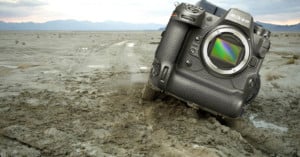
For photographers, creativity is the difference between a nice photo and a NICE photo. But what happens if you’re not feeling very creative? That’s when I like to dive into what I call my “photographer’s creative kit,” a bunch of different things to try.
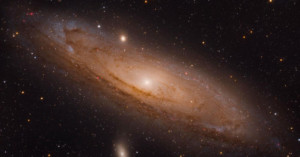
I recently shot a photograph of the Andromeda Galaxy that went viral, appearing everywhere from the front page of Reddit to Newsweek. The photo was taken with a four-inch telescope over the course of multiple nights from my backyard near Charlottesville, Virginia, US.
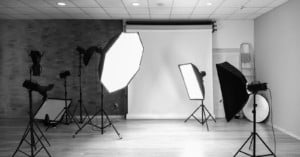
If you’ve decided to take the next step in your photographic lighting and purchase some studio strobes, then you will need to ask some questions about what kind of images you’ll be creating in the studio and what the best lighting for those particular subjects is.
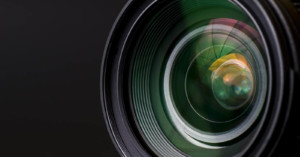
In recent years, some lens designers have updated their lenses with new lens coatings. For instance, Pentax's newest limited lenses feature an existing optical design with only a few improvements, including a better lens coating.
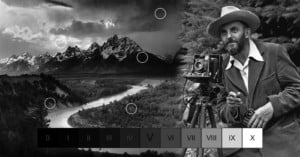
Even though the Zone System is over 80 years old, it is still relevant today whether shooting modern films or digital capture. This article is for photographers wanting to learn more about the Zone System for their particular workflow.
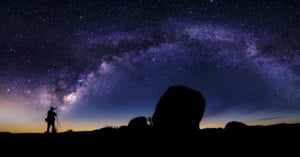
Astrophotography. We hear the term tossed around a lot these days but what actually is it? The true definition of the word is photography of the nighttime sky. The sky only—at night.
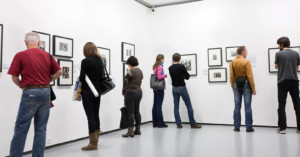
Fine art photography has become all the rage over the past decade, and it is a moniker many photographers use to try and elevate their output to try and sell it via galleries and print sales. But what is fine art photography after all?

When Italian photographer Letizia Battaglia passed away on April 13, 2022, the biggest shock among those of us who have written about her was that she didn’t die at the hands of the Mafia.

Mother’s Day is about a few things: flowers, lunch or dinner together, and of course, family photo time, a good opportunity to update the archive with images of us all together again.