InVisage Explains Their Long-Awaited QuantumFilm Technology
Update: Apparently they've decided to not allow external embedding of this promo video... You can watch it here.
Update: Apparently they've decided to not allow external embedding of this promo video... You can watch it here.
Fresh off the rumor mill: Sony will be announcing a new large sensor compact camera in the following weeks. The interesting thing about this camera is that it breaks the mirrorless trend -- taking a step back towards high-end compacts. Hopefully that step will correspond with a drop in price without much loss in quality.
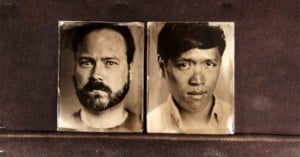
Here's another video featuring SF photo shop Photobooth and its tintype portraits. Will and Norm of Tested talk to shop owner Michael Shindler, who goes in depth into how tintype photographs are created and the science behind the process.
A new iOS app from design studio Maybe It’s the Lightening, simply titled Stilla, works with one simple premise: every photo has a second photo -- or third or fourth -- that your camera missed. For every picture of your friend on the boat, there's a beautiful sky and a glorious reflection of that sky in the water that you missed. Stilla seeks to remedy that.
A new Nikon patent unearthed by Egami shows that the company has developed a new in-camera feature that assists in panning photographs. Tracking a moving subject with your camera and shooting a longer exposure shot creates photos that contain motion blur and a sense of action, but getting the subject perfectly sharp can be difficult. Nikon wants to use some fancy digital trickery to get around this problem. The feature snaps two photographs -- one at a slower shutter speed and one at a faster …
After losing the battle over photo taking, filtering and sharing supremacy to Instagram last year, the app and website PicPlz is finally throwing in the towel and calling it quits on July 3rd.
If you've never been a fan of using sunblock, here's a photograph that might change your feelings toward it. Shot by doctors Jennifer Gordon and Joaquin Brieva of Northwestern University and published by the New England Journal of Medicine, the photo shows a 69-year-old truck driver who exhibits a strong case of photoaging. In the 28 years he spent driving trucks, the man's face received far more sunlight on the left side with the sun streaming in through the driver's side window.
Brooklyn-based photographer Henry Hargreaves teamed up with food stylist Caitlin Levin on his project "Deep Fried Gadgets", which -- as its name indicates -- shows various electronics deep fried. The purpose of the project is to highlight the wastefulness of consumer culture and its rapid consumption of the latest gadgets.
We live in an analytical time, where most of the information we receive -- be it about the stock market or the presidency -- comes in way of charts, graphs, and other visual representations of hard (or sometimes soft) data. And it's this dependency on analysis that Sherwin Tibayan's diagnostic take on Robert Frank's "The Americans" -- the second "The Americans" spin off we've seen in two weeks -- focuses on.
If you're a fan of shooting portraits in outdoor environments, David Hobby of Strobist has a great tip: keep a catalog of spaces and backdrops that you stumble upon. Anytime you need a backdrop, just flip through your catalog and select the one you (or your subject) like. If you have a GPS-enabled camera, simply snap a photo at the various locations and throw them into an app that can display the locations on a map for you. There's also a nifty free app called ShootLocal designed for this very …
Filmmaker Brandon Davis Cole's interesting take on the traditional follow focus does something that few, if any, products have ever thought to do -- integrate bicycle technology into DSLR cinematography. Cole essentially reinvented the follow focus. By instituting a "brake lever" system, the SnapFocus allows cinematographers to keep their camera steady and pull focus quickly and easily to wherever it's needed, all without ever moving your hands from the SnapFocus handles.
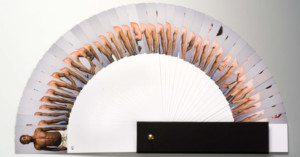
French artist Pierre David has a project titled "The Human Pantone" in which he recreated Pantone's popular color guide using photographs of 40 different models. The work was commissioned for the Museum of Modern Art in Brazil, so David selected 40 people from the museum to serve as his models. The resulting work is found on paint cans in addition to swatches, and is meant to highlight the issues of beauty, diversity, acceptance, and racism.
Several major rumors surfaced over the last couple of days about Japanese camera giant Canon, ranging from release dates to specs for cameras that up until now were spec-less for the general public. First up, according to Canon Rumors, the long awaited and rumored Canon Rebel T4i will be released later this week on June 8th. In addition, specs for the T4i should be exactly as the original rumors suggested: 18-megapixel sensor, 9 cross-type AF points, touchscreen LCD and continuous AF for live …
Someone finds your work on Flickr. They contact Getty Images to buy it. Getty Images contacts you for permission to sell it to their buyer. Do you do it?
When a group of facial hair aficionados got together late last year at the first inaugural Battle of the Beards in Atlanta, photographer Josh Meister took it as an opportunity not just to compete himself, but to take some portraits as well. The resulting photo series, simply titled "Beards," shows off some seriously impressive facial accoutrement.
We've featured more ambitious projects before -- you may remember Cesar Kuriyama's video which consisted of 1 second of footage per day for an entire year -- but YouTube user grapefrugten's take on documenting life in short snippets involves a slightly different approach. He releases a monthly video diary, entitled 48 frames, which consists of 2 seconds of video per day (24fps X 2sec = 48 frames).
Perhaps sadder than the moment when a company officially discontinues a film is the moment when the last of that film is used, and that's what has just happen to Kodak's famous Plus-X 5231 movie film. Plus-X was discontinued a couple of years ago, and according to the LA Daily News, independent filmmaker Paul Bunnell's "The Ghastly Love of Johnny X" will be the last feature shot using the film. A film that for many years was a favorite of black and white cinematographers everywhere.
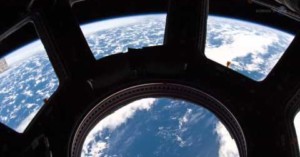
In a couple of short days, Don Pettit intends to do something that has never been done before: photograph the transit of Venus from space. The transit of Venus, a phenomenon where Venus appears as a small black dot crossing the plane of the sun, is a rare event that happens in pairs 8 years apart. The first of the current pair happen in 2004, and after June 5th we won't be seeing Venus cross the sun again until the year 2117.
It's difficult to ignore the fact that photographers are finding it harder to get paid for their work now more than ever, but a recent altercation between concert photographer Dan DeSlover and the band Alter Bridge took on a different dynamic -- criticizing a photographer for asking to get paid.
Starting off Sunday on a slow motion note, this is just a downright cool 1000fps video of skateboarders doing some pretty crazy flat ground tricks (tricks so crazy many of them don't even have established names). The video was shot using a Redlake N3 high speed camera, and the footage... well that speaks for itself.
Late last year, during the Day of Photography in Amsterdam, PhotoQ interviewed nine photographers about the challenges facing them and photography as a whole from both an economic as well as social perspective. The resulting videos offer nine different perspectives on the business of photography, how it's changed, where it's headed, and how to adapt. Some viewpoints are more negative and others more positive, but in the end you can tell that each of these photogs love what they do, and just …
Beauty may be only skin deep for us humans, but crack open a classic rangefinder and there something both nostalgic and beautiful about the components therein. The people behind Ilott Vintage -- a Miami-based camera restoration project -- know this, and so when they're restoring an old Minolta Hi-Matic 7 or Olympus 35RD, they sometimes take the time to make a little video showing off the craftsmanship and components we don't always get to see.
Over the last couple of weeks we've featured two very impressive cinematography shots, one from the movie "Contact" and another from "Sucker Punch." But while both of those required planning, expertise and, for one of them, some help from the digital age, the final steadicam shot from the movie "Hugo" is impressive in an entirely different way.
Here's an interesting, if not a little specific, idea that someone over at the stock photography website Dreamstime put into action earlier this year: a stock photography site dedicated entirely to Facebook timeline photos. Timeline Images is exactly what it sounds like it is, a collection of cheap stock photos optimized for your Facebook timeline.
We've mentioned Tom Lowe's TimeScapes a few times before, but if you've somehow missed out on the many trailers that have gone viral here's your chance to see one more and then maybe head over to iTunes to pick up the movie, which has quickly become the #5 best-seller in documentaries.
NASA astronomers announced today that they are certain that our galaxy is on an unavoidable collision course with the Andromeda Galaxy, the closest spiral galaxy to us. Don't worry though, it won't be happening for another 3.5 billion years or so. What's interesting is that the collision will drastically change what our night sky looks like, and the astronomers released a series of photo illustrations showing what future astrophotographers will be shooting when they point their cameras at the …
There was a collective groan from hipster photographers around the world last month after it was revealed that IKEA had no plans to start selling its KNÄPPA cardboard camera to the general public. If you were one of the lucky few who got your hands on one of the cameras, you'll be happy to know that the free handout you snagged is increasing in value. Earlier today one of the cameras was auctioned off for about $100 over on eBay. Another listing went up shortly afterward and has already been …
School Portrait is a project by documentary filmmaker and communications student Greg Ward, who asked a number of adults to show and share about their old school portraits. Ward writes, …
Check your facts, check your sources, and then check your facts a few more times for good measure; that should be the mantra of journalists and journalism organizations worldwide. Sadly, the BBC dropped the ball in that arena recently when they used a 9-year-old photo of Iraq to illustrate a story about a recent massacre in Syria.
Take a look at your camera, and there's a good chance it'll have this symbol: Φ -- a small circle bisected by a long line that looks like a hieroglyph of Saturn. If you've always wondered what it means, today's your lucky day: it's called a "film plane mark" (or "focal plane mark", depending on who you ask), and indicates exactly where the film (or sensor) plane is inside the camera body. One reason the mark is useful is that macro photographers often want to determine the exact distance …
Here's an interesting product idea by Oregon-based designer Jason Hilbourne that combines a charging cable and a mini-tripod into an easy-to-use, pocket-sized device. His project, dubbed Twig, is specific to the iPhone and has already gotten quite a bit of attention. With 56 days to go the Twig has already secured $64,000 in funding -- putting it a whopping $14,000 past its goal. But more-so than its iPhone functionality, for us the intriguing thing is to see if anyone takes this idea and runs …
Kingston University photography students Luke Evans and Josh Lake wanted to do something unusual for their final major project, so they decided to turn themselves into human cameras by eating 35mm film squares and letting their bodies do the rest. After eating and pooping out the film in the dark, they used fixer on the film and then scanned the film using an electron microscope. They are currently exhibiting massive prints of the images that show every detail of what their bodies did.
General consensus seems to be that a picture is worth a thousand words, in which case Ben West and Felix Heyes' unique take on the dictionary, complete with 21,000 entries, metaphorically contains closer to 21,000,000 words worth of content. That's because their dictionary doesn't hold a single word, only the first Google image search result for every word you might find in your regular Webster's.
Fingerprints of Drinkable Culture is a photo series by photographer William LeGoullon that explores what popular beverages look like under a microscope.
Here's a funny short clip from the HBO TV show Veep in which two photography enthusiasts discuss their Canon cameras, and... one of them is a camera snob. Does the guy remind you of anyone you know? Hopefully it's not yourself!
According to Photo Rumors, in addition to working on several rugged advancements to their camera line, Pentax is also planning to add a 360-degree camera to their repertoire. This is a camera that would be capable of creating 360-degree panoramas with the push of a button. The idea isn't entirely new -- Tamaggo demoed their 360-imager at CES -- but this would mark the first major photography company to create a similar product.
Looking for a solid photo editing app for your iPhone or iPad? Snapseed, an acclaimed photo editing app for iOS, has been selected as Apple's free app of the week. Apple kicked off the program last week, so this is only the second app to be featured. It ordinarily costs $5.
Creating cinemagraphs -- still photos in which one or another section is moves repetitively -- can be a pretty tricky process, but a new technique developed by Adobe researcher Aseem Agarwala and his UC Berkley colleagues may make it quite a bit easier. Their technique involves "de-animating" a video by "drawing" two sets of "strokes" over the video: one set over the parts you want to move and another over the parts you'd like standing still.
More than most government agencies, NASA is actually pretty enthusiastic about photography (by comparison, we probably won't be seeing CIA photography archives come to light any time soon). When NASA had a problem that needed solving they liked to look towards their cameras, and that's exactly what they did when they needed to test and record the abilities of their space suits.
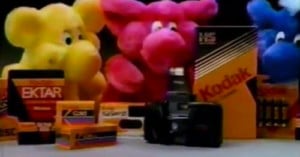
We've heard of camera manufacturers dipping into unrelated fields before, and we've also seen some pretty interesting marketing stunts, but in the early 90's Kodak had already done both... in a colorful, cuddly sort of way. Back then, as an either desperate or creative ploy to get kids into photography, Kodak came out with the Kolorkins: a set of colorful, collectible stuffed animals.
Want to enjoy a glimpse of photographic awesomeness every time you glimpse at the time at home? Create a giant wall clock with picture frames to mark each hour! You'll need a clock kit (or a disassembled clock) and 12 picture frames. You can be more serious by shooting photos of the numbers 1 through 12 for the frames, or go creative by putting in all kinds of random images.
The world is a serious place, and it seems that even comedians like Saturday Night Live's Fred Armisen think that this is a side worth seeing. So, by way of a fun video project, he's asking viewers to do one simple thing: Be Serious for 30 Seconds... and record it.
Kai over at DigitalRev put together this video that offers photography advice in burst mode: 50 (or 49) short and sweet tips in less than 15 minutes. If you take yourself too seriously, be warned: the tips are presented in Kai's trademark "infotainment" style.
Former Photoshop product manager Kevin Connor and Dartmouth professor (and digital forensic expert) Hany Farid are working together to help put a stop to image manipulation where it doesn't belong. Putting their two brains together they formed a company called Fourandsix, which is primed to release a full suite of software tools that will help law enforcement officers, photo editors and other interested parties detect secret digital photo manipulation.
Flickr user TigTab creates beautiful scenes by light painting with hand-cut stencils. For each shot, the camera's shutter is left open while she moves about the location, firing her flash through the stencils in various locations to add the individual items to the scene. Some photographs take up to four hours to create from start to finish.
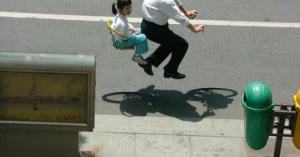
Floating is a series of manipulated photographs by Chinese photographer Zhao Huasen showing people in China riding around on invisible bicycles.
For those of you who've ever wondered what it takes to get your work into National Geographic, here's a hint: not "creative" software filters. According to a set of guidelines laid out in a message from the magazine's Director of Photography, certain minor post-processing is ok with the exception of filters. Minimal dodging and burning, black and white, hand tinted images (if you're experienced), and cropping are ok when done well; fish eye lenses are discouraged; but filters are a definite no …
In a recent interview with Fujifilm CEO Shigetaka Komori, German newspaper Frankfurter Allgemeine dived into some pretty intense financial conversation. Much of what was said didn't pertain directly to photography -- discussions about Fuji's involvement in the medical field and cosmetics for instance -- but certain parts of the interview were very interesting indeed.
Of the photographs that emerged after the recent solar eclipse on May 20th, there aren't many that are more epic than the "Ring of Fire" photo captured by Michael Chow of The Arizona Republic. In an interview with Dallas News, Chow reveals that the photograph was birthed rather spontaneously. Shooting the eclipse in Phoenix's Papago Park -- a hiking area he knows well -- Chow noticed a group of people standing on a butte a quarter mile away. He parked his car, ran across some desert, and …
200 Yards is a neat photo project based in San Francisco that centers around the idea of having photographers point cameras at a small section of a particular city. For each cycle, organizers pick a particular "alternative gallery space" and invite photographers to create photographs within a 200-yard radius of that location (this translates to roughly one block in each direction). Submissions are then whittled down until 12 photographers remain, and these artists are invited to the resulting …