
August 2012

Jump to articles by year, month, or day.

Year
Month
Day

Year alone opens that year’s archive. Add a month or day to narrow it.

Why the Mars Curiosity Rover’s Cameras Are Lame by Today’s Standards

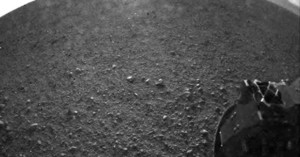
Ever since NASA's Curiosity rover landed on Mars and started beaming back photographs earlier this week, people have been wondering, "why are the photos so bad?" The criticism seems merited: consumers these days are snapping great high-res photographs using phones that cost just hundreds of dollars, yet NASA can't choose a camera with more than 2-megapixels of resolution for their $2.5 billion mission? …

Portraits of Women Guarding Exhibits in Russian Art Museums

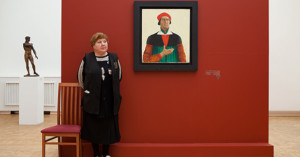
In Russian art museums, older ladies are hired as guards for the pieces in the collections. Photographer Andy Freeberg noticed that these women were a constant part of the visitors' viewing experience, silently hovering near the artworks as they're being enjoyed. Finding these women "as intriguing to observe as the pieces they watch over", he decided to photograph them alongside the works they're tasked with guarding. The project is titled "Guardians of Russian Art Museums".

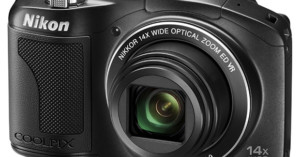
Nikon Coolpix L610: A Compact That Turns AA Batteries Into a Feature

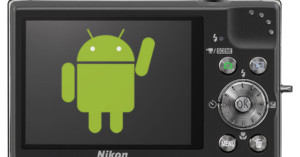
Remember the days when portable electronic devices were mostly all powered by AA and AAA batteries? Consumers had to regularly purchase new batteries to keep their gadgets juiced -- a big sink for your hard earned money. When rechargeable batteries started becoming ubiquitous, they were touted as a feature for saving both time and money. All you had to do was plug your camera into the wall (or your battery into a charger) and a few hours later you were recharged.

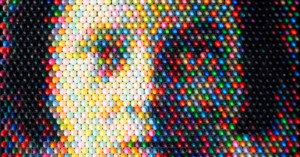
Photographs Recreated Using Crayons

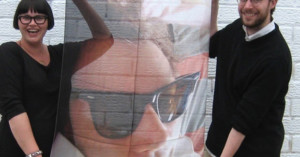
Using a novel technique he developed himself, artist Christian Faur turns photographs into giant prints created by using crayons as pixels. When exhibited, the size and three-dimensional nature of the work make for an interesting viewing experience for visitors. The space appears to be full of photographs, but the images turn into abstract and colorful sculptures as the visitor gets closer. Each piece is composed of hundreds of crayons of different colors.

Make a $2 DIY Motion-Activated Alarm for Your Camera Bag

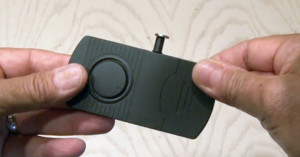
For people looking to protect their belongings from theft in public places, there are bag alarms out there that can alert them (and everyone around them) if someone tries to pick up their stuff. DIY hacker Kip Kedersha (kipkay on YouTube) recently came up with a clever way to make one of these alarms for just $2.

Scientists Shoot a 281-Gigapixel Photo of a Tiny 1.5mm Embryo

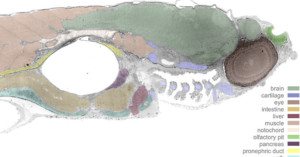
Gigapixel images are usually used to capture tiny details in expansive scenes, but scientists in the Netherlands recently created one that shows microscopic details in a tiny subject. Using a technique called virtual nanoscopy (a new relative of microscopy?), the researchers created a massive 281-gigapixel image of a 1.5-millimeter-long zebrafish embryo.

Win a Lensbaby Creative Effects System Kit Worth $540

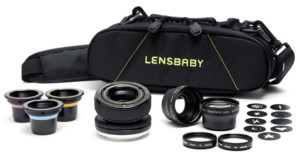
Ready for another giveaway? This week we're giving away an awesome Creative Effects System Kit by Lensbaby. The kit for Canon and Nikon DSLRs includes the popular Composer Pro lens, a bag, interchangeable optics for different effects, and tons of accessories (including a kit for creative bokeh shapes!). The package is worth $540.

Reverse Image Search Returns Nearly Identical Photo from 36 Years Ago

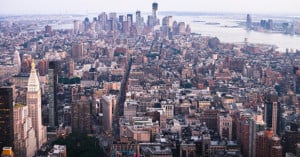
While visiting beautiful New York City earlier this year, an Australian photographer named Kiernan traveled to the top of the Empire State Building and snapped a photograph of the cityscape. After returning home, he decided to do a reverse image search on Google just to see what he might find. He was surprised to discover that the top result was a nearly identical photograph that was captured 36 years ago.

Silly Photographs of Dressed-Up Bulldogs from 1905

When you think about photographs from the early 1900s, you probably think about boring monochrome photos of locations or portraits of people with humorless expressions and rigid poses. Photographs costed more in terms of time, effort, and money back then, so photographers didn't waste them on silly photos, right? Wrong.

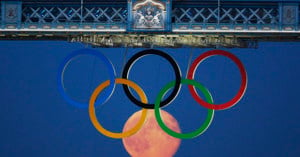
The Full Moon Photographed with the Olympic Rings on Tower Bridge

Reuters photographer Luke MacGregor doesn't know much about astronomy, but he had the idea recently of photographing the full moon rising up into the Olympic Rings found on London's Tower Bridge. Armed with a phone app that informed him of moonrise times, he spent two evenings trying and failing to create the photo. Finally, on the third evening, he succeeded: …

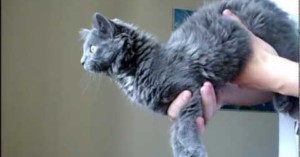
A Cat with Built-In Image Stabilization

A couple years ago we reported on the amazing fact that chickens have image stabilized heads, and shared some interesting "research" into using chickens as camera stabilizers. It turns out birds aren't the only creatures with IS systems built into their hardware: cats have it too!

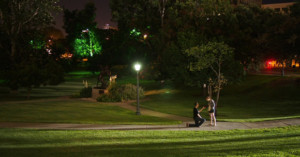
Stealthy Photo of Marriage Proposal Goes Viral on the Internet

Photographer Patrick Lu always carries around his Olympus OM-D EM-5 camera around. "Every day. Everywhere," he says. That came in handy last week, when Lu and a friend were at the capital in Austin, Texas. His eagle-eyed friend somehow noticed that a man nearby was about to propose, and Lu was able to snap some stealthy photos of the event, including the beautifully framed one above.

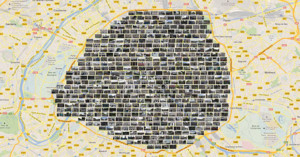
Location Recognition for Photographs by Looking at Architecture

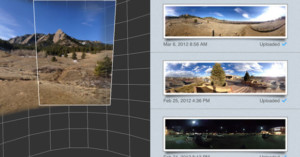
Cameras these days are smart enough to recognize the faces found inside photographs and label them with names. What if the same kind of recognition could be done for the locations of photographs? What if, instead of using satellite geodata, the camera could simply recognize where it is by the contents of the photographs?

First Photo of a Canon 135mm f/1.8L IS?

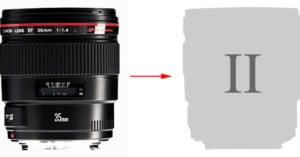
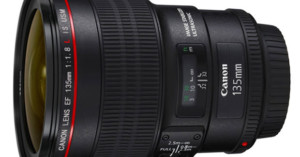
This image of a Canon 135mm f/1.8L IS lens was posted to Chinese forum Xitek. Most people seem to agree that it's a Photoshop job, since the details on the rim of the lens don't follow the curve of the lens very well. The question is therefore whether the image is some kind of early-stage mockup of a real lens, or simply a big fat hoax.

First Color Photo of Mars by the Curiosity Rover

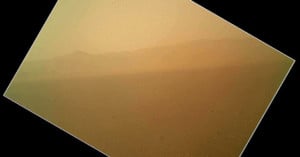
After shooting black-and-white landscape photos for a day, everyone's favorite Martian robot photographer is now dabbling in color photography. NASA's Curiosity rover beamed back its first color photo today, showing the rim of its new crater home.

The Over-Saturated World of Fashion Street Photography

Scott Schuman, or The Sartorialist, made it big in the blogging, photography, and fashion worlds by having his fashion street photography blog become an Internet sensation. If you think he's unique in his subject matter, however, boy are you mistaken: he's simply one of the most famous.

Lost Photos: An App That Searches Your Emails for Forgotten Pictures

Email services offer massive amounts of storage these days: so much that we no longer need to worry too much about deleting photos to make room for new emails. While this is convenient, it also makes it easy for your email account to turn into the equivalent of a messy attic: photos inside often disappear out of sight and out of mind.

How NASA’s Curiosity Rover Will Shoot Photos of Mars

NASA's Curiosity rover landed on Mars this morning with much fanfare here on Earth. The photo above is one of the first photographs snapped by the rover and beamed back to Earth. Captured through a fisheye wide-angle lens, the landscape photo hows a gravel field in the foreground and the rim of the Gale Crater (the rover's new home) in the distance.

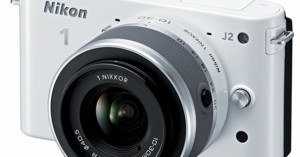
Nikon 1 J2 to Look Virtually Identical to the J1, 11-27mm Lens Coming

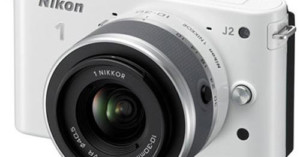
Nikon is reportedly preparing to launch a followup camera to its Nikon 1 J1 mirrorless camera, to be called -- you guessed it -- the J2. Digicam info published the above leaked photograph of the camera ahead of its rumored mid-August announcement. Aside from the new J2 branding, the camera looks like it'll be virtually identical to its predecessor.

Portraits of Lost Olympic Tourists

The subjects in portrait projects are often selected for something they all have in common. The people seen in Brooklyn-based photographer Caroll Taveras' project You Are Here have this in common: they were lost at the Olympics. Commissioned by Mother London, Taveras finds tourists at the Olympic games who are hopelessly lost, and then guides them to their desired destinations in exchange for a portrait.