Posts Tagged ‘technology’

Canon Unveils a 35mm Full Frame Sensor for Video That Can See in the Dark

Canon Unveils a 35mm Full Frame Sensor for Video That Can See in the Dark canon35mmsensor

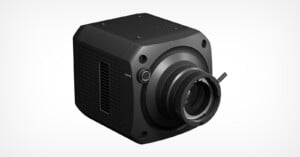
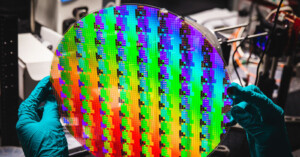
Frustrated with how your camera’s CMOS sensor performs in dimly-lit situations? Canon has just announced a new CMOS sensor that’ll put a smile on your face. It’s a new 35mm full-frame sensor that’s designed specifically for capturing video in “exceptionally low-light environments.” Canon claims the sensor can capture high quality video with high-sensitivity while keeping noise very low.

Here’s how sensitive the new sensor is: it will reportedly be able to see meteor shows, rooms lit with incense sticks, and scenes lit only by moonlight.
Read more…

Smaller and Faster Capacitor May Bring a Xenon Flash to Your Next Smartphone

Smaller and Faster Capacitor May Bring a Xenon Flash to Your Next Smartphone capacitor1

Lenses and sensors weren’t the only camera components miniaturized and dumbed down when digital photography jumped over into the world of smartphones: flashes did too. In order to fit everything into a tiny package, smartphone makers have largely opted for LED flashes in their phones rather than the bigger and bulkier xenon flashtubes found in proper digital cameras (a notable exception is the Nokia PureView 808). That may soon change.

Scientists in Singapore have developed a new capacitor that may lead to more powerful xenon flash units replacing the LED flashes found in consumer smartphones.
Read more…

Spinning Image Stabilization Gets Smooth High-Flying View from a Football Cam

Kris Kitani, a postdoctoral research fellow at Carnegie Mellon University, has developed a unique type of image stabilization that can actually transform the footage from a camera attached to the side of a spinning football from nausea inducing, to smooth fly over.

The video at the top shows the footage he collected when he attached a GoPro to the side of a football. On the left you have the un-altered version, and on the right the version with his software applied. Read more…

Flexible Transparent Sensor Could Some Day Revolutionize Digital Cameras

Flexible Transparent Sensor Could Some Day Revolutionize Digital Cameras flexiblesensor1

A new breed of image sensor is being created by researchers at Johannes Kepler University in Linz, Austria that may some day revolutionize the way we take pictures. Unlike the typical image sensor we’re used to seeing, this one is a thin, flexible, transparent sheet. Read more…

PixelTone: A Futuristic Image Editor That Lets You ‘Shop Photos Using Your Voice

PixelTone: A Futuristic Image Editor That Lets You Shop Photos Using Your Voice pixeltone0

Talking to computers is one of the exciting new trends that’s emerging in the tech world, and in the future we may find ourselves casually talking to our gadgets as we go about our lives. One application of this that you may never have considered is photo editing: what if you could post-process your photographs simply by telling an image editor what you would like done to the images?

That’s exactly what scientists are currently working on, and the research is further along than you might think. They’re already playing around with a prototype version of an app — one called PixelTone.
Read more…

Ricoh Shows Off Camera That Captures a 360-Degree Photo in One Shot

At the CP+ show in Japan, Ricoh is showing off a new camera prototype its developing that can capture full 360-degree immersive photographs with a singel push of the shutter. The omnidirectional camera looks like a cross between an electric toothbrush and a hammerhead shark. Lift it up into the air, press a button, and it will capture an image that shows every direction around you.
Read more…

Panasonic Doubles Color Sensitivity in Sensors with ‘Micro Color Splitters’

Panasonic Doubles Color Sensitivity in Sensors with Micro Color Splitters panasonicmicrosplitter1

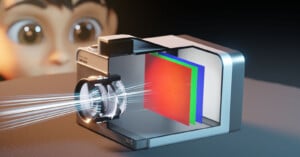
Panasonic is claiming a major breakthrough in the world of camera sensors, saying that it has doubled the color sensitivity with a new technology called ‘Micro Color Splitters.’
Read more…

Special Camera Can Capture 3D Photos of Falling Snowflakes

Special Camera Can Capture 3D Photos of Falling Snowflakes masccam

Scientists at the University of Utah are using what’s called the Multi Angle Snowflake Camera (MASC) to shoot stereoscopic photographs of snowflakes as they fall to Earth.
Read more…

Scientists Store Digital Photograph on Tiny Speck of DNA

Scientists Store Digital Photograph on Tiny Speck of DNA dnamemory

Could memory cards and hard drives one day store massive numbers of digital photographs on DNA rather than chips and platters? Possibly, and scientists are trying to make that happen.

Last year, we reported that a group of researchers had successfully stored 700 terabytes of data on a single gram of DNA. The data being stored that time was a book written by one of the geneticists. Now, a new research effort has succeeded in storing something that’s a bit more relevant to this blog: a photograph.
Read more…

Fujifilm’s Moiré-Killing X-Trans Sensor is a Throwback to the Days of Film

Fujifilms Moiré Killing X Trans Sensor is a Throwback to the Days of Film fujifilmxtransthrow

Fujifilm’s new X-Trans sensors diverge from the traditional way CMOS sensors are designed by using an irregular pattern of red, green, and blue pixels. This allows the sensors to eschew the standard anti-aliasing filter, eliminating moiré patterns without putting an extra component in front of the sensor. Roy Furchgott over at The New York Times has an interesting piece on how the new tech is inspired by Fujifilm’s glory days in the film photography industry:

Old fashioned analog photographs didn’t get a moire pattern because the crystals in film and photo paper aren’t even in size and placement. That randomness breaks up the moire effect.

So Fuji built a new sensor employing what it knew from the film business. Instead of using the Bayer array, it created a pattern called the X-Trans sensor which lays out the red green and blue photo sensors in a way that simulates the randomness of analog film.

Furchgott does a good job of explaining the new sensor design (and its benefits) in an easy-to-understand way.

Old Technology Modernizes a Camera Sensor [NYTimes]