In the video above, I’m shooting with a DSLR (a Canon 6D in this case) and everytime I snap off a shot it goes instantly to a web gallery… from the road anywhere. I got the idea while contemplating doing live video streaming for the first time this year. Not wanting to mess with another camera as I stormchase, I thought, it’d be cool to do the same thing but have the live page be for DSLR photographs. Read more…
Roberto Baldwin of Wired writes about how an SF man felt the fury of the Internet recently after pretending to be a bus-smashing rioter photographed after the SF Giants won the World Series:
The photo in question went viral pretty quickly, at least around the Bay Area. Reddit has a thread dedicated to finding the man in the photo [...] San Francisco resident Tony Lukezic saw it Monday night after some people pointed out that he looked like the vandal. “A couple of my buddies said, ‘Hey, this guy looks like you,’” Lukezic told Wired. Instead of just laughing the resemblance off, Lukezic switched out his profile picture with the offending photo and began to boast that he was indeed the bus smasher. It seemed funny right up to the point that someone took a screen grab of conversation under the profile pic and posted it to Twitter.
A few hours later, the screen grab wound up on the Facebook page of a San Francisco nightclub called Red Devil Lounge, where commenters began posting Lukezic’s phone number, information about what sort of car he drives, and pictures of him and his son. He also started receiving anonymous messages from outraged citizens.
Nikon made a big splash in the compact camera world yesterday by being the first major camera manufacturer to bake Android OS into a compact camera, the Coolpix S800c (Polaroid released one a while ago, but it’s hardly a major player at the moment). The S800c looks and sounds interesting as far as specs and press releases go, but what’s it actually like to use a camera that could be mistaken for a smartphone? Read more…
It looks like the digital camera industry is moving quickly towards building mobile operating systems into its products.
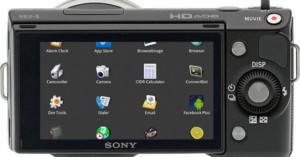
Yesterday we reported that a soon-to-arrive Nikon camera will be powered by Android, and today rumors have emerged that Sony will be offering something similar in its NEX line of mirrorless cameras. Read more…
There are currently 22 “generic” top level domains (e.g. .COM, .NET, .ORG), but that’s about to change. ICANN, the authority behind the Internet’s domain name system, began accepting applications for new gTLDs, meaning we may soon see web addresses that end in things like .PARIS, .FERRARI, and .KIDS. Yesterday was “reveal day” — the day on which the full list of domain proposals and applicants was published. The reveals some pretty interesting clues on some photo-related domains that might soon hit the web. Read more…
Photographers have already lodged complaints against the security firm that tried to prevent them from taking photos of the Olympic sites from public land, but it seems that even stricter rules will be imposed on ticket holders once the games begin. According to a freelance photographer named Peter Ruck, the Olympic organizing committee Locog intends to prevent attendees from uploading images and videos captured at the games to social networks. Read more…
Here’s a great 6-minute video in which PBS Off Book examines the impact three Internet phenomena — Kickstarter, Creative Commons, and The Creators Project — are impacting the world of art.
Traditional funding models are dissolving, new forms of expressing ownership have arisen to accomodate for remix culture, and artists are finding ways to connect physical art experiences and traditions to the internet. In the digital era, the experience of art from the perspective of the artist and the art audience is shifting rapidly, and bringing more people into the creative process.
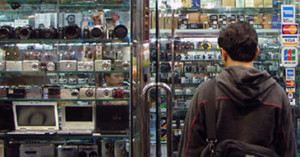
Here’s another sign of the changing times: so many camera shoppers are turning to the Internet for deals that some cameras shops are now charging fees for customers who want to test out their cameras. The Daily Telegraph writes,
Camera House Caringbah owner Craig Mackenzie charges a $30 “explanation fee” to customers looking to test out his high-end cameras.”I’ve got to pick the people who won’t screw me over,” Mr Mackenzie said.
“If I pick the wrong one, he’ll waste half an hour of my time and will then ask me to write it all down.”
A survey conducted by the paper of more than 1000 people also revealed that 61% had tried out products in local stores before actually buying them online, and half of those people had done so more than five times.
When viewing other people’s photographs online, more often than not there’s a way to comment and share your thoughts. While photo-sharing sites seem to have nicer commenters than a site like YouTube, there are still plenty of people who seem intent on putting people down and filling the Interwebs with vitriol. If that’s you, then here’s a video you definitely need to see.
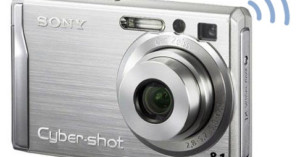
It seems like it’s only a matter of time before compact cameras are made to be directly connected to the cloud. According to social gadget website gdgt, Sony is currently working on a digital camera (i.e. not a smartphone) that has a built-in 3G modem that would allow users to easily upload and share photographs using popular services (e.g. Facebook, Flickr, Twitter). There would likely be some level of free service — such as a couple dozen uploads per month — after which users can pay for more use.
One of the gripes people have about smartphone photography is the fact that the devices generally have lenses and sensors inferior to compact cameras. If compact cameras were to gain things like Internet-connectivity and third-party apps, it could completely transform the way the general population uses them.