ChatGPT’s New AI Image Generator Looks Scarily Good
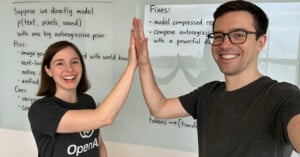
OpenAI has launched a new AI image generator that is a technological step forward, and some of the examples the company shared achieve a frightening degree of verisimilitude.
OpenAI has launched a new AI image generator that is a technological step forward, and some of the examples the company shared achieve a frightening degree of verisimilitude.
Meta is considering charging Facebook and Instagram users for an ad-free version in the U.K. after a landmark privacy case in which the company agreed to stop targeting ads at a British woman.
Google has started rolling out "Project Astra," an AI that can see via a person's smartphone camera, enabling it to answer questions about the world around it.
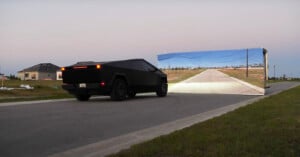
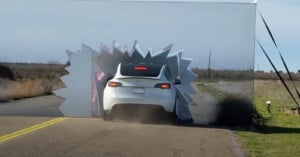
Another YouTuber built a Wile E. Coyote-style photo wall to find out whether Teslas can be fooled into crashing into them, the way Mark Rober so spectacularly did last week.
Apple is reportedly considering adding cameras and associated Visual Intelligence features to upcoming Apple Watch models.
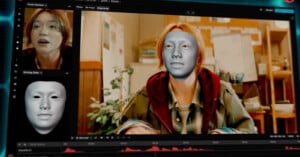
Spain has approved a bill that imposes fines of up to $38.2 million for companies that do not properly label AI-generated content, including deepfake images and videos.
Artificial intelligence (AI) is playing an ever-increased role in television and movie streaming. Thanks to AMC and AI company Flawless, AI is coming to theaters, too. Swedish science fiction movie Watch the Skies arrives in American theaters in May, with AI-powered editing that promises to match the actors’ mouths with the English dub.
Meta is testing an Instagram feature that suggests AI-generated comments for users to post beneath other users' photos and videos.
U.S. prisoners are being given virtual reality (VR) headsets to help them deal with solitary confinement.
Canon is developing 3D photo technology that combines Canon's Dual Pixel CMOS image sensors with bespoke software to make 3D data creation more accessible and much more straightforward.
Over 400 Hollywood creative leaders wrote an open letter urging the U.S. government to stop companies like Open AI and Google from weakening copyright rules.
Instagram has changed a great deal in the last 15 years and, as has been well-documented, it has moved away from being a photo-sharing platform to one that looks a lot more like TikTok.
A unanimous federal appeals court ruled that pictures generated solely by machines do not qualify for copyright protection.
In a concerning development, people have been using a new AI model released by Google to remove watermarks from photos.
Nvidia announced a new series of professional-grade GPUs and AI-powered tools for PCs and workstations. The RTX Pro Blackwell series GPUs are designed for demanding professional designers, creatives, and developers.
Famous YouTube creator and former NASA engineer Mark Rober, who provides his 65 million subscribers with scientific entertainment videos, put Tesla's vision-based safety features up against a LiDAR system, and the results, although arguably flawed, highlight the limitations of vision-based autonomous vehicle systems.
A new film, television, and gaming studio is aiming to produce more than 30 projects in the next three to four years with tiny budgets, for Hollywood at least.
OpenAI has urged the US government to give the company unrestricted access to copyrighted material to train its AI models and points to China as the reason why it should escape copyright laws.
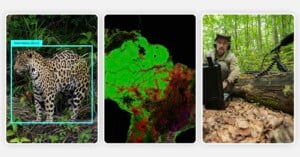
Google has released its AI model "SpeciesNet" designed to identify animal species in trail camera photos to the public.
TikTok will block teens from using the video app after 10 P.M. and instead wind them down to sleep with calming music and meditation exercises.
A new generative AI video model made for high-end film and animation studios has been released but unlike many machine learning programs, this one claims it has been exclusively trained on ethical data.
Despite its embattled status, TikTok still boasts nearly two billion monthly active users, making it an excellent platform for photographers looking to showcase their work.
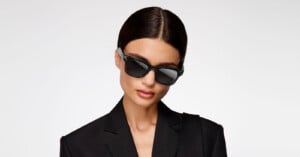
Meta has introduced a limited edition version of its popular smart glasses that can record photos and video: the "Ray-Ban Meta x Coperni Limited Edition Glasses."
Netflix used AI technology to upscale a 1980s sitcom, but the result has left viewers horrified. The streamer's HD remaster is filled with malformed hands, garbled text, and warped faces.
Among the news sites reporting on SpaceX's latest rocket explosion this week was "Science Magazine", a website where all the content, including the pictures, is AI-generated.
Minnesota is considering a landmark law to block widely accessible "nudification" technology and apps that use AI to create explicit images from regular photos without consent.
Carl De Keyzer made his name by capturing very real photographs from the Soviet Union, India, and the Belgian Congo. However, for his most recent project, De Keyzer swapped the camera for artificial intelligence imaging tools.
While Pinterest may not be an obvious platform for photographers, there are still plenty of them on there. For those shooters, they may want to take note of the recent news that the boards-based app will train AI models with user content.
Dutch startup LiveDrop is increasing the size of offline file transfers enabled by its app on mobile devices via special QR codes that don’t require the two devices to connect to each other.
Amazon is testing AI-powered dubbing for select foreign movies and TV shows on its Prime Video streaming service.
President Donald Trump says he will "probably" extend the deadline for the sale of TikTok -- as reports suggest there have still not been any negotiations between the app's Chinese owner and prospective buyers.
Apple has launched an appeal to overturn an order by the UK government demanding backdoor access to all content Apple users upload to iCloud, including users outside the UK.
Alongside the new MacBook Air, Apple announced its most powerful Mac ever, the M4 Max-powered Mac Studio.
Social media companies have expressed outrage that YouTube is exempt from the forthcoming ban in Australia that bars anyone under the age of 16 from using platforms like TikTok and Instagram.
As Tim Cook teased online earlier this week, it is the week of Air at Apple. Following an upgraded iPad Air yesterday, Apple announced a new more powerful MacBook Air today, which now sports Apple's latest M4 chip, a new sky blue colorway, and a new lower starting price.
YouTube has warned creators about an AI-generated video of the company's CEO that is being used in phishing scams.
Reddit co-founder Alexis Ohanian has joined a bid to buy TikTok -- as the popular video app faces a divest-or-ban law because of national security concerns in the United States.
A judge's smiling photo was "digitally altered" for a television attack ad to make her look like she was frowning.
Do you remember when Boris Eldagsen won a Sony World Photography Award with an AI image? And do you remember when photographer Miles Astray won an AI image award with a real photo? Well now the two of them have teamed up for an exhibition pitting photography against AI.
TikTok, Imgur, and Reddit are being investigated by a U.K. watchdog over whether its algorithms serve inappropriate or harmful content to children.
A Meta official has revealed the company has fired 20 employees for leaking confidential information.
A start-up has developed a matchbox-sized wearable camera that "sees" for visually-impaired people.
Scientists used remote cameras over 10 years to capture unprecedented footage of polar bear cubs emerging from dens for the first time.
Meta has apologized after violent videos showing people being killed or badly injured were recommended to Instagram users yesterday (Wednesday).
Alibaba, the Chinese tech giant known for its e-commerce operations, is giving people free access to its generative AI model capable of creating realistic videos and images from text and image prompts.
A new photo app called Yope -- which has recently become popular among Generation Z -- lets users share images to private groups.
Donald Trump is no stranger to AI video and has turned to the format once again to release a controversial video outlining his vision of Gaza.
Researchers have developed a new CAPTCHA test that uses AI-generated optical illusions that are easily recognized by humans but are undetectable to other AI bots.
Google's latest AI video generator Veo 2 will cost 50 cents per second of output which adds up to $30 per minute or $1,800 per hour.
Photographers rejoice: a new photo-sharing app is now available on the App Store and it has nothing to do with Meta or the head of Doge.