PetaPixel’s Bold Camera Predictions for 2026
Now for the fifth year in a row, PetaPixel has gathered its team together to gaze into the future and see the facts, the truths, that will come to pass in the camera industry in 2026. As always, we are prepared to be very wrong.
The holiday season is here, and the OM SYSTEM Holiday Savings Event continues. Right now, you can save up to $400 on many of the cameras and lenses that OM SYSTEM makes, including the popular travel camera, the OM-3. This compact powerhouse packs the same sensor and autofocus as the flagship OM-1 Mark II into a retro-styled body that weighs less than a pound. It’s the camera that makes you want to actually bring your camera everywhere.
But that’s not all: right now, almost every lens in the M.Zuiko lineup is on sale right now. Whether you’re building your first OM SYSTEM kit or adding to an existing collection, there’s never been a better time to go light without compromising on image quality. Check out the full lineup at explore.omsystem.com/petapixel or visit your local authorized OM SYSTEM retailer today!
As we explain every year, thanks to our constant inundation with technology, imaging, and art news, we at PetaPixel get to talk about some of the coolest tech and most interesting trends all the time and can’t help but speculate on what is going to happen next. And while we are very informed on the topic given that we are steeped in it on a daily basis, that probably doesn’t mean we’ll be right by much more than anyone else would be (like how being knowledgeable about football doesn’t mean you’re going to draft a great fantasy team), but it’s still a blast to discuss.
Checking Our Work
In our annual tradition, we’re going to look back at our previous year’s predictions and see how well we did. Were we right, or were our predictions too bold?
Prediction: Every major camera company is going to release a point-and-shoot camera in 2025.
Result: Wrong – Not terribly wrong, but still wrong. This was Becca Farsace’s lone prediction for 2025 and while we did see a new point and shoot from Panasonic and the return of the PowerShot from Canon, you can’t really argue that the Sony RX1R III fits the bill and Nikon didn’t budge on the issue at all.
Prediction: Canon will release a high resolution version of the R1
Result: Mega wrong. This prediction was quickly quashed in early 2025 when Canon flatly told PetaPixel that it had no desire to make a high resolution R1 at all — ever. So not only did it not come in 2025 as predicted, it never will.
Prediction: Another company will release a 35mm film camera, and it’ll probably be Fujifilm
Result: Another swing and a miss. We did see some new affordable 35mm film cameras (from the likes of Lomography and Reto), but nothing from a major camera manufacturer and most certainly not Fujifilm. That said, the X half came out this year, so maybe we get some pity points for that one?
Prediction: Nikon will announce the Z5 II and it’ll use the same sensor as the Z6 II
Result: Correct! We finally got one right. Nikon did release the Z5 II and it does use the same sensor as the Z6 II. It’s also a fantastic little camera that’s probably the best value for the dollar in its class.
Prediction: OM System will announce a new camera and it will be a successor to the OM-5 (and EM-5 Mark III)
Result: Correct — but we don’t feel great about this one. Yes, we were right, but the word “successor” is doing a lot of heavy lifting in that prediction. While it is technically a new version of the OM-5, it is in name only as the components of the camera are almost entirely the same. In its segment, it’s still a fantastic value since very few camera brands are competing with this level of camera at its price, but we sincerely believe that OM System cannot keep releasing the same camera in a new coat of paint and call it good for much longer.
Prediction: Fujifilm will make a big push for faster scanning sensors in the GFX range, probably lower megapixels.
Result: Wrong. We didn’t get a new GFX this year at all, other than the Eterna 55 and even there the sensor speed didn’t change from the expected.
Prediction: The Fujifilm GFX Eterna won’t be the only medium format cinema camera next year.
Result: Wrong again. The GFX Eterna remains the only new medium format cinema camera and it currently holds the crown as the cinema camera with the tallest sensor on the market.
Prediction: Apple will release photo-editing software that sits between Adobe Photoshop and Lightroom
Result: Wrong. Apple has been very quiet since its acquisition of Photomator. Nothing happened this year with that at all.
Prediction: Sigma’s full-frame Foveon camera will finally arrive.
Result: Wrong, and it doesn’t seem like we are any closer to a finished sensor in 2025 than we were in 2024 or even 2023. We’re done predicting anything with this project for a while, as it feels like we are at a minimum three years out on anything substantial — and it is likely to be longer.
Prediction: Sony will launch the a7R VI and it will feature a jump to 80-megapixels.
Result: Wrong. Sony did not give us a new a7R-series camera in 2025, but it’s only a matter of time. We actually didn’t even predict its arrival in 2026 since it feels like a gimmie at this point.
Prediction: Pentax will announce a new film camera as under development.
Result: Very wrong. Not only did Pentax not announce a new film camera, the man responsible for creating the Pentax 17 left the company entirely. That doesn’t bode well for future analog projects from Pentax.
Prediction: Nikon will make its third special lens model to join the Plena and the Noct.
Result: Wrong again. Nikon could have named the 35mm f/1.2 S something special — it’s that good — but elected not to. Alas, the Noct and the Plena remain the only two named lenses in Nikon’s line.
Bold Predictions for 2026
Last year’s results are our worst ever as far as accuracy is concerned. Out of 11 predictions, only two were right. But we are going to shake off that loss and move on to 2026 where we think we’ve got a better handle on what’s coming. We also called in a ringer, DPReview‘s Richard Butler, to throw in a batch of insights, so our confidence is riding high.
1) Despite firmware updates, we’ll see a Z9 II with content credentials and the next-gen of stacked CMOS sensor.
Both Richard Butler and I feel strongly that despite yet another major firmware update dropping for the Z9 just this week, we’ll still see a Z9 II come before the Olympics next year. Butler says that it will include a next-generation stacked CMOS sensor and also come with content credentials, the latter of which isn’t in the Z9 due to what he believes is a hardware limitation that Nikon just can’t crack.
This isn’t what we would classify as a terribly “bold” prediction, mostly because the Z9 is getting quite long in the tooth and it doesn’t do very much to stand out from the much less expensive Z8. Nikon was relatively quiet on the camera from in 2025, so it makes sense that a bigger, badder, bolder camera is just over the horizon.
2) Nikon will release the first “S” camera of its mirrorless era: a Z6 IIIs that integrated dual gain output.
Nikon is in a bit of an odd place with its mid range, full-frame camera lineup because it brought out the Z6 III, which was a fantastic camera, but there was quite a bit of an image quality penalty moving to that partially stacked sensor in terms of dynamic range. It’s been discussed to death and we’ve seen other companies now being able to work around that. While no one will confirm on the record, we’re fairly certain that Panasonic with its S1 II and Sony with its a7 V are using the speed of that sensor and leveraging dual gain output (DGO), leaving Nikon a bit behind.
So, we suspect we will see Nikon’s first S-series camera in a very long time. A Z6 IIIs, which will, when using the mechanical shutter, do the image combination to improve dynamic range will be the main benefit with very few add-ons beside that because the rest of the camera’s still extremely competitive.
3) Fujifilm will launch XTrans VI with the X-Pro4
This one might sound farfetched to many because of how long the X-Pro series has languished, but 2026 will see not only a new XTrans sensor but it will launch inside of a new X-Pro. Fujifilm has hinted, in various conversations with PetaPixel, that it wasts the X-Pro to be special. Just putting the latest generation chip in there wasn’t enough. So, it never made sense to see that camera in what is clearly the tail-end of the XTrans V era.

We think the new XTrans will probably not see a resolution bump, but it will see a speed increase that will make it viable not only for a camera like the X-Pro4, but also for Fujifilm’s high-end hybrid X-H series (which will drop later in the year).
4) Sigma will finally be allowed to release lenses for Canon full-frame RF or Nikon full-frame Z-mount (or both).
This is the year that Nikon and Canon are going to crack — or at least one of those two companies — and allow Sigma to make full frame, fully compatible glass for their full frame mounts, not just their APS-C lineup. There is a lot of public pressure out there and the second half of this year, especially, everybody is recognizing that costs are getting really high. Sigma does give you good value for the dollar.
Canon released that affordable 45mm lens, so it is making an effort to be more affordable and they clearly recognize the issue. So with that said, they might be a tougher nut to crack. Nikon might have its hands tied contractually. Both are in a tough position, but in 2026, someone is going to crack. And one when does, so will the other.
5) Canon will release a successor to the G7x or the G1x.
One manufacturer, surely, has to make a new enthusiast-level compact camera — not just one from 10 years ago with a new screen and a USB-C port. Of the possible options, Canon feels the most capable with either a G7x or a G1x successor, but with actual controls to use it for photography. We can’t see Nikon doing it because of the bad experience with the DL and Fujifilm seem pretty tied to the success of the X100 series. Panasonic and OM System both haven’t seemed willing, which only leaves Canon.
6) OM System will finally bring out its first original camera since spinning off from Olympus, and it’ll probably be a TOUGH.
To this point, OM System has only released one truly new product since it was spun off of Olympus: the 50-200mm f/2.8. The argument could be made that the OM-3 is a truly new camera, but we think that 2026 will bring the first truly novel camera design that is actually new from the ground up. That said, we don’t think it will be a mirrorless camera.

Instead, we predict it’s going to be a TOUGH series camera, completely redesigned. Whether they move to a Type 1 sensor or just dramatically improve the system by moving to something akin to what we see in modern smartphones remains to be seen, but OM System has a lot of cool technology that would work great in a waterproof camera. Put a fast sensor in a compact camera and make it be very capable, able to do high resolution shooting to improve the dynamic range and the detail, that sort of thing. Basically, everything OM System has access to, we see it dumping into one compact TOUGH camera. We think there’s a huge hole in that market right now and it would sell very well, even if OM System had to increase the price substantially.
7) Nikon will bring back the Z7 series
We’ve changed our tune. Originally, we didn’t see a space for the Z7 in Nikon’s line since the Z8 exists, but looking at it now, there is a notable gap between the Z6 III and the Z8 and Nikon doesn’t have a photography-first camera in its lineup anymore. It’s a very hybrid-focused company, but there is something to be said for having a camera that excels at still image quality as a sort of “jewel in the crown.” Hitting either 60 or 80 megapixels would with a photo-first camera would finally stand a chance at converting D800-series photographers that have refused to upgrade to Nikon’s mirrorless system.
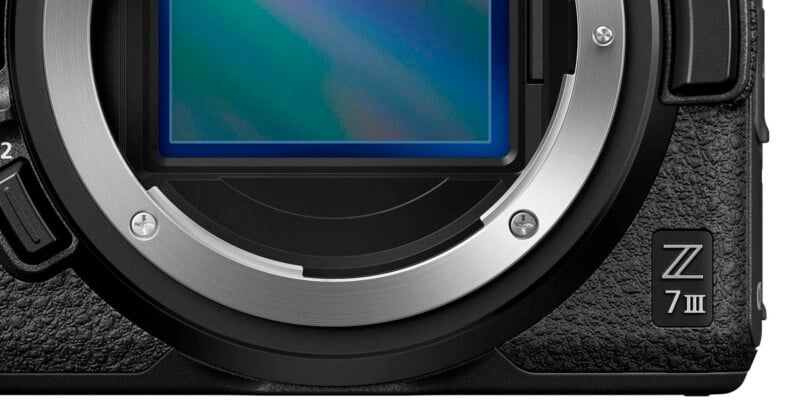
A problem Nikon regularly has with its cameras is that it releases something and it’s a little bit better or about the same for less than another camera that’s in its line. It has to stop doing that and the Z7 III will be perfect there. But the monkey’s paw will curl and it will have a vari-angle screen, so the photographers will still have something to complain about.
8) A Chinese-based company will give us an Epson RD-1 spiritual successor.
We think one of the manufacturers in China, and we don’t know which one, will make a stylish digital rangefinder that uses the M-mount. The large majority of manufacturers that have been kind of taking risks to bring back some interesting products have been the Chinese manufacturers — like Mint for example. We think a very stylish digital rangefinder is a no-brainer and we are actually surprised none of them have tried it yet.
Someone has to give photographer a spiritual successor to the Epson RD-1, and we think that will finally happen.
9) Micro Four Thirds will finally remember its strength: compactness
This one is more of a hope than a prediction, because it seems like Micro Four Thirds has lost its way. One of the appeals of the system is that it is small and travel-friendly and there has not been a new camera that embraces these factors in years. It’s time. Panasonic or OM System can release a camera that is smaller than the Fujifilm X100VI but brings interchangeable lenses to the party and give photographers a compact, enjoyable camera that is capable of much more than a fixed lens compact. Panasonic doesn’t seem interested despite the massive outcry for the return of the GM5, so… OM System, this one is in your court.
On a related note…
10) Panasonic will reuse the S9 body but stick a fast Micro Four Thirds sensor in it.
While not as compact as we would like to see in the prediction above, we think that Panasonic — a company very fond of reusing its existing camera bodies across sensors — will take the cute S9 body and replace the full-frame sensor with a Micro Four Thirds one, rendering the system a lot more usable for more people.
Panasonic has a history of this: if you look at the G9 II, it’s a Panasonic S5 II body with a Micro Four Thirds sensor in it. Adding in the 25-megapixel sensor (which has a substantially faster read speed than the S9’s current full-frame sensor) and Panasonic would inject a little bit of life into Micro Four Thirds with very little research and development. We really get the impression that Panasonic doesn’t want to sink more new resources into the small sensor format, but it could give a little bit of validity to the line without spending much money. It’s something we think Panasonic should have done when it originally launched the S9, but it’s not too late now.
11) Fujifilm will continue the tradition of “weird” started by the X half and give us a fixed-lens, double-wide APS-C panoramic camera.
While it is not for everyone, we think Fujifilm views the X half as a success. It sold very well, especially in Japan, and that rewarded the company for trying something new and unusual. I think that will have emboldened the brand, and we’ll see another swing at an unusual camera, but further up-market: the return of the TX series.

While it is more commonly known as the Hasselblad XPan, the Fujifilm TX-1 (and later TX-2) used medium-format glass in front of a double-wide slice of 35mm film with the option to come back to standard 35mm frames if so desired. It’s a wonderful little system that is still quite popular today and it deserves a digital successor. Fujifilm would just need to put two of its current 40-megapixel sensors side by side and suddenly it would be one of the most compelling panoramic cameras ever made.
While it would be nice to see interchangeable lenses (and even moreso, support to use the old TX and XPan lenses), it’s more likely that it would feature a fixed lens since that would be easier to manage and be less of a manufacturing risk. This camera would be insanely popular.
12) AI is coming for your camera.
At least one major camera brand will try to integrate more AI into a camera to the point that it is capable of evaluating a scene and not only picking the best exposure, but also the best subject. Subject detection already works well, but the photographer currently has to decide what settings to enable to get the best autofocus for a given scene and also what subject to focus on.
The camera brands will give it a cool new name but they won’t market it as taking control away from the photographer, even though that’s essentially what it’s doing. Even though this concept won’t be popular, someone will try it.
13) Panasonic will bring back the S1H series, but it will be framed as an FX3 competitor.
It has been weird to see Panasonic cede the mid- to high-end video space to Sony when it was first out of the gate with the S1H years ago. Panasonic is, and has been for some time, the best at providing videographers with the most options and the S1 II remains the best video camera on the market that uses the hybrid body design. Panasonic has a chance to actually challenge Sony and the FX3 with a video-focused S1H and in 2026, it will.
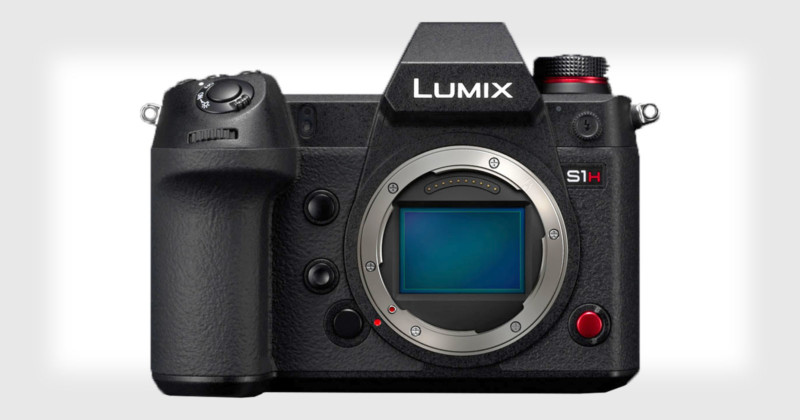
14) Pentax will release a digital camera product of some kind.
It sounds insane, we know, but Pentax will come out with some kind of camera in 2026. Whether that be a new DSLR or some kind of new compact camera (a truly new one) is up for debate, but Ricoh has said it is committed to the Pentax brand and since it’s been so quiet for so long, it’s time it put its money where its mouth is.