Hyperlapse photography involves shooting a series of photographs over large distances and then stringing the photos together into a time-lapse video that zooms the viewer through the locations. Creating a real hyperlapse involves quite a bit of work, so the folks over at Teehan+Lax Labs decided to go virtual by turning to Google Street View to source the necessary photos.

The gorgeous hyperlapse video above was created entirely using Google Street View photos, and shows the locations visited by the Street View camera van in a way that’s very different from what you see through your browser. Read more…
Photo sharing is “in” these days. Just look around, and you’ll find that pretty much every major social network has it as a major pillar of their service. Facebook is the largest photo sharing site in the world by volume. Google+ has all but absorbed the once powerful Picasa brand.
With so many services competing for your pixels, it’s getting harder and harder to keep up with the best images from your contacts. It’s something developer Arthur Chang calls “photo consumption fatigue,” and he believes he has a solution. Read more…
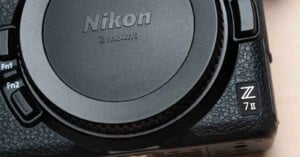
Recently published patent applications filed by Nikon offer a glimpse into what the company may be working on for future DSLRs and mirrorless cameras. The three technologies spotted are: illuminated lens mounts, dual lens contacts, and a hybrid viewfinder. Read more…
If you want a taste of how fast technology progresses in the world of digital photography, just look at the consumer camera industry through the lens of a company that continues to make a big splash: Apple.
When Steve Jobs unveiled the original iPhone on January 9, 2007 at the Moscone Center in San Francisco, cameras on phones were horrible and viewing those shoddy pictures was a pain. Then, almost overnight, the smartphone photography revolution — and the slow demise of the compact camera — began. Read more…
The folks at Panasonic just developed an exciting new sensor technology that could significantly improve low light performance in all types of cameras very soon. Calling it a sensor technology is a bit misleading, however, because no improvements have been made to the actual sensor at all; instead, Panasonic has decided to change what sits in front of the sensor: the traditional color filter. Read more…
If you’re the proud owner of a Wi-Fi-connected digital camera, there’s something you need to be aware of: your camera could be used to spy on you.
At the hacker conference Shmoocon 2013 last month, German security researchers Daniel Mende and Pascal Turbing reported on findings that Internet-connected cameras can easily be exploited and turned into spy cams. Read more…
One half of the face above is a photograph, and the other half is a highly detailed computer generated rendering created using a program called KeyShot by Luxion. Can you tell which is which? If you can’t tell, why should we? (Okay, to be honest, we’re not sure either).
Joseph Flaherty over at Wired writes that KeyShot and other programs that can generate photorealistic renders are being widely used for product photos these days, and are quickly killing off jobs that were once held by photographers. Read more…
About a year ago, we shared an app called 645 Pro that saves photos shot with the iPhone (and other iOS devices) as TIFF files. Now there’s a new app that’s even more “raw”. Digital Negative, a new app by a company called Cypress Innovations, claims to be the first app that captures uncompressed images that retain 100% of the information captured by the camera sensor. Read more…
Some pretty amazing new software developed by researchers at the Max Planck Institute for Informatics is bringing something akin to cloning to the world of HD video. Using a step-by-step process, the software removes moving people or objects from video and then fills in the empty space with data from other frames. Read more…
Fujifilm is best known for its camera and film products, but the company is now using its photographic expertise to invade new markets as well. The company is reportedly using its background in silver to create touchscreen displays that are bigger and more affordable than current offerings. Read more…