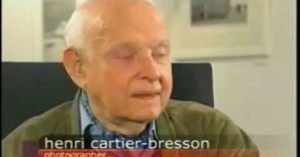
An Interview with Henri Cartier-Bresson, the Father of Photojournalism
A wonderful hour-long interview with Henri Cartier-Bresson.
A wonderful hour-long interview with Henri Cartier-Bresson.
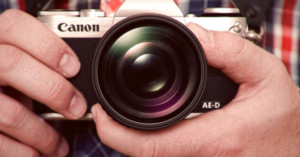
Olympus recently rebooted its OM line of film SLRs with the OM-D mirrorless camera, and many photographers are hoping that Canon will follow suit with one of its film bodies. Industrial designer and photographer David Riesenberg is among them, and recently decided turn what he wants to see into a concept drawing.
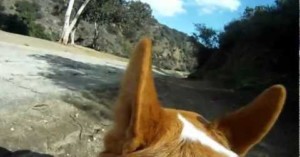
YouTube member Syejukoon mounted a GoPro camera to the back of his …

Photographer Ilona Szwarc's project "http://www.ilonaszwarc.com/american-girls" is a series of portraits of girls in the United States posing with their avatars -- American Girl dolls that are customized to look exactly like their owners.
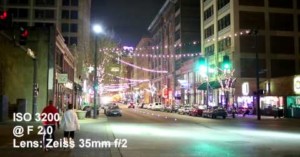
YouTube member eaglejm shot this video in downtown St. Louis to show the …
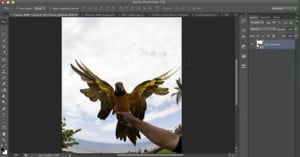
Adobe has launched the public beta version of Photoshop CS6, which features a completely redesigned user interface along with new saving features (auto and background), new content-aware features (move and patch), new blur filters, an updated Adobe Camera RAW, and improved video editing capability. There's a 62% increase in features, with 65 of them inspired by user feedback. ACR 7 also features the same new engine found in Lightroom 4 that improves the performance of sliders.
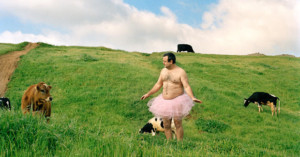
After photographer Bob Carey moved with his wife to the East Coast in 2003, he found that life suddenly flipped 180-degrees from what he was used to. He then did what every sane, middle-aged, male photographer would do: he began photographing himself in a pink tutu to express himself. However, the project wouldn't stay random for long.
Steven Alan and Ben Boutwell made this …
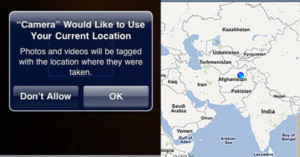
Earlier this month the US Army published an article warning its soldiers that …

German ad agency Jung von Matt created this brilliant series of photographs for a LEGO advertising campaign titled "Imagine". The images show famous characters from children's television shows in simplified LEGO form. Can you figure out each of the shows?
While a number of countries are taking steps to ban the unrealistic Photoshopping of models, Israel has …
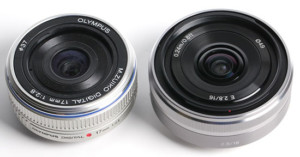
I’ve always been fascinated by pancake lenses. It just amazes me that something that small can actually function. As I mentioned in an earlier post, we’ve been taking things apart to determine where and how (and sometimes if) the lenses can be adjusted optically. So, I decided to do two pancake lenses for mirrorless cameras side-by-side to see how they differed (the Sony 16mm f/2.8 E mount and the Olympus 17mm f/2.8 micro 4/3 mount). I wasn’t sure there would be much we could do with pancakes (and there wasn’t), but I still found the look inside rather interesting.
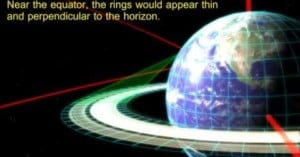
YouTube user Roy Prol created this fascinating animation that imagines what Earth would …

Singapore-based photographer Aw Zinkie's photo series "Republic of Pulau Semakau" explores the idea of a trash bin being an essential part of an individual's personal space, and a way of examining their identity. Her portraits show the subjects in their personal environments with their faced replaced by held up trash bins. The series also highlights issues of waste management in Singapore, and the fact that every individual's trash causes them to become a "founder" of the offshore Semakau Landfill.
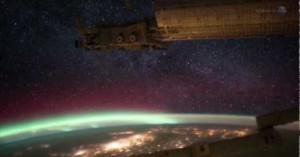
Here's a fascinating video by NASA that explains what auroras are and what they look like from space. It's filled with beautiful photographs and time-lapse sequences captured by astronauts on the International Space Station. Astronaut photographer Don Pettit, who maintains a blog about his experiences, writes that taking pictures of Earth is harder than it looks.
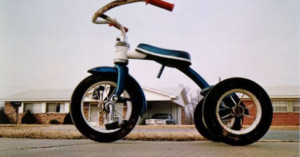
Last week, a collection of 36 prints by William Eggleston was sold for $5.9 million at auction. The top ten list of most expensive photographs ever sold doesn't contain a single work worth less than a cool million. Just a few months ago, Andreas Gursky's 'Rhine II' became the world's most expensive photograph, selling for $4.3 million.
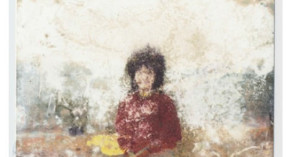
The Lost & Found Project is a volunteer effort that recovered three quarters of a million lost photographs after last year's devastating earthquake and tsunami in Japan. Each of the snapshots was washed, digitized, and numbered, and twenty thousand of them have since been reunited with their owners.
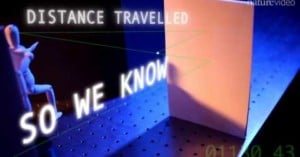
Back in 2010 we shared that MIT was developing a special camera that uses echoes of light …
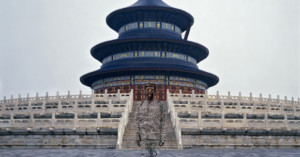
After his Beijing studio was destroyed in 2005, artist Liu Bolin (AKA "The Invisible Man") began a project titled "Hiding in the City" that show him blending into various locations around Beijing. The photographs aren't Photoshopped -- Bolin carefully has his body painted to blend in with each landscape.
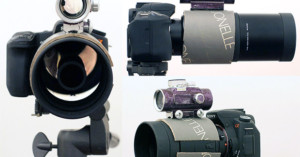
Photo enthusiast Chris Malcolm needed a better way to aim his 500mm lens at fast moving subjects (e.g. birds in flight), so he upgraded his lens with a DIY sighting aid by attaching a non-magnified red dot sight:
They're designed to clamp onto a gun sight wedge mount, so some kind of adapter is required. I played with the hot shoe mount, but it was too flexible -- the sight needed re-zeroing at every mount, and was easily knocked out of calibration. The degree of precision required to aim the central focus sensor at the target via the dot also made parallax error a problem on the hot shoe. So I decided to mount it directly on the lens. Least parallax error, plus the geometry of the lens barrel and the sight mount naturally lines it up with the lens. To protect the lens barrel I glued the sight clamp to a cardboard tube slightly too small, slit open to provide a sprung grab on the lens body. The slit also handily accommodates the focus hold button on the lens barrel.
Malcolm reports that the site "works amazingly well", making it "trivially easy to aim the lens at anything very quickly".

Imagine a world in which cameras are as connected to the web as cell phones and purchased with contracts …
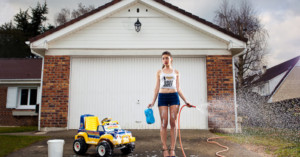
After finding toys from his childhood in his grandparents' attic, photographer Julien Mauve decided to create a series of photographs that imagines what those toys would look like in our serious adult world. The series is titled "Back to Childhood".
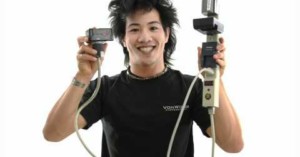
Here’s a simple tip by photographer Benjamin Von Wong for traveling abroad: you …
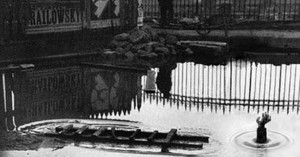
Here's what Henri Cartier-Bresson, the father of modern photojournalism, said about his concept of "The Decisive Moment" in an interview with The Washington Post in 1957.
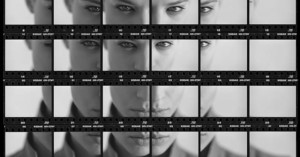
Photographer Mario Zanaria created this contact sheet …
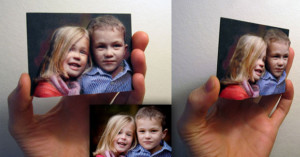
At CES 2012 back in January, Casio showed off a 2D to 3D conversion service that turns photos into sculptures. Now a new Portland, Oregon-based company called BumpyPhoto is bringing the technology to the masses. With prices starting at $59, BumpyPhoto will take your standard photograph, turn it into a 3D model using their special software, and then create a color 3D relief sculpture for you.

Photographer Andrey Pavlov's images of ants may look like they were computer-generated or created with dead insects, but they're actually real photographs of living ants. Pavlov spends hours setting up his fantasy scenes and then waits for his ant subjects to interact with his miniature props in just the right way.
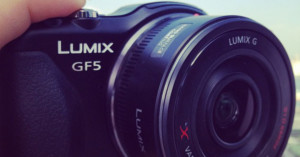
Here's the first leaked photo of the upcoming Panasonic Lumix DMC-GF5. It was shared on Instagram (and quickly taken down) by Hong Kong-based model Angela Baby, who was likely working on a commercial for the new Micro Four Thirds camera when she decided to snap a photo using the iPhone app. 43 Rumors writes that the camera will have a 12 megapixel sensor, ISO 12800, snappy autofocus (0.09s), a revised touchscreen, and improved low-light performance.
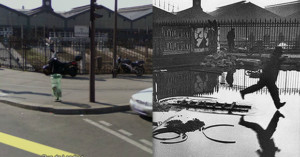
If you go to Google Street View and type in “rue de londres, …
Being able to concentrate is a great quality to have as a photographer, but make sure it doesn’t make …
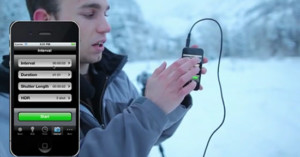
Trigger Happy is a new product that lets you use your iOS or Android smartphone as a fancy camera remote. It consists of an app and a one-meter-long cable that goes from your phone's audio jack to your camera. Besides acting as a simple remote shutter release for shake-free shots, the app offers bulb functionality for timing long exposures, an intervalometer for timelapse photography, HDR mode, and bramping. They're also working on lightning detection, audio waveform detection, face detection, and accelerometer-based triggering.
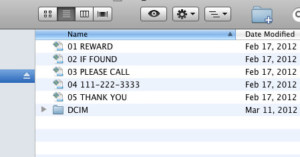
If you were to lose your camera today, would anyone who found it be able to get in touch …
For this short titled “Full Circle”, Callum Cooper attached a camera to the …

Photographers are supposed to document news rather than make it, but a clumsy German photographer had the ill fortune of doing the latter in the most horrible way this past Wednesday. The photographer was shooting at a media event at the Limbach-Oderfrohna zoo in Eastern Germany when he stepped backward and onto a three-week-old earless bunny named Til, instantly killing the little guy.

Cesar Kuriyama spent a couple years saving enough money to take an entire …
NASA has released a gigantic catalog of …
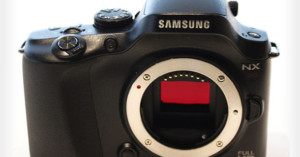
Dutch website Focus Media has published several photographs of the upcoming Samsung NX20 mirrorless camera, along with a list of specs. The camera will be slightly larger than the NX11 (there a thicker grip), and will offer a 20.3MP sensor, built in Wi-Fi for uploading images to the web, 8fps continuous shooting, ISO 100-12800, i-Function 2.0, built-in flash, an electronic viewfinder, 1080p HD video recording (with a separate button), and a 3-inch tilting screen on the back.camera/#ixzz1pJPIu4K9

Next Media Animation is a Taiwanese company that regularly creates animations that report …
Last month some retailers had short sales that heavily discounted Adobe Lightroom 3, selling it at $70 …
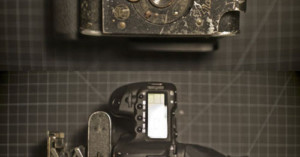
Director Jason Bognacki had a Contessa-Nettel Piccolette German folding camera from 1919 sitting around on his shelf for ages, and decided one day to bring it back to life by attaching it to his Canon 5D Mark II.
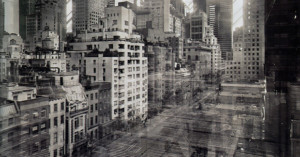
German photographer Michael Wesely has spent decades working on techniques for extremely long camera exposures -- usually between two to three years. In the mid-1990s, he began using the technique to document urban development over time, capturing years of building projects in single frames. In 1997, he focused his cameras on the rebuilding of Potsdamer Platz in Berlin, and in 2001 he began photographing the Museum of Modern Art's ambitious renovation project. He uses filters and extremely small apertures to reduce the amount of light striking the film, creating unique images that capture both space and time.
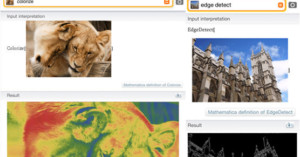
Wolfram Alpha has added a new in-app purchase option to its …
Last year we shared a table listing the various hazards National Geographic photographers experience while on the …
We’ve seen quite a few videos lately by people who send cameras up to the edges of space …
Every photographer probably has at least one story of a photo opportunity they missed simply because they decided not …

For his project Couples, Spanish photographer Nacho Rojo made portraits of himself and his girlfriend mimicking the stereotypical looks of various social groups.
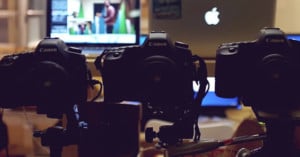
Protobooth is a creative photobooth by design firm Digital Kitchen that captures 3D photos rather than static images. Comprising 3 Canon 5D Mark II DSLRs, 4 Macbook Pros, and some fancy software mojo, the Protobooth simultaneously captures three photos at the push of a button, saves them to a networked hard drive, stitches them using Automator, applies a Photoshop filter action to the image, and then saves it as a GIF.

Based in New York, 46-year-old Chris Arnade is a banker by trade and …
Here’s a crazy rumor floating around: an upcoming M-series camera by Leica may feature a sensor that can only …
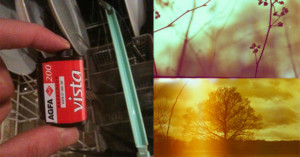
There's a subgroup of film photographers who are dedicated to coming up with inventive new ways to distress film in order to achieve unexpected -- and occasionally beautiful -- results. Last year we shared that soaking film in rubbing alcohol does strange things to your images. Here's another crazy idea: put a roll of film through the dishwasher. Photographer Tom Welland did just that and ended up with some vintage-looking photos.