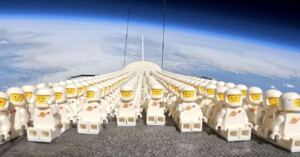
Breathtaking Footage of 1,000 Lego Astronauts Flying to Space
Two cameras captured 1,000 Lego astronauts flying to the edge of space on a 3D-printed mini space shuttle.
Two cameras captured 1,000 Lego astronauts flying to the edge of space on a 3D-printed mini space shuttle.
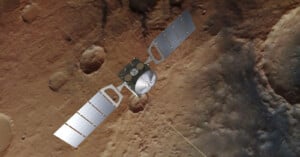
The European Space Agency (ESA) will broadcast the first ever live stream from Mars -- showing new images every 50 seconds as they come in from the Mars Express spacecraft.
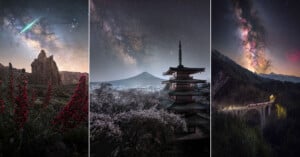
Travel and adventure photography blog Capture the Atlas has announced the winners of its sixth annual Milky Way Photographer of the Year contest.
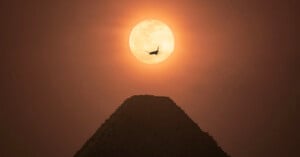
A photographer captured a "once in a lifetime" photo of the Great Pyramid of Giza with an airplane silhouetted against a full Moon above it.
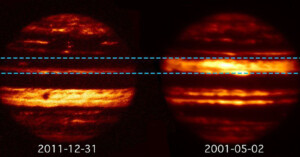
Much to the chagrin of tigers everywhere, Jupiter can change its stripes, although an explanation of how the gas giant changes its colors and famous "stripes" has long evaded scientists. Researchers at the University of Leeds in England believe they've found the answer and can explain why the bands on Jupiter move and change.
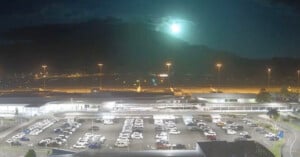
An airport camera perfectly captured a meteor exploding on Saturday ngiht, with the brilliant light illuminating the night sky for miles around.
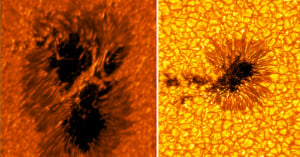
Earth's most powerful solar telescope has captured new images of the Sun, zooming in on sunspots and showing them in nightmarish detail.
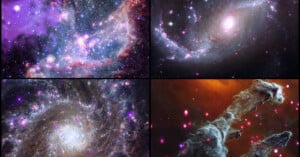
Scientists have once again combined X-ray data from NASA's Chandra Observatory and groundbreaking James Webb Space Telescope to create stunning composite images that showcase the incredible capabilities of each telescope.
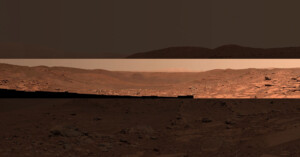
NASA's Perseverance Mars rover recently captured a series of 152 images while investigating the Belva Crater which NASA has stitched into a dramatic and striking mosaic.
A creative photographer used ancient and mythical rocks as the basis of a 360-degree "stellar flower" image that shows the passage of day into night and the setting of Venus and the Moon.
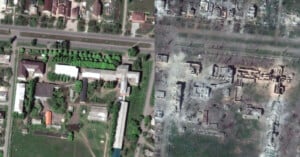
Fresh satellite images of the embattled Ukrainian city of Bakhmut lays bare the awful destruction that war has brought to the region.
ShadowCam recently grabbed a stunning shot of NASA's Lunar Reconnaissance Orbiter as it orbited below KPLO.
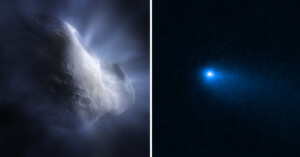
NASA's James Webb Space Telescope has helped scientists achieve another breakthrough. Solar system scientists working to understand the origins of Earth's abundant water have used Webb's Near-Infrared Spectrograph (NIRSpec) instrument to confirm water vapor around a comet in the main asteroid belt for the first time.
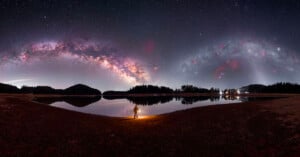
Award-winning astrophotographer Mihail Minkov captured an incredible 360-degree panorama that shows two Milky Way arches, a shot only possible during a specific time.
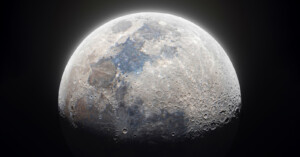
Astrophotographer Andrew McCarthy has captured a "GigaMoon" -- a 1.3-gigapixel highly-detailed image of the Moon made from 280,000 photos.
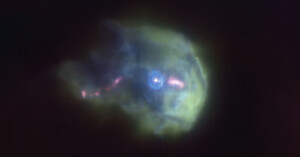
A terrestrial telescope has captured an incredible image of a young star shooting out matter like a water sprinkler 1,350 light-years from Earth.
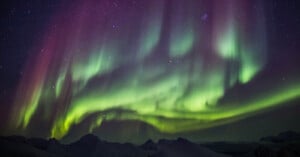
Aurora-chasing photographers may want to pay attention this week after the Sun emitted a powerful solar storm directly at Earth.
A private astronaut and keen amateur photographer heading to space later this month has received photography training from prominent astronaut and astrophotographer Donald Pettit.
The European Space Agency (ESA) has released a stunning photo of Earth from its latest satellite imager that captures weather conditions in never-before-seen detail.
The James Webb Space Telescope has achieved another milestone by capturing an image of the first asteroid belt ever seen outside the Solar System.
Astrophotographer Bray Falls recently posted a series of striking images on Instagram that instantly caught PetaPixel's eye. Falls' photos aren't just visually stunning; they represent a brand-new discovery, a significant accomplishment for any astrophotographer.
NASA has released incredible new images of the shadowy region of the Moon's south pole. The detailed photos were captured by NASA's impressive ShadowCam instrument.
A team of scientists led by New York University Abu Dhabi (NYUAD) and the United Arab Emirates (UAE) Center for Space Science has created a high-resolution map of Mars that holds great potential for researchers aiming to understand the red planet's history, and how its arid, barren landscape came to be.
NASA has released a guide to the night sky for May with the main opportunities for astrophotographers coming from planets rising in proximity to the Moon.
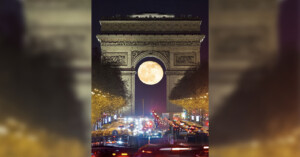
A photographer captured a full Moon framed inside Paris' iconic Arc de Triomphe -- a shot that took months of planning.
The Hubble Space Telescope is celebrating its 33rd year in orbit around Earth. To celebrate this incredible milestone, the Hubble team has released an incredible photo of a nearby star-forming region, NGC 1333.
Radio astronomers have captured a novel wide-angle image of the famous giant black hole at the center of the galaxy Messier 87 (M87).
During its 51st flight, NASA's Mars Ingenuity helicopter snapped a striking shot of Mars, showing an apparent blue sky -- a far cry from the typical dusty, dull sky seen from Mars' surface -- and captured a special guest in the frame, the Mars Perseverance rover.
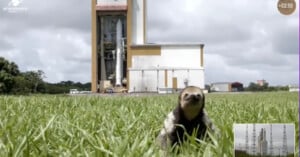
A lovable sloth named Gerard photobombed a major rocket launch in South America when he unexpectedly appeared on the livestream.
The United Arab Emirates (UAE) Space Agency has unveiled the most-detailed images ever of Deimos, the smaller and outermost of Mars' two natural satellites (the other is Phobos).
The Super Pressure Balloon Imaging Telescope (SuperBIT) was recently carried about 20.5 miles (32.9 kilometers) above Earth's surface on a massive NASA helium balloon, capturing the balloon-based telescope's first research images.
A viral photo has internet users scratching their heads as an apparent image of Earth taken from space isn't what it seems.
Skywatchers across the South Pacific witnessed a rare hybrid solar eclipse yesterday -- two eclipses in one.
NASA's Nancy Grace Roman Space Telescope (NGRST or Roman) will feature two primary instruments, a 300.8-megapixel infrared Wide Field Instrument (WFI) and a Coronagraph designed for studying faint objects, when it launches in 2027. The NASA Goddard team recently installed a vital subsystem for the space telescope's Wide Field Instrument.
A homemade motion detection camera has become the first instrument on Earth to capture NASA's enigmatic ICESat-2 satellite firing laser beams at Earth.
NASA's James Webb Space Telescope has captured a stunning "smash-up" of two spiral galaxies. Collectively called Arp 220, the collision of the pair of galaxies has facilitated massive star formation.
A space probe that will explore Jupiter and its moons beamed back farewell selfies with planet Earth in situ hours after it was successfully launched on Friday.
A photographer out capturing the aurora lights over Alaska on Saturday night was dumbfounded when a giant blue spiral appeared above him.
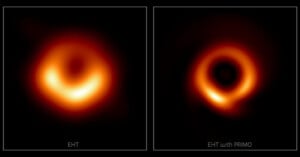
A team of researchers has developed a machine-learning technique to give the first-ever image of a supermassive black hole a new, sharper look.
Since NASA shared the first five images from the James Webb Space Telescope last July, astronomers have been busy using the telescope to study the cosmos and uncover new information about the origins of the universe. Scott Pelley took a closer look at Webb and its images in the most recent episode of "60 Minutes."
Last week, NASA revealed the four astronauts embarking on the Artemis II mission. It's a momentous mission for NASA and humanity because Artemis II will be the first time since Apollo 17 in 1972 that a crewed spacecraft will travel to the Moon and beyond low Earth orbit.
While vital to humanity's existence on Earth, the planet's atmosphere is a major nuisance for astronomers trying to learn more about what's beyond Earth. The cosmos would be much easier to study without the pesky atmosphere. Researchers at Northwestern University in Chicago and Tsinghua University in Beijing have unveiled a new artificial intelligence-powered approach to cleaning up images captured by ground-based telescopes.
A group at Caltech's Bruce Murray Laboratory for Planetary Visualization has unveiled a 5.7-terapixel global image of Mars.
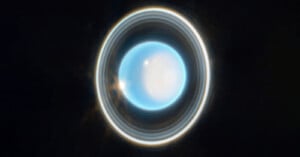
The James Webb Space Telescope has captured a gorgeous photo of the seventh planet from the Sun, Uranus. Not only that, but the rings around the ice giant are clearly visible for only the third time.
Astronomers used NASA's Chandra X-Ray Observatory and the International Gemini Observatory to discover a distant, lonely galaxy that has assimilated its former nearby galaxies, essentially having cannibalized its neighbors.
A photographer who was "rummaging" through the NASA archives stumbled across an amazing earthrise timelapse taken by the crew of Apollo 11 and then dubbed the audio of Neil Armstrong, Buzz Aldrin, and Michael Collins discussing the camera settings.
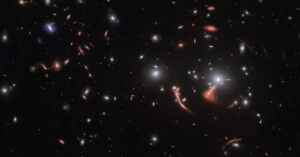
One of the first images the James Webb Space Telescope ever captured was only possible thanks to a gravitational lens. Its latest is another example of this phenomenon, this time featuring a galaxy called the Cosmic Seahorse.
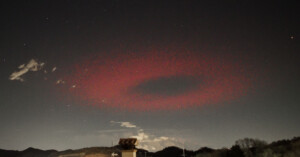
A photographer has captured a rare and mysterious phenomenon called ELVE which appears as a massive red ring of light in the sky and is generated from thunderstorm clouds.
The Pentagon says that footage of "aircraft interaction" with UFOs exists but the United States Department of Defense has refused to release it.
Last October, a burst of gamma-ray light hit Earth that was so strong scientists believe it was the brightest to ever hit human civilization -- dubbing it the BOAT (brightest of all time).