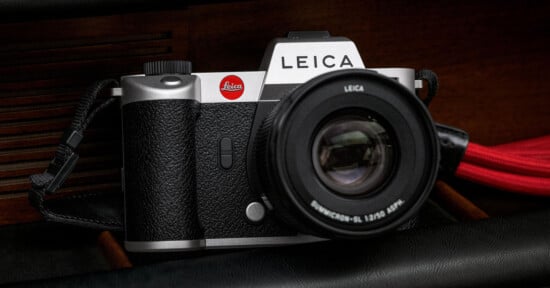
While Much About Leica Is Changing, Its Ownership Seemingly Isn’t

In January, reports surfaced that Leica Camera AG’s controlling owners were considering selling a majority stake in the legendary photography company. Per a new Wall Street Journal feature, those conversations appear to have ended, and Leica will, for now, maintain the status quo.
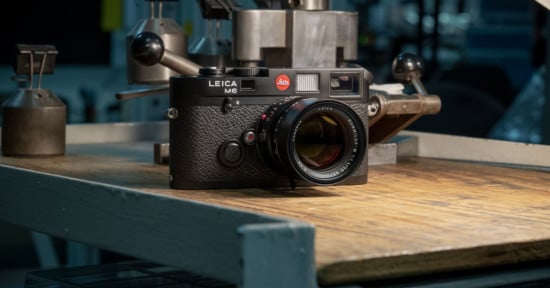
The wide-ranging WSJ report, “These $10,000 Cameras Are a Rare European Manufacturing Success,” covers a lot of ground about Leica. The story touches on Leica’s rich history, including the 100th anniversary of the first 35mm camera last year. It also dives into how Andreas Kaufmann used his inheritance to buy Leica more than 20 years ago, proving him a very successful steward as the company transitioned from its analog era to the digital one. Of course, Leica still makes an analog camera: the Leica M6.
When Kaufmann took over the company for less than $2 billion, Leica was in serious trouble. Kaufmann ultimately got the company back on track, but Leica’s survival was far from guaranteed, let alone its ability to thrive. Although a four-year streak of increasing revenue just ended this year, the company is extremely healthy right now. Nearly $670 million in annual revenue is very good.
Given Leica’s continual growth under Kaufmann, it was not especially surprising when Bloomberg reported that Kaufmann and another of Leica’s major owners, Blackstone Inc., were contemplating some form of cashing out. While it seemed like Kaufmann would want to stay heavily involved, it appeared that Blackstone, which acquired a minority stake in Leica in 2011, long before the company’s soaring growth in recent years, would be keen to get out while the getting was good.
The Kaufmann family, through ACM Projektentwicklung GmbH, owns 55% of Leica Camera AG. Blackstone Group owns the other 45%. Bloomberg did not specify which shares or how many may have been up for sale, but noted that Chinese private equity company HSG and Swedish private equity house Altor Equity Partners were sniffing around.
In any event, per WSJ this week, “deal talks have since ended.” This comes from a person “familiar with the matter,” a source similar to the one Bloomberg cited in January. It’s quite possibly the same person.
For photographers who were worried about increased outside influence on their beloved premium camera brand, this likely comes as a relief. However, as WSJ rightly points out, Leica is still entering a new era.
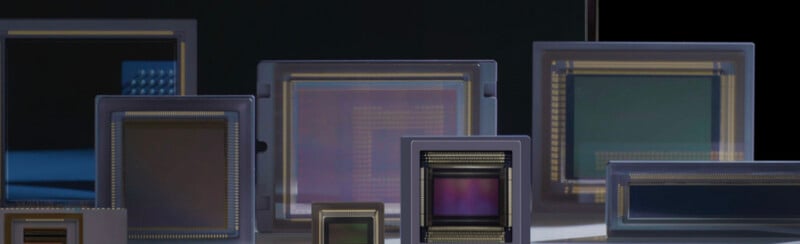
Leica continues to expand its partnerships with other companies, especially in the smartphone and home electronics market, and earlier this year announced a new partnership with Chinese image sensor company Gpixel to develop a next-generation image sensor.
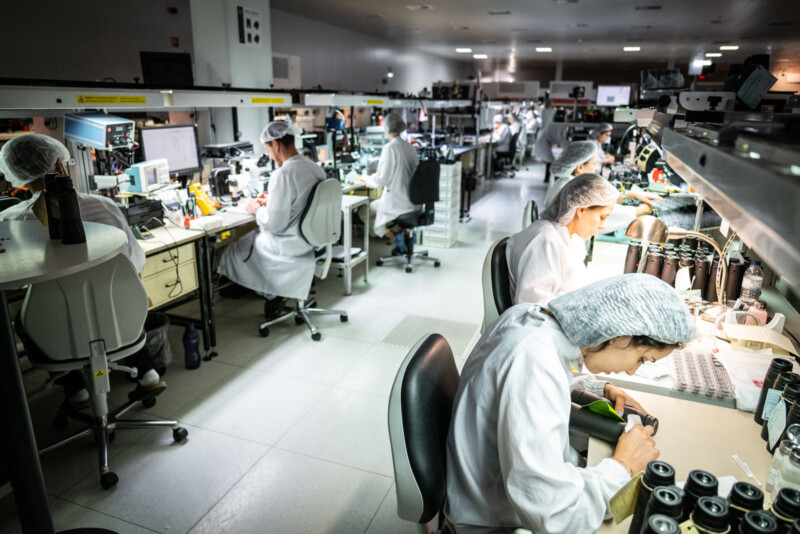
The company, which makes only about 45 M Series cameras each day in its Wetzlar, Germany factory, one of two Leica factories in Europe (the other is in Portugal), is navigating how to balance ambitious growth without losing what makes its products special.
“There are two things anyone who produces anything in Europe should care a lot about: materials and design,” Andreas Kaufmann tells WSJ. “And unfortunately, there are almost no European car I could imagine buying today because they all look so ugly.”
However, while Leica could inspire other camera makers, much of what it does doesn’t translate easily to any other company, whether in Europe or beyond.
Hand-making cameras is expensive, and Leica’s cameras have prices to match, with some new cameras priced around $10,000. Leica has a rich retail network that lets it control much more of its business. Leica says it sells about half of its sales through its own Leica Stores. Leica has a growing international network of galleries. Leica sells its own used cameras and lenses through an internal auction house at staggering prices.
What other camera company could do half of these things, let alone all of them simultaneously? None of them.
Image creditsLeica
Affiliate Disclosure PetaPixel articles may include affiliate links; we may earn a commission if you buy through one.