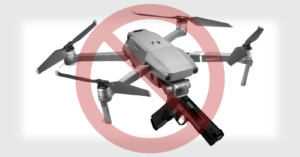
Do NOT Weaponize Your Drone, FAA Warns
The FAA has published a notice and is sending out emails warning drone owners and the general public that weaponizing drones is illegal.
The FAA has published a notice and is sending out emails warning drone owners and the general public that weaponizing drones is illegal.
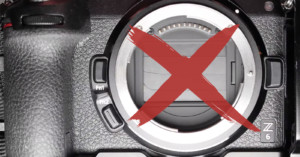
A video has been making the rounds this week that shows a "hack" for locking down the shutter mechanism while changing lenses on Nikon's full-frame mirrorless Z6 and Z7 cameras. Basically, you remove the battery while the camera is on, causing an error, and change lenses after that. Do NOT do this.
There is a persistent scam going around that is so pervasive that you might think everyone has heard about it and is immune to it. Yet, I often enough see this come up as a question in a Facebook group when a photographer is unsure if an inquiry is a scam. Most often they are. This is how these advance-fee scams work and how photographers are scammed.

Studio lighting can get hot -- so hot, in fact, that some can double a stove. Here's a humorous 14-minute video in which photographer Sweet Lou tests how well different ARRI fresnel lights fry eggs and bake cookies.

If you own the $5,000 Leica Q2 full-frame compact camera, you may want to be careful when shooting in the Continuous Super Speed drive mode. There's a bug that's leaving photographers with unreadable files.
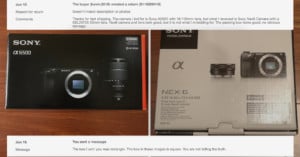
When it comes to selling your used camera gear online, many consider eBay to be one of the safer options. But as one photographer found out recently, there's a new scam that gets around eBay's "protections" and could cost you thousands of dollars and your camera gear.
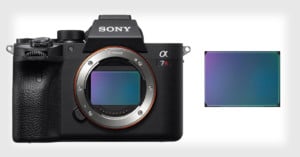
I, like many of you, watched the Sony a7R IV announcement live stream on Tuesday. I saw them put up the video of the camera and its specs, which I thought looked good as an evolution of their R platform. However, when the lights came back on in the room, the kind man that is the VP of their alpha division debuted the camera to the world with the line: “medium format level image quality”
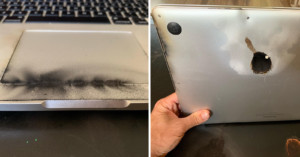
A couple of weeks ago, Apple announced a recall of "a limited number" of Mid-2015 15-inch Retina MacBook Pros because "the battery may overheat and pose a fire safety risk." But if you thought that yours is probably fine and haven't taken the time to check your serial yet, think again. As designer Steven Gagne recently discovered, the "fire safety risk" is very real.
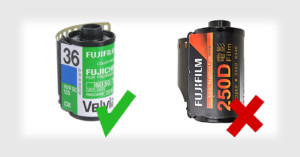
Fujifilm has issued a warning to customers warning of counterfeit Fujifilm 35mm film floating around in the market -- film that will cause photographers headaches if used.
Photography is amazing, but it does require gear. I recently moved from Canon to Sony, so I had to offload a camera body, lenses, flashes, and triggers. I purchased out-of-pocket insurance on all of my gear packages just to have some peace-of-mind.

Adobe announced last week that older versions before the latest two major releases of its subscription apps would no longer be available for download through Creative Cloud. But that's not all: Adobe is also warning customers that using older "unauthorized" versions could get you sued.
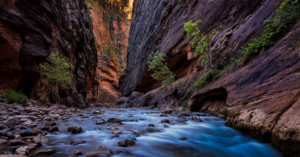
What is the most important thing for a photographer? The simple and easy answer is the camera, or something closely related to it (like tripods or lights). And for many photographers that might be true… but not for a nature or landscape photographer. What we prize most, what we need most is uncompromising vistas of land, views unobstructed by the hand of man.

Apple killed off Aperture back in 2014, but there are still photographers out there who have opted to continue using the beloved photo editing and management app. If that's you, there's some bad news: Aperture will no longer run on Mac after macOS Mojave.
It’s an ongoing joke with my friends and I that I am really not a fan on the current marketing messaging that the “universe has my back” and that the success of my business is down to my “mindset”.

The Auschwitz Museum is reminding the public to be respectful when taking photos at the infamous former Nazi concentration camp. It seems that in recent days there has been an increase of people using the railway tracks leading into the camp as a balance beam for social media.
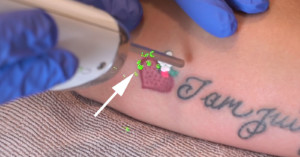
You probably know that the lasers in concerts and even on self-driving cars can damage your camera's sensor in a direct hit, but did you know that light reflected off skin during laser tattoo removal can also destroy your sensor? Watch this 37-second video to see for yourself.

Kodak launched an on-demand photography service called Kodakit back in January 2017 that aims to connect photographers to brands looking for photography. But there's something all photographers need to know about this "Uber of photography," as it's been called: it demands that you sign over the "entire copyright" to the photos you shoot.

The popular photo-sharing service 500px has announced that it was the victim of a hack back in 2018 and that personal data was exposed for all the roughly 14.8 million accounts that existed at the time.

After limiting free accounts to 1,000 photo and video files, Flickr announced that it would begin deleting data from accounts over that quota starting on February 5th, 2019. Now Flickr has announced that it's giving users more time to download photos by pushing the wipe date back to March 12, 2019.

After being acquired by SmugMug from Yahoo, Flickr announced in November 2018 that it would be limiting free accounts to 1,000 photos and videos total. The major change takes effect tomorrow, and if you're over the limit, your extra photos will may be permanently deleted.
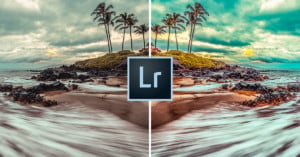
One of the more difficult aspects of post-processing is identifying when you’re starting to over edit a photo. It’s common knowledge what many of the characteristics of an over-edited image are, but determining when you’ve gone too far, that’s the challenging part. In this 14-minute video, I break down five tips that have helped me to understand and identify when I’m beginning to over process an image.
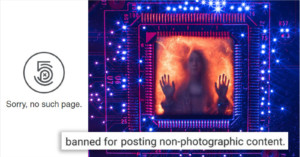
Tim Gamble is a Manchester, UK-based photographer who uses light-painting techniques to create surreal and abstract artworks. His photos are almost entirely created in-camera, so imagine Gamble's surprise when 500px unexpectedly deleted his account for "posting non-photographic content."

It all started with an email from Wendi Murdoch. She claimed that she had found us through a personal recommendation from a senior editor at Conde Naste Traveler. We had just finished talking with Conde Nast Traveler about doing some Instagram featured work on both my and Zory’s accounts, so the timing made sense.
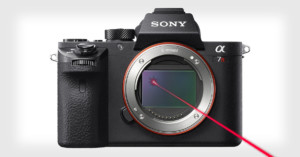
Self-driving cars widely use a technology called lidar (which stands for light detection and ranging) to "see" the world using laser pulses. These lasers are designed to be safe to human eyes, but it seems they may not always be safe for cameras. A man at CES in Las Vegas says that a car-mounted lidar permanently damaged the sensor in his new $1,998 Sony a7R II mirrorless camera.

My name is Mattias Hedberg, and I'm a photographer based in Norrköping, Sweden. I was recently about to get the Flickr Pro upgrade and was hovering above the buy button when I decided to take a deeper look at the Adobe offer since it sounded a little too good. I was interested in other features of the plan also, but the Adobe one was very tempting.
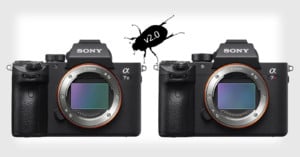
After releasing firmware v2.0 for the a7 III and a7R III in October, Sony abruptly took down the update earlier this month citing a bug that would cause photographers to lose RAW photos they've captured. Sony has since fixed the issue and today released firmware v2.10 as a replacement.

If your camera has an Electronic Front-Curtain Shutter (EFCS) feature and it's turned on, here's something you might want to know: it could be giving you noticeably worse bokeh when you're shooting at faster shutter speeds. Photographer Manny Ortiz shows the difference in the 4.5-minute video above.

Here's some big news in Europe that hasn't made a big splash in the US and has largely flown under our radar: the very day after Photokina, Tetenal announced that it's in financial turmoil. Tetenal is one of the largest photochemical businesses in the world and produces chemicals for brands like Ilford and Kodak.
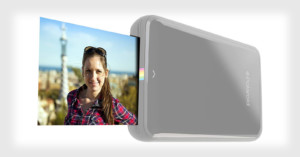
Beware: instant cameras that produce Zink photos may not be a good option for preserving memories long term.
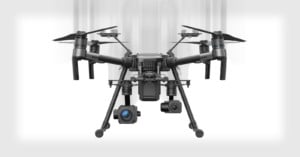
If you fly a DJI Matrice 200 drone, beware: there are reports of the drone losing power and falling out of the sky. DJI says it's currently investigating.