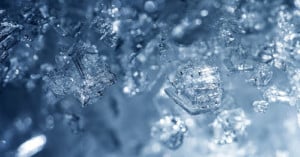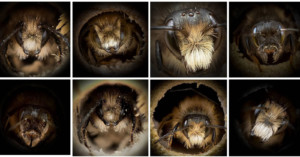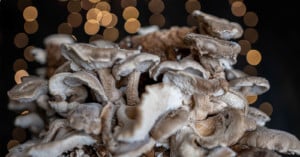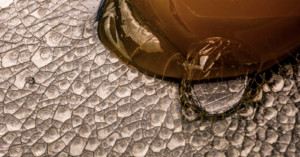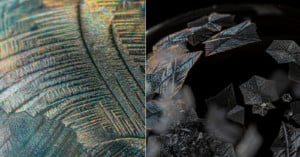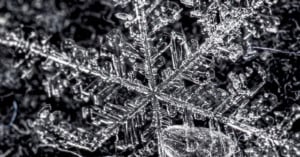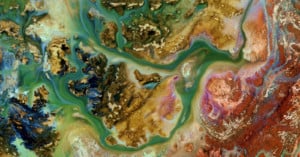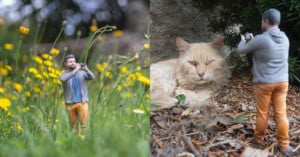
You’ve probably seen macro photographs of everything from bugs to blooms, but have you seen any of ocean waves? That’s the niche that Australian photographer Deb Morris has carved out for herself, and it’s working out quite nicely. Read more…
We first featured photographer Matthew Albanese’s Strange Worlds project back in 2010, not too long after the project’s inception. His amazing images appear to show beautiful outdoor scenes, but were actually shot on a tabletop in his studio. He creates extremely detailed dioramas that take months to complete, and then uses various photographic techniques to make the scene look like the real world. It’s like the opposite of using tilt-shift lenses to turn the world into a miniature model. Read more…
Last month we wrote about how the small focusing lens inside a laser pointer can be repurposed as a cheap macro lens for your smartphone. After seeing this project online, photo enthusiast John Coleman decided to give it a shot. To keep the lens secure against your phone, you’ll need something to hold it (e.g. a hair pin) and some tape to attach the holder to the phone. The photo above shows the super simple attachment Coleman created. Read more…

Bob Ross became a household name a couple of decades ago through his show The Joy of Painting on PBS. His friendly personality, soothing voice, and artistic talent got countless people hooked on oil painting, beating the devil out of paintbrushes, and creating happy little trees and clouds. He’s the kind of guy who could (and did) talk about watching paint dry and make it enjoyable.
Thomas Shahan is the closest thing we’ve found so far to a photographic Bob Ross. In the video above, he introduces us to the art of high-magnification macro photography, which he employs to create vibrant images of all kinds of tiny critters. Read more…
French photographer David Chambon is a master of macro insect photography. An amateur photographer for over 10 years, his goal is to capture the magical beauty of nature through his imagery. All of his macro shots are amazing, but it’s his morning dew series that stands out from the rest. He ventures out early in the morning, and photographs various insects perched on flowers and leaves, glowing from the tiny beads of dew that coat their bodies. Read more…
If you want to take Lensbaby-style selective focus macro shots using your phone, go buy a cheap laser pointer. Photographer Zaheer Mohiuddin writes that the lens inside laser pointers (the one that focuses the laser) works well as a macro lens for the tiny cameras found on smartphones. After taking the device apart and finding the small gem-like lens, simply attach it to your camera with some tape to start shooting close-up pictures. Read more…
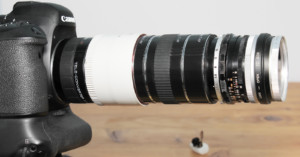
Photographer Christian Lobo came up with this thrifty macro setup that uses his Canon Rebel T3/1100D and a 50mm f/1.8. It might look ghetto, but it actually functions pretty well for casual macro photography. Read more…
Really more useful for landscape and macro photographers who are going to be shooting through very small apertures (f/22 and above), this video from FStoppers explains what diffraction is and how it can affect your shots. The trade off, as they explain in the video, is between a large depth of field and a sharp image; and the trick is to find your “sweet-spot.”
The difference isn’t as obvious on the video even at 1080p, so if you want to see full resolution examples be sure to head over to the original post.
A team of researchers at the Japan Science and Technology Agency have recently taken 3D imaging to another level. A much smaller level. What they’ve managed to do is develop an electron microscope that can show 3-dimensional photos of their tiny subjects in real-time. In the past, getting a 3D photo from an electron microscope meant superimposing two images taken at slightly different angles. But this new microscope allows the scientist to slant the electron beam and obtain both angles at the same time.
The resulting images are slightly lower in resolution, but the advantage of seeing their structure in 3 dimensions makes it a worthwhile tradeoff. And all this without the need for 3D glasses.