Lenses and sensors weren’t the only camera components miniaturized and dumbed down when digital photography jumped over into the world of smartphones: flashes did too. In order to fit everything into a tiny package, smartphone makers have largely opted for LED flashes in their phones rather than the bigger and bulkier xenon flashtubes found in proper digital cameras (a notable exception is the Nokia PureView 808). That may soon change.
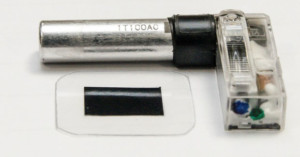
Scientists in Singapore have developed a new capacitor that may lead to more powerful xenon flash units replacing the LED flashes found in consumer smartphones.
Read more…

A big win for photographers in Canada: as of today, you now officially own the copyright to all your photographs regardless of whether they were commissioned. The development comes as a result of Canada major copyright reform bill (Bill C-11) taking effect this morning. One of the stated goals of the new copyright law is to, “give photographers the same rights as other creators.”
Read more…

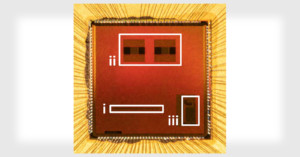
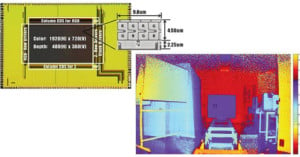
Samsung has developed what the company claims is the world’s first CMOS sensor that can capture both RGB and range images at the same time. Microsoft’s Kinect has received a good deal of attention as of late for its depth-sensing capabilities, but it uses separate sensors for RGB images and range images. Samsung’s new solution combines both functions into a single image sensor by introducing “z-pixels” alongside the standard red, blue, and green pixels. This allows the sensor to capture 480×360 depth images while 1920×720 photos are being exposed. One of the big trends in the next decade may be depth-aware devices, and this new development certainly goes a long way towards making that a reality.
(via Tech-On! via Gizmodo)

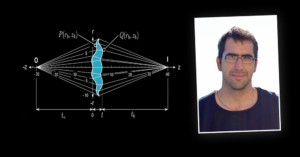
Contrast detection is one of the two main techniques used in camera autofocus systems. Although focusing speeds continue to improve, the method uses an inefficient “guess and check” method of figuring out a subject’s distance — it doesn’t initially know whether to move focus backward or forward. UT Austin vision researcher Johannes Burge wondered why the human eye is able to instantly focus without the tedious “focus hunting” done by AF systems. He and his advisor then developed a computer algorithm that’s able determine the exact amount of focus error by simply examining features in a scene.
His research paper, published earlier this month, offers proof that there is enough information in a static image to calculate whether the focus is too far or too close. Burge has already patented the technology, which he says could allow for cameras to focus in as little as 10 milliseconds.
(via ScienceNOW via Fast Company)
Image credit: 2011 12×12 Vancouver Photo Marathon by 12×12 Vancouver Photo Marathon

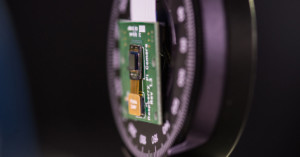
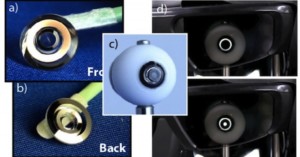
Researchers at the University of Toronto have come up with a new video camera that can achieve infinite depth of field even when objects are immediately in front of the camera. What they did was stuff an array of video cameras into a single camera, with each camera focused at a different distance. Software then calculates the distance of each object in the scene, and selects the individual pixel that has the object in focus. The resulting image is one in which every object, both near and far, is in focus.
Maybe in the future consumer cameras will also have an array of cameras, allowing us to have much more control over the photo (or video) in post-processing.
(via PhysOrg)
Image credit: Photo and illustration by the University of Toronto
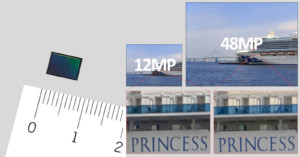
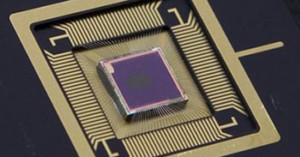
InVisage, a California-based start up company, has announced a new image sensor technology that it claims is up to four times more sensitive than traditional sensor technologies.
Their product, QuantumFilm, is a layer of semiconductor material added on top of the traditional silicon that uses quantum dots to gather light.
According to InVisage CEO Jess Lee, quantum dots have a 90% efficiency in gathering light, compared to the 50% of traditional silicon.
What this means is that we can expect cell phone cameras to improve at a much faster pace than what we’ve been seeing, since improving the performance of traditional silicon has proved difficult. Lee predicts that in two years, mobile phones will contain cameras that are superior than current digital cameras in both megapixels and light sensitivity.
If this turns out to be true, we will likely see a dramatic decrease in the number of point-and-shoot cameras sold, as more and more consumers rely solely on their camera phones.
(via CNET)
In other news, Wired is reporting that this technology will lead to wedding photography from phone cameras. Really?
Image credit: Photograph by InVisage