Photographer Tim Chao created this beautiful photo of a dark figure standing over the Chicago skyline by shooting a double exposure. It’s titled “Metamorphosis”, was shot with a Nikon FM on Kodak TX 400, and is part of a double exposure project titled “Worlds Within“.
For her project titled Mirrors, Swedish photographer Ilar Gunilla Persson photographed various landscapes with giant mirrors placed in them. The mirrors give the scenes an surreal and artificial look, but all the shots were captured on film. Read more…
This photo is what you get when you point a massive 4.1 meter telescope (VISTA in Chile) at an unremarkable patch of night sky and capture six thousand separate exposures that provide an effective “shutter speed” of 55 hours. It’s an image that contains more than 200,000 individual galaxies, each containing countless stars and planets (to put the image into perspective, the famous Hubble Ultra-Deep Field contains “only” around 10,000 galaxies). And get this: this view only shows a tiny 0.004% of the entire sky! Read more…
Rock Photographer is a new iPhone game that can be described as a mix between “Guitar Hero for photography” and “Pokemon Snap for adults”. Each level in the game presents real footage of “bands” in action, and the player’s job is to use their iPhone as a camera:
Just like a real camera, tilt your phone to look around inside level as the band plays. You can shoot from different positions to get the best angle. When you see something interesting happen, tap the screen to take a photo.
If your timing & frame is right, you’ll get big points! If not, you’re going to waste up all your film before the level is over. Special objectives are hidden throughout the levels waiting to be found. They just have to be taken at the perfect moment. Save up the points you earn to unlock hidden features, and become the World’s Greatest Rock Photographer!
The app was created as a collaboration between photographer Joey L and development duo the All Nighters. Read more…
Every day for 100 days, I will paint one branded object white, removing all visual branding, reducing the object to its purest form. Each object may be purchased for less than $10, something I own, something another person gives me, or something I find.
See if you can identify each of the objects despite their lack of branding. Read more…
Did you know that your morning cup of coffee can help you predict rain? It’s a trick used by backpackers that can come in handy you’re shooting outdoors without Internet: pour a cup of coffee and carefully watch the bubbles. Backpacker Magazine writes,
If the bubbles amass in the center, you’re in a high-pressure system, which is making the coffee’s surface convex (higher in the middle). Since bubbles are mostly air, they migrate to the highest point. It’s going to be a beautiful day. If the bubbles form a ring around the sides of the mug, you’re in a low-pressure system, making the surface concave. Rain is likely. Note: It has to be strong, brewed coffee to have enough oil to work, and the mug must have straight sides.
To make new bubbles, simply give your coffee a good stir.
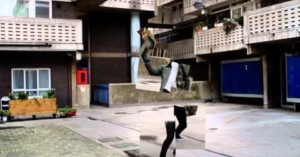
Here’s a stunning super slow motion video that shows Marina Kanno and Giacomo Bevilaqua of Staatsballett Berlin performing several jumps. The footage was captured at 1000 frames per second.
Want to see how your eyes stack up against other photographers when it comes to seeing colors? Try your hand at Color, a simple browser-based color matching game that tests you in how quickly you can match colors. It starts with simple matching, but soon moves onto more difficult challenges involving multiple colors. Be sure to leave a comment here reporting on the score you get!
Can’t wait to use Instagram on your Android smartphone? The company has put up a new “coming soon” page for the impending Android app launch, and submitting your email address will provide you with a notification the moment the app becomes available to the public.
“Mimicry” is a photo project by Dutch photographers Ilse Leenders and Maurits Gisen that’s based around the idea of uniformity. They write,
The inspiration of the series Mimicry came from the uniformity of the human beings. People from whom the identity is missing and those who are inconspicuous in our society. Just like animals they adapt to their environment. Visually in this series it is shown by the use of similar costumes, position and sex.