Websites

Flickr Chief Matthew Rothenberg Departs

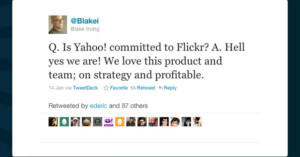
Matthew Rothenberg, the man who has led Flickr the past two years has Head of Product, announced today that he is leaving the service. In a message posted to his Twitter account, Rothenberg states,

Here goes: after 5 years, I will be stepping away from Flickr. Will miss working with such a talented, hard-working, and hard-drinking team.

Despite reassurances from Yahoo that Flickr is doing well, many will undoubtably look at this development and wonder whether the future for the service is as bright as the company would like us to think. TechCrunch also reported today that the situation inside the service isn't too great.

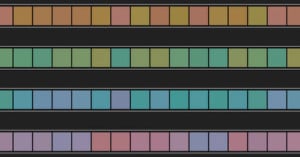
Famous Films Compressed into Barcodes

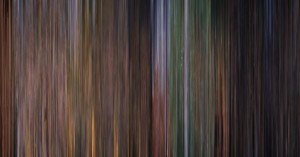
What you see here is every still frame of the famous 1939 film The Wizard of Oz compressed into a single frame, creating a colorful "barcode" for the movie. moviebarcode is a neat blog that publishes these images for a wide range of famous movies.

Alan Taylor Leaving The Big Picture for The Atlantic

After Alan Taylor started "The Big Picture" photo blog over at the Boston Globe in 2008, it quickly became one of the most popular sections of the website. In addition to starting a large format photo blogging trend among news organizations, it has also won two Webby Awards and a SXSW nomination for "Best Blog". Taylor announced yesterday that he will be leaving "The Big Picture" to start up a new photo blog over at The Atlantic called "In Focus". His last post at The Big Picture will be on January 21st, 2011, and In Focus will be officially launching in February.

PicScatter Helps You Make “Hacked” Facebook Profile Photographs

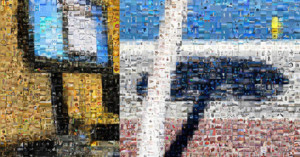
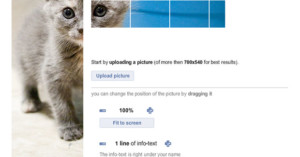
Last week Alexandre Oudin's creative Facebook portrait idea spread like wildfire on the Interwebs, and was even featured by CNN. If you'd like to do the same thing with a portrait or photograph of yours but don't have the time or technical know-how to do so, there's a new website called Pic Scatter that does all the work for you. All you need to do is upload and resize and reposition the image to your liking, and the website will allow you to download all the individual photos for the "hacked" profile pic. The only downside is that a "Made with picScatter.com" bar is added to your image.

The History of Photography According to Google Books

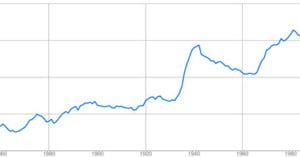
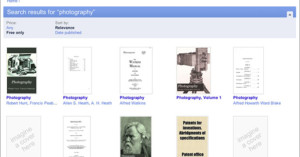
Google's new Books Ngram Viewer is a cool new site that allows you to search for words and view a graph of how the usage of that word has fluctuated over time. A quick search of the word "photography" in books published between 1835 and 2008 provides a pretty interesting look at the history of photography.

Twitter Photo Rights Controversy is Much Ado About Nothing

Last week Scott Bourne published an article on Photofocus titled, "Photos On Twitter – What You Should Know". In it, he claimed that Twitter's terms of service (TOS) forced photographers to give Twitter a license to do whatever they wanted with photos shared through the service. The argument centered around a couple paragraphs found in the document:

By submitting, posting or displaying Content on or through the Services, you grant us a worldwide, non-exclusive, royalty-free license (with the right to sublicense) to use, copy, reproduce, process, adapt, modify, publish, transmit, display and distribute such Content in any and all media or distribution methods (now known or later developed).

This was used to argue that Twitter owns a license to photos shared through the service.

Photos of Things That Aren’t Supposed to be Photographed

If you're like a lot of people, you might have felt the urge to secretly shoot where there are signs posted prohibiting photography. Strictly No Photography is a website that aggregates these photographs, giving the public a glimpse into various things that are off limits to cameras. There's photographs from museums, theaters, and even a collection of "no photography allowed" signs.

Kite Photos Used to Replace Shoddy Satellite Imagery on Google Maps

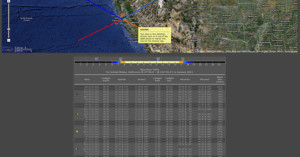
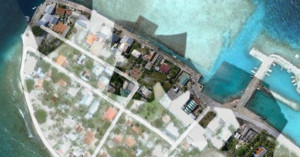
Frank Taylor, the guy behind the unofficial Google Earth Blog, is currently on a 5 years sailing trip around the world called The Tahina Expedition. Google is actually a partner in the expedition, and is acquiring content generated by the trip for use in their products. One thing Taylor has been doing is taking aerial photographs of locations using a kite, resulting in imagery that's much clearer than the photos Google gets from their satellites up in space. Google has already begun incorporating some of these images into their products, as you can see from this Google Maps satellite view of Manihi in French Polynesia.

Check out this Picasa album to see behind-the-scenes photos of Frank setting up his kite and shooting photos.

Facebook Has a Zombie Photo Problem

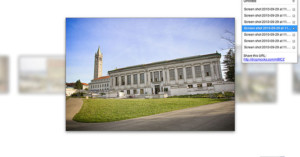
Ars Technica published an interesting story today about how photos uploaded to Facebook remain on their servers months -- or even years -- after they're "deleted" from the service. We decided to test this out ourselves, uploading the above photo to Facebook, copying the direct URL to the image file, and then deleting both the photo and the album. As you can see from the hotlinked photo above, the image continues to live on as a zombie photo on Facebook's CDN servers.

Facebook Increases Maximum Photo Size to 2048px, Adds Lightbox

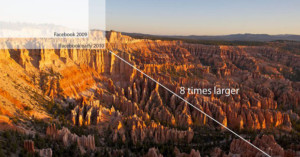
Just earlier this year Facebook upped their maximum photo size to 720px, an increase of 20%. Today, they've announced that the maximum size is increasing to 2048px, about eight times larger than the previous maximum size. A download link will be included with photos allowing people to download the high resolution versions.

DropMocks Makes Sharing Photos Quick and Stupidly Easy

DropMocks is a new photo sharing service designed to help you share photographs online as quickly and easily as possible. Created with HTML 5, the service has a minimalistic homepage that invites you to drag and drop photos into the browser. It then adds those photos into a simple gallery, and provides you with a short URL you can share. It's a bit like file hosting service DropBox, except for photos and done through the browser.

A Day in the Life of the MIT Community

A Day in the Life of MIT (ADITL) is a neat project in which members of the MIT community take pictures on a particular day and then pool the photographs together to provide a snapshot of what life was like on that day. ADITL 2010 happened yesterday, and hundreds of people contributed images to the collection.

New Look Strobox Even More Useful for Learning Lighting

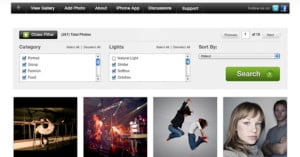
When we featured Strobox back in 2009, it was a simple idea: provide an easy way for photographers to create lighting diagrams and share them with others. Since then, they've upgraded their website to include a gallery where you can browse photographs done by others, view their lighting diagrams, and comment on them.

If you don't have a full arsenal of lightning equipment, you can filter the photos by what kind of lighting equipment was used to browse photos that are more relevant to you.

Webinpaint is a Poor Man’s Web-Based Content Aware Fill Tool

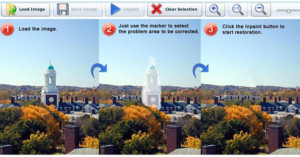
Photoshop CS5's Content Aware Fill feature was quite a hit when it came out earlier this year, but what about free alternatives? Webinpaint is a web-based photo app that aims to do just that. You simply open up an image, paint over the area you'd like removed, and click the "Inpaint" button for the app to do its removal magic.

From tests I've done with the app, it's pretty clear it doesn't come close to the power of Content Aware Fill. However, for simple photographs without much texture or clutter, the app actually works quite well.

Easy HDR Editing with Oloneo PhotoEngine

French company Oloneo has just released a free beta for their product, PhotoEngine. The software is a straightforward HDR creator and non-destructive editor that allows you to quickly merge HDR photos. Additionally, it has features that can adjust specific light sources in the photo, to change the white balance or the exposure. This could come in handy when shooting HDR frames that have a variety of different light sources with different temperatures.