The Best Wireless Microphone Kits in 2024: From $130 to $500
Microphones are an absolutely critical part of my video kit, and I’m very hard on them. So when I find something that works, I tend to stick with it for a long time.
Microphones are an absolutely critical part of my video kit, and I’m very hard on them. So when I find something that works, I tend to stick with it for a long time.
I like to think I have relatively basic needs when I'm traveling for work. But the one luxury I miss when traveling is a second monitor for my laptop, especially when I need to edit The PetaPixel Podcast. But with the Espresso Display 17 Pro 4K, a hotel room can be as effective a work location as my office at home. It's a transformative product for my workflow on the road.
Since using my first pen tablet over a decade ago, I found that working with display tablets provided an extra level of precision to my work since I could see exactly where my pen strokes were connecting on the screen. This let me be more precise and creative with my edits, but most of these tablets were either incredibly expensive or overly large. The $1,099 Huion Kamvas Pro 19 solves both these problems.
DxO PureRAW 4 promises to “supercharge your cameras and lenses” by offering a suite of image quality corrections for RAW files: deep-learning noise reduction, superior demosaicing, as well as per-lens correction of distortion, softness, vignetting, and aberrations.
I haven’t used an instant camera in a very long time, and I must admit that when the new Fujifilm Instax Mini 99 showed up I was a little flippant about it. After my time with it, I'm happy to admit I was wrong.
For decades, professional photographers have been using the pairing of a 70-200mm f/2.8 and a 300mm f/2.8 to achieve their telephoto goals. Canon introduced the RF 100-300mm f/2.8 L IS USM recently and it just about covers the range of both those lenses. But is it as good?
The Leica SL3 is the latest entry in the high-megapixel camera arena and the first for L-mount in some time. I was excited to get it in my hands, even if it was still in the pre-production phase.
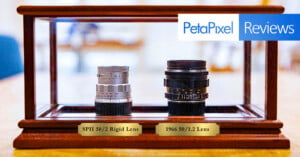
This article will review two prototype lenses from Light Lens Lab: the “1966” 50mm f/1.2 lens and the SPII 50mm f/2 multi-coated rigid design lens. Light Lens Lab based in China has an interesting business model. Instead of designing new highly corrected camera lenses, they re-create special lenses from past decades.
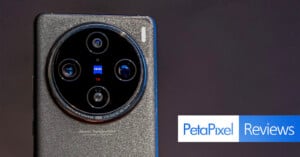
It's a shame the Vivo X100 Pro won't find itself in the hands of many mobile photographers in North America because it raises eyebrows for all the right reasons.
It's been a hot minute since I've played with a true superzoom, so I was unusually excited to see how Panasonic's new compact 28-200mm f/4-7.1 -- the L-mount's first all-in-one zoom lens -- performed.
It’s not often that I get to review a lens that the world has never seen before. I’ve reviewed plenty of f/1.4 lenses and I’ve reviewed the occasional 15mm fisheye, but a 15mm diagonal fisheye with an f/1.4 maximum aperture is a first for me.
When it comes to general-purpose standard zooms, Sony has you covered. With some classic choices like 24-70mm f/2.8 G Master II and 24-105mm f/4 G or the unique Sony FE 20-70mm f/4, there is something for everyone. However, Sony decided to go even further and add the brand new FE 24-50mm f/2.8 G to its growing collection. The idea is to have a more affordable and compact lens alternative to the expensive 24-70mm GM while still having a fast f/2.8 aperture, albeit with a reduced zoom range. I …
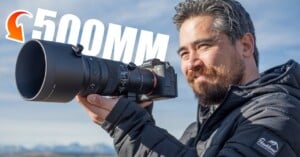
When I heard about the latest Sigma lens, the 500mm f/5.6 DG DN Sport, I wanted to revisit the Yamnuska Wolfdog Sanctuary. The new lens sounded ideal because it is unobtrusive, lightweight enough to handhold easily, and has the reach to capture these elusive Wolfdogs in their natural surroundings.
I'm gonna let you in on a dirty little secret of mine: I never liked the original Fujifilm X100. When it first came out, I was -like many others- enamored by the beautiful styling, but the operation of the camera just never gelled with me. The rather boring -- in my opinion -- 35mm lens didn't help things either. It wasn't until I played with the newly designed X100V that I had my aha moment, and realized the appeal of this camera.
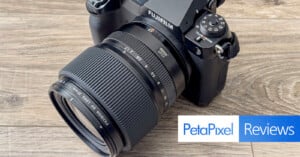
Last fall, Fujifilm unveiled its newest medium format camera, the Fujifilm GFX 100 II along with its first tilt-shift lenses and a new fast prime: the Fujifilm GF 55mm f/1.7 R WR.
We've seen 24-105mm lens formulas before and we have seen f/2.8 zooms, too. However, we have never seen the two combined, and it's about time.
The Hasselblad 907X CFV 100C is a fantastic, stylish, and -- perhaps most importantly -- charming camera kit. The camera and digital back combo honor Hasselblad's illustrious analog past while incorporating the company's most modern digital imaging technology.
OnePlus isn’t the kind of company that just goes away, and its persistence may have finally paid off with the OnePlus 12, a very impressive flagship phone that undercuts all others. This phone starts at $800, but trade-in incentives can drop it $100 or more, which feels like a bargain compared to competitors who hover around or above $1,000.
When OM Digital Solutions purchased, and thereby saved, Olympus' incredible photographic history and slate of digital cameras from the brink of collapse in 2021, there were many questions about what would happen to the Olympus Micro Four Thirds system. OM answered these concerns the following year with the OM System OM-1 camera, the most impressive Micro Four Thirds camera ever released at the time.
Anyone who has worked with large display tablets will know that comfortably positioning and using them in a workspace can be challenging. Unless you are lucky enough to have a massive desk with a ton of space, most users will reposition these devices every time they use them. This is why having a proper stand for your display tablet is critical and why the Xoot_Pro Pen Display Stand is so helpful.
With the recent release of the Samsung S24 Ultra, North America now has three premium-priced phones that happen to compete in a very similar way against each other. The Apple iPhone 15 Pro Max, Google Pixel 8 Pro, and Samsung S24 Ultra, all have state-of-the-art displays, HDR-compliant photos and videos, and a 5X telephoto lens to compliment the main and ultra-wide cameras.
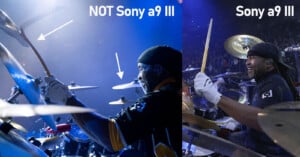
No camera is as exciting or interesting as the Sony a9 III. Since Sony announced it in early November, the a9 III has occupied considerable space in my mind. Many questions have swirled since, and the answers to each have proved mercurial.
Even among the now-crowded niche of instant cameras, Leica’s Sofort 2 stands out, representing the idealized version of a modern-day instant camera.
I think one of my favorite things about the current state of the display tablet industry is how there seems to be a non-stop growth of affordable alternatives to the historic "major players" in the game, making it easier and much more justifiable for photographers to make the leap into not just using a pen tablet, but a large and color accurate display version suitable for proper photo editing.
Like the majestic Canada Goose, I escaped a particularly brutal winter by flying south. As temperatures back home plummeted to a balmy -40 degrees, my plane landed in San Jose, California. San Jose is the West Coast convention center capital of the tech world, and Samsung was there for the brand new Galaxy S24 series of smartphones.
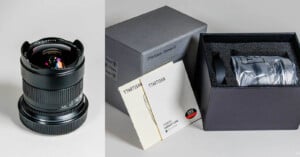
I like wide-angle lenses. So, when Pergear asked me to review the TTArtisan APS-C 10 mm lens, I gladly accepted. In this article, I will share my user experiences and feelings about the lens, construction, etc. This is not a technical review as I am not equipped for that.
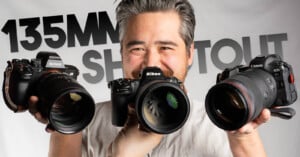
The 135mm focal length is one of my favorite portrait ranges due to its compressed rendering of people’s faces, as well as lending itself to stunningly dramatic full-body environmental portraits. Last year saw the release of two new 135mm lenses, one each from Canon and Nikon. Take into account the venerable Sony 135mm G Master and you have all three of the major full-frame mirrorless companies now offering a 135mm f/1.8 lens.
In this modern age, all of us film photographers need a way to bring a physical strip of film into the digital space. Whether you are just trying to post your images on social media or make an inkjet print, scanning is a necessity for most analog photographers.
I’ve been in the camera review game for a decade and a half and while the pleasure of checking out new gear hasn’t diminished, it’s very rare for me to be truly excited about a new camera. Well, that happened two years ago with the DJI Ronin 4D release, and now we have an impressive new 8K version to check out.
Many camera manufacturers choose to support, or at least turn a blind eye to, third-party lens makers. Some even wholeheartedly embrace them. However, Canon has infamously taken a stance to deny third-party manufacturers access to its RF mount. The fascinating twist is that many companies were beginning to produce manual and autofocusing lenses before the crack-down, creating an exclusive market of very rare lenses that hit the streets before the curtain fell.
We all have to start somewhere. For most of us, that means a basic DSLR or mirrorless camera kit with a compact, handy general-purpose zoom lens. Undoubtedly, we can't wait to ditch our basic kit lens for something faster or more versatile. A kit lens is something we feel we need to graduate from to call ourselves an accomplished photographer. But is that really the case? Maybe the humble kit lens has more to offer than we think, so today we will look at our five favorite kit lenses of all time.
My first digital ILC (interchangeable lens camera) was the Nikon D40, which I purchased during my senior year of high school in late 2007. That camera was followed by the Canon T2i (550D), which I bought in 2010, primarily because of Canon’s significantly more advanced video features; I have always been an active filmmaker as well as a photographer. Like most people, my first two lenses for each of these cameras were the kit 18-55mm zoom and a cheap nifty-fifty prime lens, so the cost of …
Jordan and I were naughty this year and Santa put something in our stocking that was less useful than a lump of coal. Naturally, we decided to review our gifts and see if there was any merit to mass-produced photo gear on the cheap.
When Asus launched the updated ProArt Station PD5 earlier this fall, it looked poised to deliver a powerful, accessible machine to creative professionals. Unfortunately, despite lofty and worthwhile goals, the ProArt Station PD5 is not quite the impressive machine I had hoped for.
The Pentax K-3 III Monochrome is among the most affordable cameras designed exclusively for black-and-white photography and a very good APS-C DSLR.
In the early summer of 2023, I had an opportunity to play with the soon-to-be-released Nikon Z8. We met up with the Nikon crew in Yellowstone National Park to photograph some wildlife and the good folks at Nikon also had another surprise for us out there.
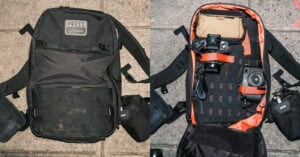
I am on what feels like an endless hunt for a backpack, or even set of backpacks, that I actually like to use. I'm looking for comfort, build quality, and maybe a tinge of style. Finding this bag is harder than it sounds, but Shimoda's new Urban Explore comes the closest yet.
The Canon EF 11-24 f/4 L lens was an extremely wide-angle lens that found popularity with DSLR users. Although it could easily be adapted to RF mirrorless cameras, doing so would make its bulky size more cumbersome and it was quite expensive -- but now there is an RF solution.
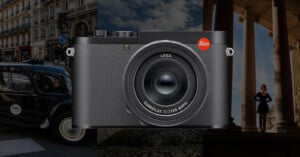
Like many photographers, I've spent years hunting the impossible combination: a high-quality camera that's also compact. Must haves: a great sensor and a wide aperture wide angle lens. Today, I’ll walk you through the meandering journey that eventually led me to the Leica Q3.
Tamron has built a reputation for creating some unique focal ranges. Take, for example, the 35-150mm that recently hit the market and really impressed. What might seem at first to be an odd range can end up being very useful. So the same could be expected of the 17-50mm f/4 Di II VXD, right?
The Phase One XC is an unusual camera, and not just because of its $62,490 asking price. It's designed with a specific purpose in mind and it sports a fixed lens in front of a massive 150-megapixel medium format sensor.
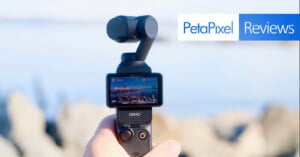
The DJI Osmo Pocket 3 skips the smartphone as a capture device and uses an integrated camera, essentially taking the front of a DJI drone and mounting it to a control stick. It is also one of the few creator gimbals I like and love using.
Like most photographers, I’ve never reviewed a piece of gear before. Also like most photographers, I tend to voraciously read reviews each time I consider upgrading. Many of these reviews parse through micro-level analysis of pixel detail, noise levels, and test charts but to me fail to answer the simple question: “will this help me get the shot?”
Where has the time gone? It's been ten years since Jordan and I started our annual roundup of the best and worst products in our industry. Every year we give our opinions on the cameras we feel deserve the top spot as well as any honorable mentions that have also made a positive impression. Perhaps even more exciting, though, is our vote for the most infamous photo and video products of the year.
Apple has just launched the promised new round of updates to its Final Cut Pro for iPad software and Final Cut Pro for Mac and we had the exclusive opportunity to put the changes through their paces.
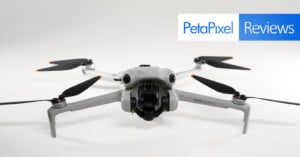
The DJI Mini 4 Pro is a drone I’ve been looking forward to flying for a while. Weighing in at under 250g, while still featuring a powerful and capable camera, the Mini 4 Pro packs a lot of features into a tiny body. But can a drone that only weighs a few ounces really deliver quality photos and videos?
Fujifilm has come to dominate the medium format market and for good reason. Combining the ergonomic controls and autofocusing capabilities of its APS-C cameras with the colossal image quality from the 100-megapixel sensor has paid dividends for the company. Although Fujifilm also uses a 50-megapixel sensor, it's the latest sensors in the GFX 100 line of cameras that steal the show.
Like many photographers, I own a million bags. Some have different purposes, one for day-to-day work and one for traveling, one for quick access during rainy days, one for studio days.
I think Pergear likes my reviews! Here I am, reviewing an “action camera,” which is the opposite of my habits. But, I review gear and share my honest opinion with all the information in the open.
Sony is on its second version of a pro-level 70-200mm f/2.8 G Master lens. Tamron recently released its second 70-180 f/2.8 G2 lens. A professional 70-200mm f/2.8 was one of the first lenses released by Panasonic for its Lumix full-frame bodies. And in all this time, where has Sigma been? Well, the wait is over. Sigma has finally released the 70-200mm f/2.8 DG DN OS Sports series lens, but was it worth the wait?