How to Give Your Bokeh Custom Shapes
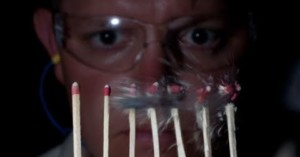
Here’s another video tutorial teaching how to give your bokeh custom shapes. When a point …
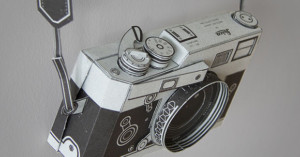
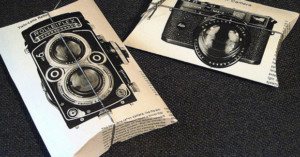
Photographer Matthew Nicholson created this paper Leica M3 that's a working pinhole camera. It's loaded with 35mm film, and even the strap is realistic and made with paper!
Now here’s something we haven’t seen before: Flickr user Damon Hair made this …
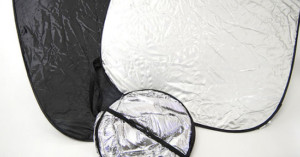
If you need a cheap way to bounce some light, don’t want to spend a wad of cash on …
Photographer Adrian Onsen wanted to use the AI Servo autofocus mode on his …
Reflector mounts (the things that attach a reflector to your bike) are so cheap that bike shops often give …
DC Watch has a tutorial on how to make your own bellows on which you can use various lenses …
Flickr user Betty Ann recycled a photography book by transforming pages into these …
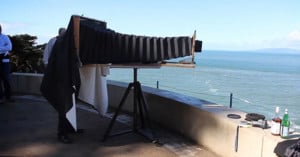
Photographer Darren Samuelson spent seven months building a massive homemade large-format camera that's about six-feet-long when fully extended. He shoots with 14×36-inch x-ray film that's about 1/12th the cost of ordinary photographic film but much harder to develop.
Redscale is a technique where film is exposed on the wrong side -- rather than having the light hit the emulsion directly, you expose the film through the non-sensitive side.
The name "redscale" comes because there is a strong color shift to red due to the red-sensitive layer of the film being exposed first, rather than last (the red layer is normally the bottom layer in C-41 (color print) film). All layers are sensitive to blue light, so normally the blue layer is on top, followed by a filter. In this technique, blue light exposes the layers containing red and green dyes, but the layer containing blue dye is left unexposed due to the filter. [#]
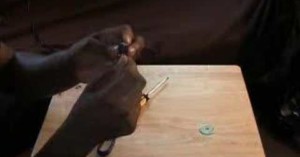
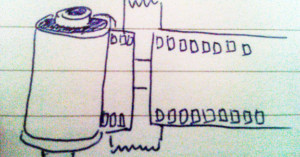
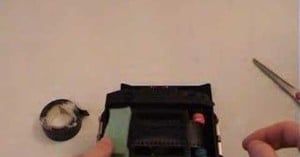
The two main ways for doing this are loading the film upside down (if your camera allows it), or by purchasing film that has been "converted" already. A third way is to make DIY redscale film by going into a darkroom, pulling out the film, cutting it, flipping it, taping it back together, and then winding it back into the canister. Messy, but it works!
Mother’s Day is just around the corner, and if you haven’t gotten anything for your mom yet we think …
National Geographic created this nifty little video teaching how to turn any room with a view into a giant …
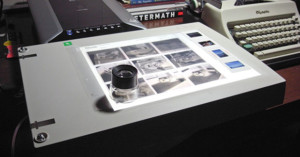
If you have an old or broken flatbed scanner lying around and gathering dust, a neat thing you can …
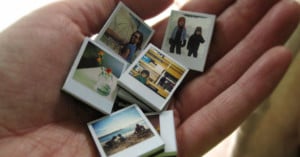
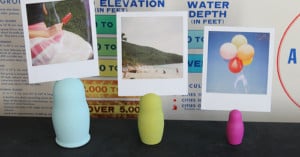
Here’s a neat idea for displaying your photos: pick up a set of …
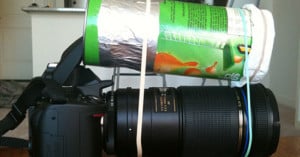
Flickr user Steve Kushnir came up with this neat idea of building a cheap DIY diffuser using a Pringles can, two layers of paper towels, and some rubber bands. He attached it to his Nikon D5000's popup flash and uses it for macro photographs of creepy crawlies.
Andrew Lathrop came up with this novel way of building a simple radiation detector using an old compact camera, …
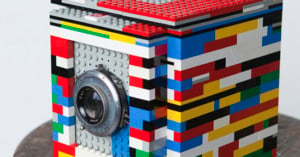
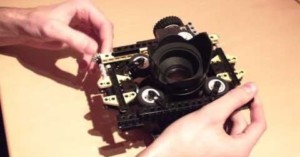
Photographer Cary Norton built a working 4x5 large format camera using Lego bricks, a 127mm lens he purchased for $40 on eBay, and a film holder and ground glass in the back.
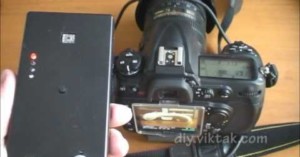
IT consultant and photo enthusiast Viktor Takacs didn’t have much success when he …
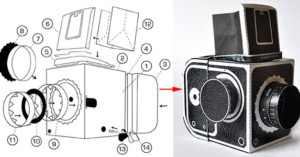
You can now build you own version of the cardboard Hasselblad pinhole camera that we featured a couple days ago. Kelly Angood has released a PDF with the template and detailed instructions for putting the pieces together. The finished product is a working pinhole camera that takes 120 35mm film.
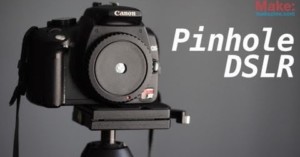
Make just published this short but informative tutorial on how to turn your …
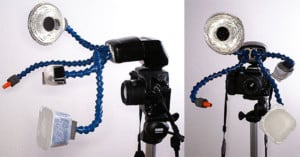
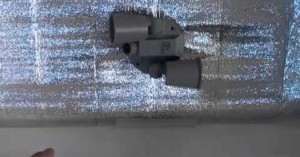
If Doctor Octopus were to design a DIY flash accessory, it might look …
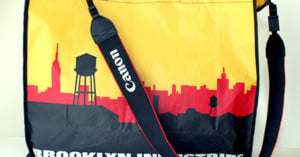
Have an unloved camera strap lying around? You can repurpose it as a strap for a shoulder …
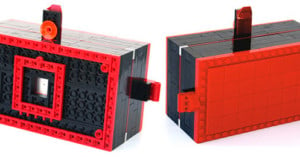
Flickr user Chase Lewis created this working pinhole camera using ordinary LEGO pieces (we featured an uber-fancy LEGO Mindstorm camera before) for his high school film photography course.
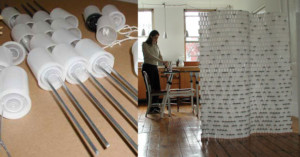
Tiffany Threadgould of RePlayGround had the awesome idea of building a room divider using old 35mm film canisters. She spent three months befriending film processing shops in New York and collecting the 1,000+ canisters needed for the project.
How do photographers get those wide images that bleed through the edges of the negative, showing the sprocket holes? It's a technique that allows your to create stunning panoramic images -- these little bits of film become art in themselves. These photographs are achieved by loading 35mm film into a 120 medium format camera. This tutorial was written with the Holga in mind, but the same technique works for other 120 cameras as well.
YouTube user havok2 created this creative follow focus using LEGO Mindstorm pieces. It’s …
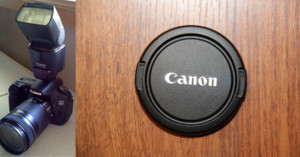
For Christmas, I received a Canon 60D. I’m definitely still learning how to use it, but I’m excited to have it. The first big problem I encountered, besides the need for more regular exercise so I can lift the beast, is that I am going to lose the camera lens cap. I take this cover off the lens and leave it everywhere. I had the camera for about 4 days before I was considering checking the price on replacing it. Lucky for me, I came up with a better idea while I still knew where it was. Instead of waiting until I lost it, I made it a little pouch that slides onto my camera strap.
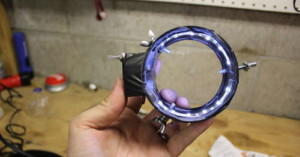
I had some stuff lying around as well as saw some parts as I was out and thought this would be fun to make. I have around $20 invested in parts. On eBay I saw ring lights for anywhere around $40 on up, so this will save you money and it was fun to make.
If you use the LCD on your DSLR for shooting images or video, you probably know how much of …
Here’s a nifty behind-the-scenes video tutorial by photographer Jay P. Morgan that shows …
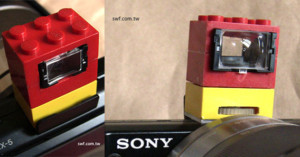
This DIY viewfinder was created using LEGO bricks and components from a …
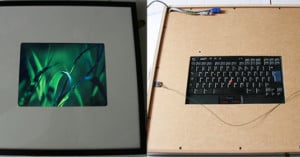
Erik Pettersson was looking for a nice digital frame, but found that all the commercially available ones were too …
You’ve likely seen this DIY trick before, but it doesn’t hurt to share this for those who haven’t. Instead …
Need to hold down the shutter release for extended periods of time, but don’t want to shell out money …
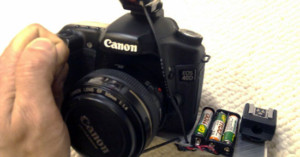
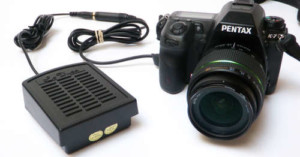
I needed a foot switch for my DSLR camera so that I could take hands-free pictures. On a long-shot, I went down to the local Radioshack to see if they had one. As expected, they didn't have any camera foot switches, but I did luck out that they had all the parts necessary to build my own. Here is how to throw together a 5-minute camera foot switch with easily obtainable parts from Radioshack.
Time-lapses are usually created using intervalometers — devices that electronically trigger the shutter …
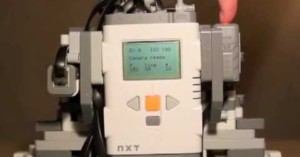
Pinhole cameras are usually very low-tech and dumbed-down in their operation, but how would one go about making it fancier like a digital camera? Basil Shikin decided to build his own custom pinhole camera using Lego Mindstorms, adding all sorts of awesome features to an ordinarily simple kind of camera. Features include automatic shutter speed calculation using a sensor, automatic film rewind, and the tracking of how much film remains.
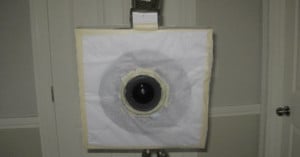
If you'd like to take "lo-fi" photographs with your DSLR, but don't want to spend money on a pricey specialty lens just for this purpose, you're in luck. In this tutorial I'll be showing you a simple "mod" with which you can get a similar effect for no money at all! You’ll need a piece of scotch tape, scissors and a lens.
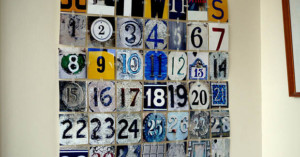
If your wall needs decorating and you have a lot of time on your hands (and we mean a …
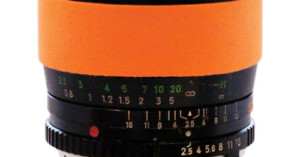
I really love using old lenses on modern digital cameras, but many old lenses have cosmetic issues that make them a little less pleasant to use. Here are a few very cheap and easy things you can do to make these old lenses a little nicer to look at and to use. I don't advocate doing this to rare collectible lenses; this is for "user" lenses.
Note that these things have nothing to do with internal functionality of the focus or aperture, nor the condition of the glass. That should all be good before even thinking about this. No sense making lens ergonomics better if the lens isn't known to be worth using!
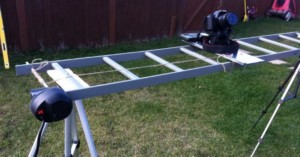
While adding movement to time-lapse videos is cool, the special equipment (e.g. dollies, cranes, etc...) you need can be pricey. Derek Mellott couldn't afford to shell out hundreds of bucks for a dolly, so he decided to make his own using things found in his garage. His resulting setup included tripods, a cable management tray, a TI-calculator as an intervalometer, and a BBQ rotisserie motor to slowly pull the camera along.
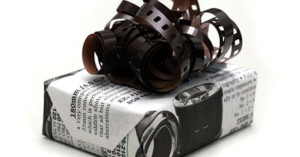
If you’re planning to give any gifts to photography-enthusiasts this Christmas, you can try adding a little awesomeness to …
Last week we shared the awesome fact that chickens have image stabilized heads. If you’ve been wondering …
Cinematographer Tom Guilmette has a simple way you can shoot your own aerial …
I have always been enthralled ring flashes, but they are so expensive! I recently found a pizza box ring flash how to, but it didn’t go on my camera (it was meant as an off camera ring flash) so I made some changes. And here, for all to use, is my version of the pizza box ring flash.
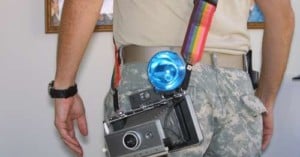
What does a rainbow mean to you? An interesting atmospheric phenomena.... gay pride... the 42nd Infantry Division? To me a rainbow screams, "Polaroid Corporation!". Even when Polaroid was actually making cameras, the camera straps were disappointingly plain vanilla. Polaroid missed a critical branding opportunity! In this tutorial, I'll attempt to make a new camera strap for my Polaroid 100 camera by recycling rainbow colored luggage belts.
These pastel baby box cameras are perfect for any party where photography enthusiasts are present. Etsy seller …
Over at Leica User Forum, member dkpeterborough wrote a series of posts detailing how he and a fellow member of the Peterborough Photographic Society named Tony Lovell created a beastly 900mm lens. The lens uses optics salvaged from a government flight simulator projector lens, and cost only hundreds of pounds in parts (comparable lenses cost thousands).