How Fujifilm Changed the GFX Eterna 55’s 100MP Sensor for Filmmaking

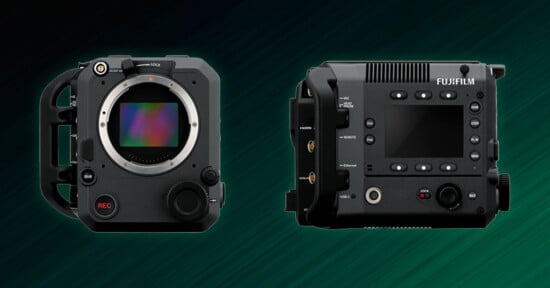
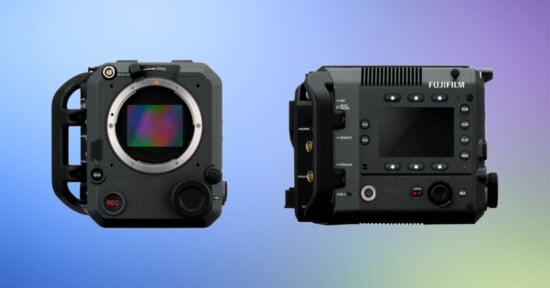
At first glance, the 101-megapixel medium-format image sensor in Fujifilm’s brand-new GFX Eterna 55 cinema camera looks very much like the sensor featured in the GFX100 II and GFX100S II. However, as Fujifilm details in its latest “GFX Eterna 55 Development Story,” the truth is much more complicated than that.
Although the GFX Eterna 55’s image sensor is derived from the custom-engineered sensor built for the GFX100 II, Fujifilm’s new article and accompanying video detail the numerous ways that the sensor has been adapted specifically for filmmaking applications.
In addition to the GFX Eterna 55’s cooling fan, which enables the camera to record continuously for longer periods than the standard GFX cameras, the team at Fujiflm engineered additional heat-dissipating metal components for the sensor assembly and redesigned the internal structure of the imaging pipeline — “distinct from that of still cameras” — to make the GFX Eterna 55 up to the task of long takes.
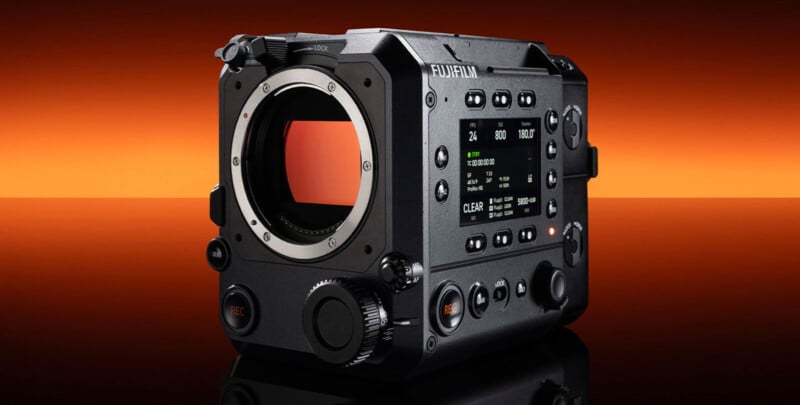
As PetaPixel has reported on numerous occasions, the GFX Eterna 55 also incorporates a new dual-base ISO system. The dual-base ISO at 800 and 3200 promises improved video quality and dynamic range in a broader range of situations than GFX still cameras. This is a very specific and careful tweak to image sensor behavior, made with professional video applications in mind.
The GFX Eterna 55 can also extract more performance out of the customized image sensor. The camera features a new 48 frames per second open gate mode, which utilizes the entire light-sensitive area of the sensor, measuring 43.63 x 32.71 mm.
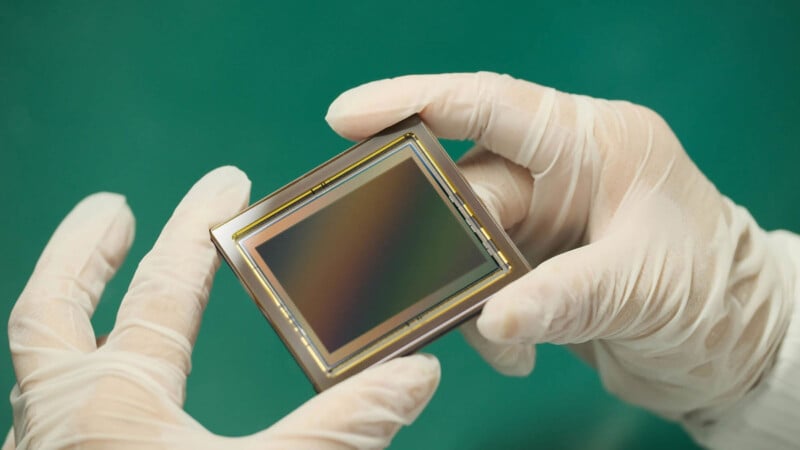
Another adaptation designed for filmmaking is the new optical low-pass filter (OLPF) in front of the 101-megapixel image sensor. GFX still cameras lack this filter, ensuring that photographers can extract as much resolution as possible from the image sensor. However, for video applications, the OLPF, which helps “align the separated RGB Bayer pattern more precisely,” ensures cleaner and more accurate color information for motion pictures. The OLPF also slightly reduces spatial resolution, which Fujifilm claims delivers a “film-like look” with “similar visual softness.” Although filmmakers often want high-resolution capture, there is such a thing as too sharp.

As Fujifilm explains, yet another sensor-level change comes in the form of a new internal electronic neutral density (ND) filter, designed specifically for large-format image sensors. The internal electronic ND covers a density range from ND0.6 to ND2.1, which enables filmmakers to reduce the amount of light that hits the sensor by two to seven stops.
Fujifilm reveals in its Development Story that it began development on the internal electronic ND filter “a year before the development of the GFX Eterna 55,” requiring significant work by multiple departments within the company. The ND filter can modulate light attenuation by incredible 0.05-stop increments, ensuring “nearly imperceptible transitions in exposure.”

“Ultimately, it was the fusion of analog and digital expertise that made the development of the GFX Eterna 55 sensor a success,” Fujifilm concludes. “We hope creators will fully explore the beautiful cinematic expression this camera enables — especially by making the most of its low-pass filter and electronic ND filter.”

It’s always nice to get a peek behind the curtain of camera development, especially when it concerns technological achievements at the image sensor level. The Fujifilm GFX Eterna begins shipping this month for $16,499.95.
To get a sense of its performance, PetaPixel used the GFX Eterna 55 to shoot our new documentary, No Guarantees. The trailer for the documentary is available above, and a behind-the-scenes deep dive is available here.
Image creditsFujifilm
Affiliate Disclosure PetaPixel articles may include affiliate links; we may earn a commission if you buy through one.