Chief White House Photog Pete Souza is Now an Instagrammer
How do you take the next step after rising from humble newspaper shooter to chief official photographer for the White House? You start sharing pictures of your lunch, of course.
How do you take the next step after rising from humble newspaper shooter to chief official photographer for the White House? You start sharing pictures of your lunch, of course.
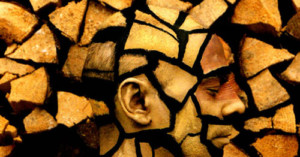
Chinese photographer Liu Bolin has made a name for himself by creating photos showing his body blended into various environments with the help of carefully applied paint. Italian artist Johannes Stötter has been creating similar works, except he's more focused on the painting than the photos.
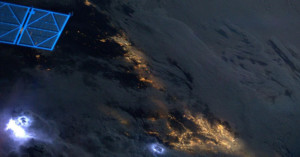
Hey aspiring storm chasers -- want to dramatically improve your lightning shots? Try getting an elevated view. Like about 400 miles up. That's the approximate orbital height above Earth of the International Space Station, which is producing an impressive library of images showing what lightning looks like from way above.
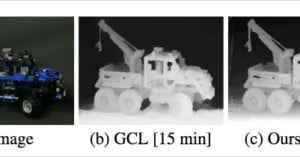
3D modeling for movies and video games is often done using lasers. The modeler scans whatever it is they are trying to reconstruct using a laser and then ends up spending a good bit of time cleaning up the results in post. In contrast, a new method developed by the folks at Disney Zurich promises to generate much more accurate results by replacing the lasers with photos.
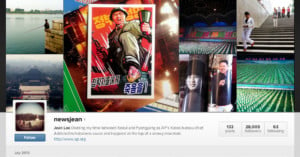
Back in February, the AP's David Guttenfelder and Jean Lee were some of the first to begin uploading Instagram photos from inside the closed off country of North Korea. A rare look inside a normally very mysterious country, both of their Instagram accounts became the subject of many a headline.
Lenstag generated quite a bit of buzz last week by introducing a service that aims to crack down on gear theft by making it easier to track and report stolen gear. The service is now getting a new feature that will further add trust to the used gear buying process: disposable verification links for individual items.
LensRentals is at the height of its popularity and still growing. About a week ago, we shared some stats that more than proved this, showing how a company started by one man and $5,500 dollars in 2006 is now a 42 person operation on track to bring in $13 million this year.
Camera-toting birders are flocking to a remote area of New Mexico to capitalize on what's being described as "the best photobomb in history." At least for people who are really into birds.
Although drone photography might lead you onto some sticky legal ground in some states, it is nonetheless often quite beautiful. It makes sense that those who have spent good money on drones are eager to put that money to use, and now they have an Instagram-like social network on which to share their results.
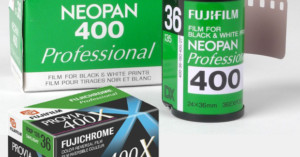
Film has seen better days. With legends like Kodak's Kodachrome gone, and staples like Fujifilm's Neopan 400 very recently following suit, most news about film is met with dismay and long drawn out "No's" (if you doubt it, check out the comment section on the Neopan 400 and Provia 400X discontinuation announcement linked above).
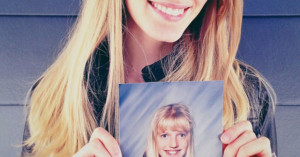
Do you always laugh and squirm when you look back at official school pictures from "awkward years"? You're not alone -- take a peek at the Awkward Years Project and you'll see what we mean. The project was started by a Utah-based graphic designer and photography enthusiast named Merilee, who's collecting then-and-now portraits to show people who have blossomed since their awkward teen days.
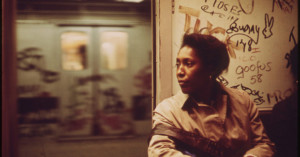
The mandate for Documerica was intriguingly broad -- "photographically document subjects of environmental concern" -- and photographers responded with striking images covering everything from pot-smoking form to toxic smog.
Every day it feels like there are another hundred or so timelapses posted online. While some of this is just the illusion of more exposure and access caused by the Internet, some of it is definitely real. The abundance of rapidly evolving technology and constantly dropping DSLR prices have created the perfect atmosphere for even the least experienced photographers to churn out a decent timelapse. And while some people will complain about this fact, it's really just the natural order of things.
Photographer Brad Hammonds is fascinated by a concept that he calls "emotional delay." It's the idea that no moment is truly experienced until it has already passed. In the time the moment is happening, the brain is processing it. By the time the experience comes, the moment is actually gone.
In the past, we've shared a few creative ways to take your fireworks shots to the next level. Be it shooting hand-held long exposures for an abstract result or refocusing during a long-exposure, the results can be quite stunning.