May 2012

Photos of a Perpetually Burning House

Burning House is a series of photographs by artist Carrie Schneider that shows a small white house burning on an island in the middle of a lake. While the subject matter might not be too out of the ordinary, glance through the images and you'll soon find that the house appears to be perpetually on fire throughout the seasons.

How to Fold an Origami Camera Using a Dollar Bill

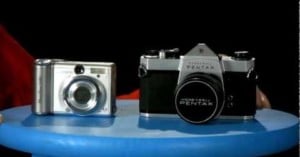
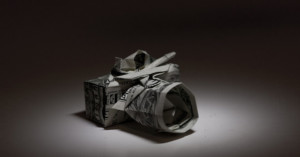
Last year we featured a neat little origami camera created using a dollar bill by Won Park. If you've been dying to know how to fold one yourself, today's your lucky day. Be warned though: isn't definitely not an origami project for beginners.

Apple to Unveil iCloud Photo Sharing and Video Synching

According to the Wall Street Journal, Apple is planning on becoming more invested in photos and video with the next iterations of iCloud and, subsequently, iOS. The updates, which are expected to be announced officially at the WWDC starting June 11th, will include the addition of video synching similar to the current photo stream alongside some exciting photo-sharing capabilities.

Fashion Photos of Models Wearing Light Painted Dresses

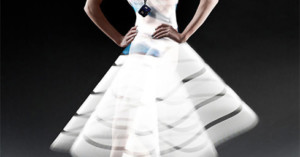
London-based advertising and art photographer Atton Conrad does some pretty interesting mixing of fashion and light painting photography. He has done a number of images for magazines and ad campaigns that feature models wearing dresses manufactured from light rather than fabric. For each fo the images, Conrad paints the dress around the model in a blacked-out studio while remotely triggering the camera.

Yahoo! and the Decline and Fall of Flickr

For those of us who remember it, Flickr was once an amazing place. More than just a website or a bucket of features, it was a vibrant community made up by professional photographers and amateur photo junkies alike. Before Facebook would even allow you to upload anything more than a profile picture, Flickr was the place you went to share your life in pictures. And then, at least according to an article on Gizmodo, Yahoo! happened.

Marc Jacobs Slaps Graffitied Store Photo onto Shirt, Gets Last Laugh

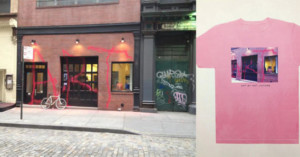
Don't mess with Marc Jacobs. That's the lesson graffiti artists should take from a teensy little altercation between Marc Jacobs and the infamous graffiti artist Kidult. When Marc Jacobs employees awoke to a vandalized Soho boutique the morning after the Met Ball, they snapped a few photos before starting to clean it up. But instead of just stopping there and moving on, Marc Jacobs decided instead to turn the whole thing on its head, slap the photo on a t-shirt, and sell it with the caption "Art by Art Jacobs."

Photographers: You’re Being Replaced by Software

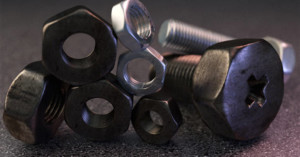
The image above is one-hundred percent fake. It has no connection whatsoever to the world of things. I created the bolts, lights, textures, and everything else in a free, open-source, relatively easy-to-use software package called Blender. It's easy enough that even a novice user like me is able to make a pretty convincing image. If you are a photographer that makes a living shooting still-life photos, this should scare you.

Is This Britain’s Most Photogenic Face?

Beauty may only be skin deep, but apparently it's also scientifically measurable. At least that's what Lorraine Cosmetics was banking on when they put together the Britain-wide beauty contest "Lorraine: Naked." Contestants, who were not allowed to have had any plastic surgery, were asked to send in a photo with no makeup on, and after many different symmetry tests, input from experts and a nationwide vote over the top three, Florence Colgate emerged victorious.

Star Trails Above, City Trails Below

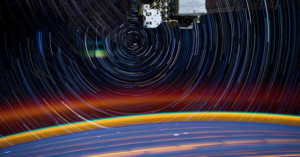
NASA astronaut Don Pettit shot this beautiful long exposure photograph showing star trails and city trails from the International Space Station. The image was created by combining 18 separate long-exposure photographs.

Lightroom Plugin Offers and Easy Way to Add EXIF Data for Manual Lenses

Many photographers, especially those who used to shoot film, still enjoy the feedback and control offered by fully manual lenses. The only problem with using these lenses in the digital age is that modern camera bodies don't recognize them and therefore add no EXIF lens data to your images; adding that data up until now required you to install a command line tool such as ExifTool and learn complicated prompts. But now there's an easier way to make these changes happen inside of Lightroom.

What Classic Video Games Would Look Like in the Real World

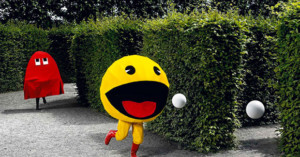
Prior to the fancy graphics video game players enjoy today, classic games were based on simple geometric forms. German photographer Patrick Runte decided to do a quirky photo project exploring what these games might look like if translated to the real world. His series, titled Jump 'N' Run, shows people dressed in simple costumes of "characters" from games like Pac-Man, Pong, and Tetris.

SloPro App Lets You Shoot Real 60FPS Slow Motion on Your iPhone 4S

Slow-motion video is usually the territory of expensive equipment like the Miro M120. Alternatively, if you're not looking to shoot professionally, you can always take the video you capture on your phone or regular camera and slow it down, but the results are usually choppy and (sadly) nothing you'd want to broadcast on YouTube. Fortunately, there is another way; iPhone videographers who own the 4S now have a free, fun alternative in a new app called SloPro.

Kodak Had A Nuclear Reactor in the Bowels of its Rochester Campus

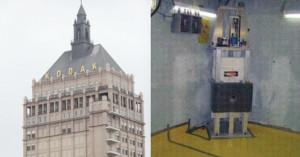
Many words and/or phrases come to mind when you think of Kodak: photography, disposable camera, Kodak moment, and more recently bankruptcy. But we never thought we would be able to associate the phrases "nuclear reactor" and "enriched uranium" with the once-great photography giant -- until recently that is. That's because a few months ago a former Kodak employee let slip to the Democrat and Chronicle the existance of a little known, and never publicized, nuclear reactor hidden in the bowels of Kodak city for the last 30 years.

Photographer’s Photos Found in Over 5,000 Wikipedia Articles

David Shankbone (real name David Miller) has been called "arguably the most influential new media photojournalist in the world." And if you've never heard of him you may wonder: How did he achieve such a status? How did he get his work published by The New Yorker, Vanity Fair and Forbest all while his actual day job isn't even as a photographer? He did it all by giving away his photography for free.

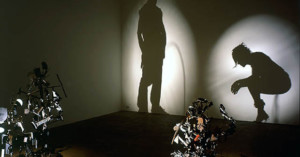
Amazing Shadow Photos Created Using Carefully Arranged Objects

Tim Noble and Sue Webster are a London-based artist duo that creates amazing shadow art installations using carefully arranged objects. They use everything from trash to metal cans shot with BB pellets, arranged to cast shadows of people and skylines on the wall when a light is shined from a certain direction.

Project Seeks To Capture Long Term Time Lapse of The Platte River Using 45 DSLRs

A team led by photographer Michael Forsberg and NET Television project manager Michael Farrell recently embarked on a large-scale time lapse project the likes of which you don't usually see. The project, which you can follow on their website, constitutes an attempt to visually document the Platte River -- a long-standing source of water and power to a large part of the United States.

Hardcore Durability Test Looks to See Just How Much the Canon 7D Can Take

It goes without saying that nobody should ever test their camera's limits where durability is concerned (so please, don't try any of this at home); but in the interest of science (or lunacy?) someone volunteered their Canon 7D and asked the folks over at DigitalRev to see just how much the camera could really take before it gave up its digital ghost.

The Focus Shifter — A Simple Lens Mountable Follow Focus

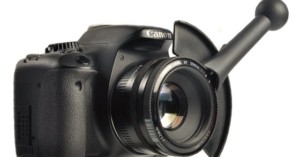
The focus shifter -- which, for now, is also going by the name "lens shifter" -- is a simple, lens-mounted, adjustable follow focus that works by attaching to the focus ring on lenses between 56 and 98mm in diameter. Using the attachable marker board you can then mark your focus and transition points in advance, shifting between them with ease when the time comes.

Famed Combat Photographer and Picture Editor Horst Faas Passes Away at 79

Host Faas, the two-time Pulitzer Prize winning AP combat photographer, passed away in Munich, Germany on Thursday May 10th. Best known for his striking work in Vietnam, he was perhaps one of the most famous combat photographers to date. More than just a photographer, though, Horst Faas was also an avid teacher of the art, and a photo editor who wouldn't take no for an answer.

Unlocked 41MP Nokia 808 PureView May Make it Stateside

A while back people were pretty disappointed when they found out that Nokia would not be bringing their 41-megapixel 808 PureView smartphone to North America at all. All megapixel race arguments aside, a lot of people wanted to give the camera a shot and see what those 41 million pixels could really do. Well, it looks like Nokia haven't entirely given up on the United States after all.

The New Leica APO-Summicron-M 50mm f/2.0 ASPH Lens

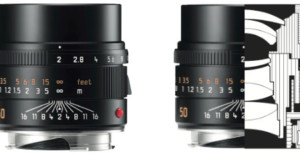
Hidden in-between all of the camera announcements from Leica at their May 10th event, was a lens that made quite a stir. At 50mm and f/2.0 the new Leica APO-Summicron-M ASPH lens doesn't seem like anything to write home about; and with a price tag of almost $8,700 it falls a bit outside most consumers' price range.

Leica's justification of the price, however, has to do with the craftsmanship that goes into each of these lenses, and the quality that this leads to. Like all of Leica's lenses, each one is hand-made: the optics are inspected and assembled by hand, the casing is put together by hand, even the numbers on the lens are painted by hand; and the catch phrase for the lens on Leica's website, "Anything but a standard lens," isn't off the mark.

What if Learning to Use Photoshop Was More Like Learning to Play Portal?

Learning to play a game and learning to use Photoshop follow two, very different patterns. In the first you "discover" how the game is played, you fiddle with the buttons, try combinations, have eureka moments and eventually become proficient at it. Learning Photoshop, on the other hand, requires extensive tutorials and help; books are available from thin "easy-to-use" instruction books to heavy tomes many hundreds of pages long.