Great Reads in Photography: February 7, 2021
Every Sunday, we bring together a collection of easy reading articles from analytical to how-to to photo-features in no particular order that did not make our regular daily coverage. Enjoy!
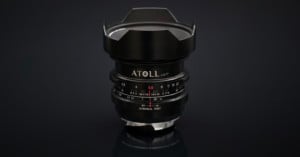
Lomography has launched its Kickstarter for the Atoll Ultra-Wide 17mm f/2.8 Art Lens for Nikon Z, Canon RF, Sony E, and Leica M-mount. The fully manual lens makes many lofty promises for its $550 asking price.
Every Sunday, we bring together a collection of easy reading articles from analytical to how-to to photo-features in no particular order that did not make our regular daily coverage. Enjoy!
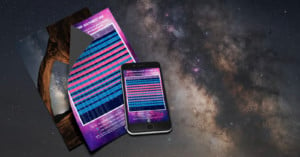
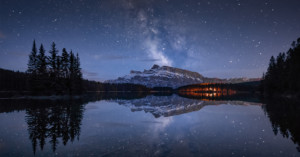
Planning is key to capturing the best Milky Way images. Unlike other types of photography, shooting our galaxy requires you to consider many astronomical factors, like the sunset, the moon phase, and the Milky Way’s location in the sky.
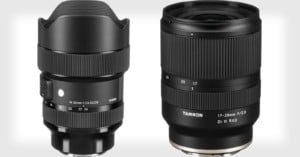
Let’s talk about the most interesting and hardest lens to master: the ultra wide angle. This is a fantastic lens that lets you share unique perspectives of almost any subject by cramming a whole lot of environment in a single frame. If you are in the market for one of these, follow on as I compare two of the best on the market.
There are many genres of photography, which I believe is what makes photography such a unique hobby or profession. The camera simply becomes a tool that facilitates a personal interaction with the wide range of variables in our culture.
British electronics retailer Currys has published a comprehensive breakdown of insights it collected on the state of photography in 2020 using various statistical methods and sought input from three experts to forecast the troubled photography industry going forward.
In 2015, I fully committed to switching from my Nikon DSLR system to a Sony mirrorless system starting with the Sony a7 II. Up until that point, I had always held on to my Nikon D700 and D800 as my workhorse cameras for weddings and commercial shoots but experimented with Olympus, Sony, and Panasonic for my travel photography.
As a landscape and travel photographer, I often carry around an ultra-wide-angle 14mm lens and the Tamron 28-75mm f/2.8. Last week I was able to test the latest addition to the Tamron series for full-frame mirrorless cameras: the 70-300mm f/4.5-6.3 Di III RXD. And I think I've found the perfect addition to my usual 2-lens kit.
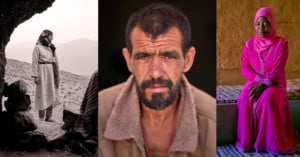
Of the many creative photographic genres, it is perhaps portrait photography where two camps—the representative and the artistic—can be most clearly observed. Whilst the former requires context through captions and backstory to elevate it, in the later, the absence of such requires creative aptitude. Attempting to merge both camps in one photograph can often diminish its effectiveness.
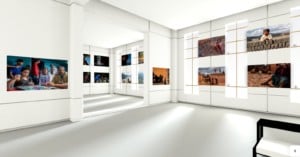
Last month my fiancé (Corina) and I (Matt) did something we’d never done before. We ran a virtual photography exhibition.
Okay, I know the title of this article sounds a bit clickbaity -- and to be honest, it is. Proclaiming anything to “be dead” always sounds alarmist. But really, I don’t see a bright future for the medium I love.
So you have spent years packing up your camera and jumping on a plane. Then a pandemic shut down borders killing travel plans overnight and you are not sure where your next story is going to come from. Where do you go for those sweet photos or that glorious content you had been able to churn out as fast as you could make it?
There are many different reasons that photographers love photography. Almost always any individual photographer’s interest is a mixture of multiple aspects.
Creative Director Yousuke Ozawa—whose 'Satellite Fonts' project went viral back in 2014—is at it again. In order to keep his sanity during lockdown, he started taking "digital vacations" through Google Maps, and capturing Street View travel photography.
After a recent bad experience in Ukraine, I returned to the UK upset, fed up and tired of things not going my way. I can't get into details about what happened in Ukraine and although it was personal, it acted as a catalyst which then got me reflecting negatively on other areas of my life too.
I have sometimes been critical when landscape photographers combine two or more photos not taken at the same time to make one great photo -- adding northern lights or beautiful skies to a photo that did not have them, for example -- and then making people believe it was something that really happened.
As fears of coronavirus (COVID-19) balloon in the U.S., many freelance photographers have begun to contend with the economic impact of event cancellations and social distancing policies. Freelancers are accustomed to seasonal slowdowns or the occasional cancellation, but the uncertainty around the breadth and duration of this outbreak has resulted in anxiety, frustration, and anger.
Street photographers are not known for their reserve. We are happy to give advice on gear, framing and technique. But I believe the best photographers are those who also seek advice and look to learn from others. That said, not all advice is equal, and some ideas are outdated, narrow minded, or just plan wrong.
If there is a type of photography where a great planning increases your chances of success, that’s Milky Way photography.
As a landscape and travel photographer with more than a decade of experience, I always found myself carrying a ton of gear. With huge wide-angle and telephoto lenses, multiple DSLR camera bodies, heavy-duty tripods, and occasionally drones in my backpack, my mobility while trekking to locations was often limited. However, things changed dramatically in 2016 when I started working at GoPro and discovered its amazing cameras.
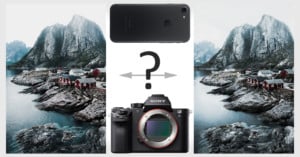
Sensor image quality has advanced so much over the last few years that phone manufacturers are boasting photographs that rival those from larger mirrorless and DSLR cameras. Some, like the Xiaomi Mi CC9 at 108 megapixels, quadruple the resolution of my best camera.
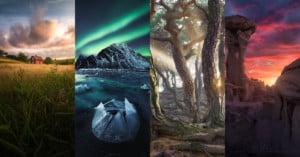
There is a plethora of very talented landscape photographers out in the field these days, both hobbyists and professionals alike. The following is a collection of some of them, and may you enjoy their talent, craftsmanship, and dedication to the genre.
Landscape and travel photography marketing is one area that photographers often find particularly hard. But if you want your photography business to grow, you have to know how to market yourself and your work.
While most commercial photographers know about copyright laws and the use of a model for their images, it seems the answer isn’t so clear when it comes to travel photography. If you’re traveling the world with your camera, what laws apply for you and for your subject?
With the recent polemics surrounding a certain image that won a photography competition this week, I feel like we need to talk about travel photography. About people photography, in our case. And to set up boundaries as to what’s acceptable in both cases. Honestly, in my opinion, it’s a matter of common sense – but it seems that’s not enough. We still witness some shocking scenes in the world of travel photography these days.
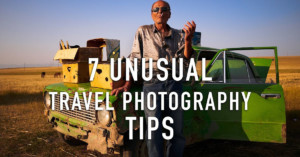
You might have seen countless videos about travel photography tips online. Most of them touch on more or less the same stuff, which is either fairly obvious or pretty banal. Here's a 17-minute video about travel photography tips that I’d consider fairly unusual. They aren’t something you commonly hear.
There is a particular obstacle that stands in the way of almost all travel, documentary and cultural photographers alike and, for some reason, no one seems to be willing to talk about it -- so I'm going to.
You're full of excitement, and new adventures and life experiences are just around the corner. You have finally completed those last minute errands and your bag is now bursting at the seams as you try to squeeze in the last few items before zipping that bad boy up and darting out the door for the airport. But you pause for a moment and find yourself staring at your bag. You think to yourself, "Have I forgotten anything?"
This 8 minute episode of Ian Wong’s Digital Darkroom series explores the thought process while taking travel photos, how to manage expectations, and the importance of taking photographs just for fun.
When shooting travel photos, it's very tempting to direct your subject and stage your composition. A lot of people are very happy to be photographed and even happier to be able to make a few bucks being your subject.
I had the good fortune of having a pre-production model of the Fujifilm GFX 50s to take with me to Norway in February of this year on my scouting trip with Discovery Photo Tours.
From the beginning of my photography career—which is … almost 30 years ago (that can’t be true!)—I've been shooting with zoom lenses. Due to the flexibility they offer, I was convinced they make the best choice; as far as I know, thousands of other travel photographers who would say the same.
Traveling and photography go hand-in-hand, but without the right gear it can also be a pain. Fortunately, there's some great affordable travel photography accessories out there that will make traveling with a camera a joy.
It was a beautiful day in Montreal. I was on a regular afternoon jog listening to a popular photography podcast. The topic of the episode was travel photography. The guests of the show were two professional photographers with the years of experience.
At the end of the podcast during the listeners’ question and answer session, the first question immediately grabbed my attention. Why? Because I’ve been asked the same, or nearly identical, question many times before.
COOPH just released this short 3-minute video in which adventure photographer …
Photography is not about the camera. It’s not even about the beautiful images we create. It is about telling powerful stories. Photography is a tool for creating awareness and understanding across cultures, communities, and countries; a tool to make sense of our commonalities in the world we share. I believe the way to find common ground is by seeing yourself in others.
On a recent trip to Hong Kong, David Hobby (aka. Strobist) caught up with his friends over at DigitalRev and offered some wise advice for the traveling photographer.