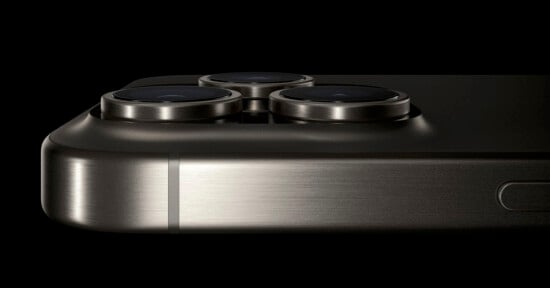

Years in the Making, Glass Imaging Is Delivering on its Promise to Transform Smartphone Photography

Glass Imaging’s impressive GlassAI Neural image signal processing (ISP) technology is heavily featured in the brand-new Honor 600 smartphone, promising to improve the zoom photography experience on the fancy new phone.
What Does Glass Imaging Do?
PetaPixel has covered Glass Imaging’s AI technology numerous times in the last few years, including a trip to Glass Imaging’s California headquarters in 2024. The company’s primary focus is using AI technology and more intelligent image signal processing to dramatically improve image quality from small image sensors and mobile camera systems.
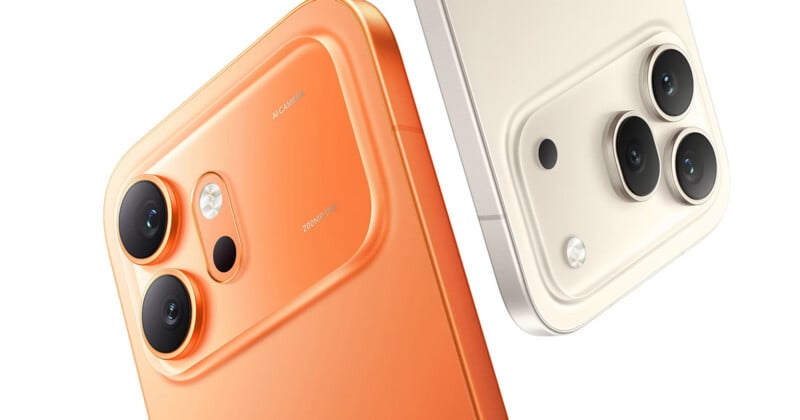
By leveraging its sophisticated algorithmic technology, a specific imaging pipeline, and on-device processing power, GlassAI can help smartphones overcome the physical limitations of small sensors and lenses.
In the case of the Honor 600, GlassAI applies its neural network processing to the phone’s zoom imaging, “helping to recover fine detail, reduce noise, and preserve natural color and texture across the zoom range.”
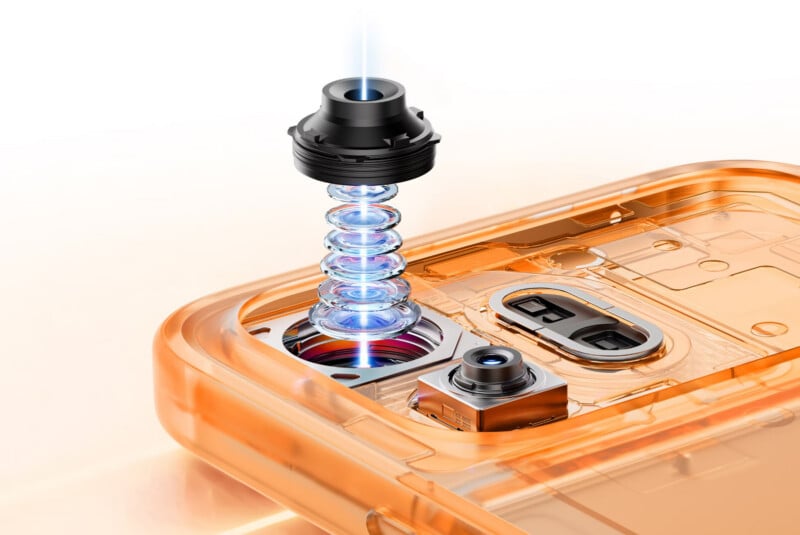
GlassAI Inside the Honor 600 Smartphone
”We’re honored to partner with Honor and to have our Neural ISP technology featured in the 600 series,” says Ziv Attar, CEO of Glass Imaging. “Honor continues to set a high bar for mobile imaging, and we’re proud to contribute to that experience and showcase our product in the market.”
As Glass Imaging tells PetaPixel, its neural ISP technology is particularly helpful when dealing with small pixels.

“In general, one advantage we offer is in dealing with small pixels. Sub-micron pixels encode high-frequency data in complex ways that traditional ISPs fail to decode — that information isn’t lost, just hard to recover. By modeling the specific point spread function (PSF), sensor, and noise profile of each module, GlassAI corrects optical degradations at their source instead of relying on generic approximations,” Shivansh Rao from Glass Imaging’s machine learning team tells PetaPixel.



“Specifically, smartphone cameras run into a hard trade-off as pixels shrink: to keep diffraction in check at tiny pixel sizes, designers tend to widen the aperture, but a wider aperture pulls in steeper rays at the edge of the lens that introduce more geometric aberration. A conventional ISP does not model the optics, so it can’t undo that blur; it generally only smooths or sharpens around it. Because we model the actual optics and sensor physics per module, we correct those degradations directly instead of masking them,” Rao continues.
As Glass Imaging has explained before, the company performs extensive end-to-end training for demosaicing, denoising, deblurring, and multi-frame fusion simultaneously, so that all these critical image processing steps are performed in parallel rather than one after another.
“A traditional ISP runs [these] as a chain of discrete steps, and each step discards information the later steps can never recover,” Rao says. “By training the whole pipeline end-to-end on the RAW, we avoid that compounding loss.”
Understandably, given the occasionally jarring, unrealistic, and unpleasant-looking results from many traditional computational photography models and modes, photographers are a little bit skeptical of anything AI-related in their phones. Glass Imaging hopes to avoid the pitfalls of more traditional computational photography by relying on a real RAW image data signal at every step of the process. The company’s model is not creating new detail from thin air, but rather recovering “genuine detail” from real data captured by the actual image sensor.



“GlassAI Neural ISP is trained to recover genuine detail the optics actually captured but a standard pipeline would lose, so the output stays realistic to what was in front of the lens. That avoids the over-sharpened, artificial, or ‘AI-cleaned’ look you get when computational steps are guessing at detail,” Rao says.
In the case of the Honor 600, Glass Imaging’s technology takes the place of a dedicated telephoto lens. While many class-leading smartphones these days feature three rear cameras, main, ultra-wide, and telephoto, more mid-range models designed for customers on a tighter budget often eschew a dedicated telephoto camera. This is also the case for many very expensive folding or ultra-thin phones, where space is at a premium and a dedicated telephoto camera comes with too many other trade-offs.
So instead of using a longer lens with a dedicated sensor, the Honor 600’s zoom function crops from its 200-megapixel main camera.
“On the Honor 600, zoom isn’t handled by a dedicated telephoto lens — the phone reaches into a scene by cropping its high-resolution main camera. That puts the load on the sensor and main lens: the 200 MP main camera uses a 16-in-1 ‘Hex Bayer’ pattern, so its native pixels are tiny (around 0.56 μm) and normally binned into 2.24 μm super-pixels,” Rao says.



Overcoming the Physical Limitations of Small Pixels
“When you zoom, you’re effectively shooting at those native sub-micron pixels, which is exactly where image quality hits a real physics problem.”
While zooming in on a 200-megapixel sensor may provide the data for a decent simulated telephoto shot, cropping like this also reveals sensor-level issues, such as diffraction and aberrations that can otherwise harm image quality. A blur spot can even cover multiple pixels, since the pixels themselves are so small.
“The result is that simply adding more pixels stops helping, at least with naive sharpening in a traditional ISP, which can’t recover the lost detail,” Rao tells PetaPixel.
“GlassAI addresses this in two ways. First, we incorporate lens aberration correction into the pipeline and train on the actual point spread function (PSF), sensor, and noise of that specific module, which matters more and more as pixels shrink. In our own controlled study, neural restoration improved resolution (MTF50) by over 50% as pixels shrank from 0.75 to 0.35 μm (covering the range of the Honor 600’s sensor), while a traditional ISP largely stalled: since it has no model of the optics, the residual blur stays in the image and the extra detail from denser sampling is lost,” Rao explains.
“That gap is very hard to close with a stepwise pipeline — by the time it sharpens, the real detail has already been discarded. Second, as mentioned, we train an end-to-end network on the RAW data, avoiding the information losses of a traditional multi-stage (demosaic, denoise, sharpen) ISP pipeline,” Rao continues.



Put another way, by precisely modeling the entire imaging pipeline, including the specific sensor and lens used in the Honor 600’s 200-megapixel main camera, Glass Imaging can recover details that would typically be lost.
“We’re approaching what we call the ‘telephoto physics wall’: the point where silicon scaling outpaces what conventional optics and traditional ISP can cleanly deliver, and further resolution gain is limited,” the Glass Imaging Deep Optics team explained earlier this year in an extremely detailed technology article.
As the company shows through extensive testing, its neural ISP significantly outperforms traditional image signal processing, delivering sharper, cleaner photos. The performance gap widens as pixel size decreases, opening new possibilities for smartphone manufacturers.


Glass Imaging Can Improve Image Quality From Any Sensor
Speaking of smartphone makers, while Glass Imaging cannot discuss any particular future, unannounced products, Rao says the team is working hard to develop new technologies for many devices across the smartphone industry and beyond. Glass Imaging’s technology offers promising benefits for any camera, especially those with smaller sensors and lenses, such as wearables, drones, automotive, medical, and more.
“You should expect to see Glass Imaging in more places over time,” Rao concludes.
Image creditsHonor 600 product photos by Honor. Real-world sample photos by Cyrus Tabar.
Affiliate Disclosure PetaPixel articles may include affiliate links; we may earn a commission if you buy through one.