
Photographers Outraged After Heavily AI-Edited Image Wins State Fair Photo Competition
An image that was heavily edited with AI has controversially won a state fair photography competition, prompting organizers to change the rules for next year.
An image that was heavily edited with AI has controversially won a state fair photography competition, prompting organizers to change the rules for next year.
Meta’s Oversight Board has ordered the company to remove two AI-generated videos from Facebook and called for stronger measures to address the spread of deepfake content.
The European Union is proposing bloc-wide restrictions on children’s access to social media, online gaming, and some AI services as part of a new framework aimed at strengthening online safety.
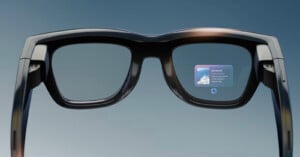
Meta is reportedly preparing a new pair of smart glasses that removes the camera, as the company faces growing scrutiny over its existing camera-equipped models.
An app called Superpose is teaching people how to pose better by employing AI computer vision.
Despite its enormous and ongoing success at the box office, as well as being lauded for its innovative filmmaking, the world's richest man, Elon Musk, has repeatedly made it known that he does not like Christopher Nolan's version of The Odyssey.
Meta is launching Meta One, a new range of subscription plans that combines paid features across Facebook, Instagram, and WhatsApp with expanded access to the company’s AI tools.
A photographer in Texas says she is no longer sharing identifiable photos of children on social media or on her website after a federal judge ruled that the First Amendment protects an individual's right to possess AI-generated child sexual abuse material (CSAM).
Apple and Google will be legally required to block explicit and nude photos on children’s smartphones in the U.K. under what is believed to be the world’s first legislation of its kind.
One of the largest drone light show operators in the U.S. says the FCC's proposed retroactive ban on some foreign-made drones could effectively kill its business and others like it.
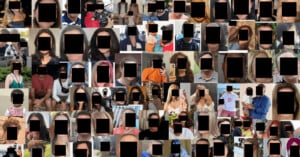
A federal class-action lawsuit has been launched accusing Meta of harvesting millions of photographs from Facebook and Instagram to build "Name Tag", an unreleased facial recognition system for its smart glasses.
The director Danny Boyle has taken the unusual step of admitting that he used generative AI on his latest movie, Ink.
News just broke that the new Apple Watch Series 12 will have a feature called "Siri Recap" that uses "ambient listening" to "take notes" that users can later review as a summary.
The Australian government plans to introduce another world-first social media law by allowing people the choice to opt out of content recommended by algorithms.
Police forces across the U.S. are concerned that Meta smart glasses could be used to secretly record inside jails and police facilities and potentially aid acts of terrorism.
Owners of large Instagram accounts are receiving false copyright claims and then paying ransoms to extorters, according to a report by the BBC.
A lawsuit filed by the American Civil Liberties Union (ACLU) over drones photographing people’s homes without warrants has forced a California county to overhaul how it conducts aerial surveillance.
Researchers have developed a $7 smartphone accessory that can detect hidden cameras within five seconds with 94% accuracy.
Norway says it is considering banning camera-equipped smart glasses that can record other people in public spaces without their knowledge.
Meta claims that it has disabled the camera on thousands of pairs of smart glasses that the company detected had been tampered with.
Today, Tim Cook officially hands the reins at Apple over to John Ternus. During Cook's 15-year tenure as Apple's chief executive officer, Apple went from a $347 billion company to a $4.6 trillion one, a nearly 13.3 times increase.
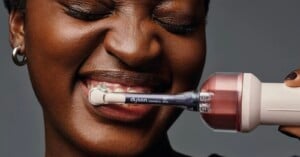
Technology company Dyson has launched an electric toothbrush that uses a built-in camera to help clean between the teeth.
AI-generated content creators that masquerade as real humans have soared in recent years and now Instagram is making a move against them.
Uber is introducing a feature that lets parents watch live video from drivers’ selfie cameras during their teenagers’ rides.
Instagram has launched a new feature called "First Draft" that automatically trims and edits clips to quickly make a base edit for a Reel.
Instagram CEO Adam Mosseri denied that the platform concealed information about the low use its teen safety feature "Take a Break" in a landmark child-safety trial that could have significant consequences for Meta.
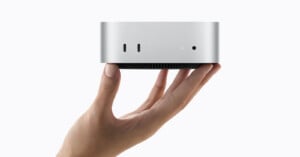
Apple has announced a new generation of its popular Mac mini series that comes with the brand new M6 chip as well as the M5 Pro chip.
Apple has unveiled the M5 Ultra chip and the first Mac to feature it: the upgraded, super-powerful Mac Studio.
Apple just surprisingly unveiled the brand-new M6 and M5 Ultra chips. They are debuting in new, more powerful Mac mini and Mac Studio desktop machines.
Elon Musk’s xAI is suing a prominent Arkansas photographer accused of using Grok to turn photographs of his minor clients into sexually explicit images -- arguing that he is responsible for the resulting material.
AI-generated pictures and videos purporting to show one of Dr. Seuss' characters as a serial killer have prompted police in the U.K. and Ireland to state that "Cat in the Hat was not in your driveway."
A website that helps to identify people using just a photo was found to have a massive database of images unsecured on the web.
Last week, PetaPixel reported that Cara, an anti-AI photo app, had all of its content scraped into a dataset despite the platform explicitly not consenting to the practice. It turns out the story has a happy ending.
Last month, Instagram head Adam Mosseri said that the platform would ban videos filmed on Meta smart glasses that harass women in public places -- but it seems the ban isn't working.
ByteDance and the Motion Picture Association (MPA) have signed an agreement aimed at strengthening copyright protections for the Chinese company’s AI video and image models.
An engineer is facing 10 years in prison for using an Insta360 X4 Air camera hidden in a bag of snacks to steal trade secrets and pass them on to his next employer.
Meta will head to court on Tuesday for a potentially landmark child-safety trial that could have enormous financial and operational consequences for the tech giant -- with four states seeking up to $1.4 trillion in penalties and sweeping changes to Facebook and Instagram.
Apple has deployed an alarming threat notification to an unspecified number of users in 110 countries -- experts advise not to ignore it.
A sports photographer had his Instagram account permanently disabled after Meta mistakenly claimed his content violated its rules against the “sexualization of children.”
Amateur astronomers and astrophotographers may need to exercise great caution when enormous reflecting satellites start appearing in the night sky -- as experts say they have the potential to blind them.
A New Mexico court has ordered Meta to pay $567 million over harms to young people linked to its platforms -- in what is the largest fine against Instagram and Facebook’s parent company over child safety.
Chinese-made surveillance drones used by the U.K.'s elite special forces were found to have cameras that secretly sent data to China.
Several establishments across the U.K. are announcing bans on Meta smart glasses, citing concerns that the devices could be used to record customers and staff secretly.
Late last year, Adobe introduced integrations for Photoshop, Express, and Acrobat inside OpenAI's conversational AI platform, ChatGPT. Now Adobe has upped the ante and announced the Adobe plugin in ChatGPT, which brings every Adobe app inside ChatGPT.
A car photography company has sued AI image generator Midjourney, accusing it of copying tens of thousands of its copyrighted vehicle photos without permission.
DuckDuckGo, the privacy-focused search engine, has entered the smart glasses industry with a pair of sunglasses that are not smart at all.
Apple's camera-equipped AirPods could be released before the end of 2026, earlier than previously expected.
Ariana Grande has filed a lawsuit against hackers she claims targeted several of her photographers before stealing and leaking unreleased photos.
Several European countries -- including France, Germany, and the Netherlands -- are considering banning Meta’s smart glasses as regulators examine whether the devices comply with privacy laws.
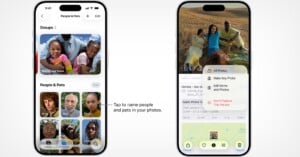
Apple is facing a lawsuit seeking up to $32.5 billion over claims its iPhone Photos app illegally collected users' biometric information.