How Much Does Lens Sharpness Matter?
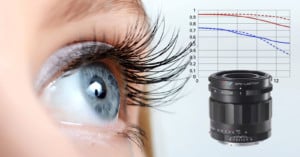
Many of us enjoy quality. Be it a car or a lens, there's a pleasure in using quality things. And in the case of lenses, how perceivable is the quality of the images captured?
Many of us enjoy quality. Be it a car or a lens, there's a pleasure in using quality things. And in the case of lenses, how perceivable is the quality of the images captured?
A few weeks ago, I was speaking with a good friend -- who is also a heck of a photographer -- about the pros and cons of using creative profiles and presets as part of your photo editing workflow. His stance was unambiguous and straightforward: as far as he’s concerned, profiles and presets are murderers of creativity.
On Monday, March 15, 2021, a record-breaking sandstorm descended on northern China, engulfing cities including the Chinese capital, Beijing. In recent decades, northern China has suffered from sandstorms as a result of increasing desertification in the north of the country which is largely dry, arid, and covered with deserts.
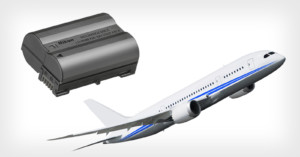
I'm photographer Jay P. Morgan from The Slanted Lens. In this video and article, we’re going to take a look at batteries. What you can fly with, what you feel comfortable checking in your check bags, what you should carry on with you, and what you shouldn’t take with you.
Non-fungible tokens in cryptocurrency have made a splash in the art world in recent days. If you're out of the loop and don't have time to read an in-depth explainer on what NFTs are, check out this humorous 3.5-minute Eminem rap parody by Saturday Night Live that will bring you up to speed (maybe).
Shooting timelapse is certainly a lot of fun, but trying to sell them and make money is an entirely separate story. So that leads to the question: how can you monetize the planning, time spent shooting, and the effort of editing hundreds or thousands of pictures into extra income or maybe a new career?
Unstable. Criminal. Impoverished. Absentee fathers. Neglectful mothers. “A tangle of pathology,” as the Moynihan Report, a 1965 study on Black poverty, put it. For decades, the Black family has been denigrated as dysfunctional.
When I attempt to make a great photographic print, what do I look for? What process do I go through to make the image as perfect as possible? I have spent 40 years making my exhibition-quality Cibachrome prints and I’d like to explain what goes into making a superlative photographic print.
I'm photographer Jay P. Morgan from The Slanted Lens. In this video and article we’re going to take a look at why a 50mm lens is the only lens you need for landscape photography.
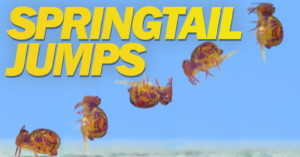
Dr. Adrian Smith is well-known for this slow-motion study of insect species and that skill set was perfect for a detailed study of insects known as "springtails." They normally move so fast that normal cameras, as well as the human eye, cannot perceive their motion.
I really do enjoy taking my time to get to know my new camera. One of the most effective ways to do that is to dive deep into the camera's menu and begin customizing everything to meet my needs and requirements. Of all the settings that I end up customizing, there is one that is always first without question: setting up back-button autofocus.
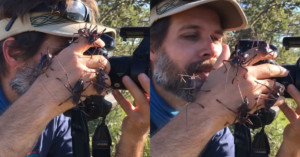
National Geographic photographers can find themselves in all kinds of strange and uncomfortable situations while on assignment and hunting for the perfect shots. Just check out what Nat Geo photographer Thomas Peschak is up to in Africa's Kalahari Desert.
If you've heard of Fresnel lenses in photography before but have no idea what they are or how they work, here's a fantastic short primer. In this 3.5-minute video, physicist David G. Willey (AKA the Mad Scientist) explains the science behind the lens style using a simple and easy-to-understand model on a blackboard.
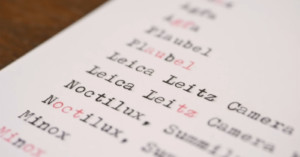
Germany has a long history of producing some of the best cameras and lenses ever to appear in the history of photography, but German brand names can be a bit tricky to pronounce. In this 8.5-minute video, photographer Maximilian Heinrich of Analog Insights shares the native German speaker's pronunciation of some well-known brands.
Seemingly overnight, NFTs became the hottest acronym on social media and in headlines. On Thursday, a single JPG file created by Mike Winkelmann, also known as Beeple, sold in an online auction for $69.3 million. It was the first digital-only art sale for auction house Christie’s, meaning there was no physical copy involved.
When it comes to landscape photography, any photographer specializing in the genre can tell you just how difficult it is to make any sort of income. Stock photography – once a mainstay source of income for landscape photographers – has almost come to an abrupt stop, given the sheer number of photographs being submitted throughout the years.
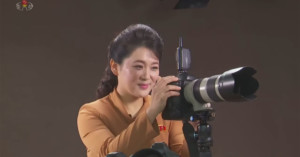
If you've always wanted to learn about the history of the photographic camera as taught by the North Korean government, today's your lucky day! Here's a 15-minute educational video on camera history that was broadcast for children in the "hermit kingdom" (you can turn on English auto-translation in the video's settings).
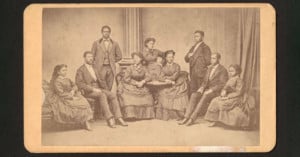
Frederick Douglass is perhaps best known as an abolitionist and intellectual. But he was also the most photographed American of the 19th century. And he encouraged the use of photography to promote social change for Black equality.
In a 7-minute video uploaded by The Slo Mo Guys, host Gav shows how an old-school handheld 16mm Russian film camera works thanks to detailed footage captured at 1,000 frames per second with a Phantom Flex 4K.
Due to the pioneering adventures of a few, the Lofoten Islands have become a winter magnet for landscape photographers. Light has begotten this new pilgrimage. And February is the high season.
The next time you find yourself wanting to take a selfie with a gorilla, you may want to think twice: a new research study has found that tourists who try to take pictures with wild mountain gorillas could be putting the animals in danger of getting COVID-19 and other diseases.
Almost four years ago I was diagnosed with bipolar disorder. Finding this diagnosis for me was a huge change (a positive one), and that led me to start a journey that continues to this day, where the mental stability that I have is maintained. I lived through many things and something curious is how the disorder began to show before I gave it a name, through my photos.
HDR stands for High Dynamic Range and is a setting available on several Fujifilm cameras, including the X-T4. HDR involves merging separate images together to create a single JPEG file in order to provide the maximum amount of dynamic range possible out of your image.
The COVID-19 pandemic lockdowns around have pushed artists to find new ways to work, publish, and teach. Renowned photographer Alec Soth is posting "rambling talks" to his YouTube channel, and in this 42-minute talk, Soth slowly flips through photo books by photographer William Eggleston and discusses the work.
Many photographers have had the same reaction that I did upon hearing about yet another new social media app hitting the radar: a yawn and a roll of the eyes. We have seen countless apps and image-sharing sites emerge with fanfare and then fail to gain traction in the crowded sphere of social media, and we feel pressed to carve out time for the platforms that we already use.
This is the end of my essay series on how we see and think about photographs. While I could certainly ramble on more or less forever, this is a good place to stop.
I'm photographer Jay P. Morgan from The Slanted Lens. In this video and article, I'll share with you an actual photoshoot fraud case and what to look for so that you don’t get taken by a fraudulent scam like it.
Photographer Paul Rutherford specializes in photographing sports and has shared his experiences both with the MLB and NFL during the age of COVID. His latest video goes over his experiences with the NHL, where he details what he looks for and how he approaches the shoot.
Square format simplifies shooting because you never have to rotate the camera. You can edit the image to any format you like.
In the previous essay I set aside a category of ethical issues around photographs. Specifically, the issues that arise from the very existence of the photo, rather than from the meaning of it. Issues around consent, and around extraction (who gets paid.)
This article is aimed at folks who don't edit their photos at all. If you aren't editing you're missing a lot of fun. Think of me more as a cheerleader than a teacher. I'll show you simple edits that can be done in a few minutes. We won't be adding non-existent clouds nor making fat people thin. This is just simple stuff. Let's start with this shot.
Photographing trees and forests sounds simple, but making a good image of a forest can be surprisingly challenging. In this pair of videos, Michael Shainblum explains how he wrangles the chaotic nature of trees into a beautiful photograph.
I haven't lusted for a fixed prime camera because it's so easy for me to mount a short prime lens on my ILC. But I am intrigued by the idea of walking around with a short prime on my camera, even though it is limiting compared to walking around with a zoom.
In the ongoing spirit of applying my new(?) model of thinking about photographs to old questions, let’s take a pass through “ethics” to see if anything interesting shows up.
Learn photography rules, learn to apply them, learn their advantages and limitations. Finally, learn to bend them, break them and explore beyond them.
If you often find yourself in Zoom meetings in which others on the call don't need to see your face, you now have a great excuse for leaving your camera off: it can help save the environment.
I’ve been writing for a while now on this single idea: that photographs transport you, in a sense, to the scene of the photograph; that you therefore react to photographs as if you were there, viscerally; that you react specifically by imagining the world around the photo; and finally that this imaginative reaction, this meaning you make, is of central importance in understanding a photograph.
Man Ray is today regarded as one of the most innovative photographers of the twentieth century. He reinvented solarization and further developed photograms, which he called "rayographs," in reference to himself. He also pioneered fashion photography in the 1920s-1940 in Paris but did not want to be known as a "photographer." He considered himself a painter and artist above all.
If you’ve been following along for any length of time, you might be starting to wonder if the author here even owns a camera, and if so, whether he can work it at all. I can! I really do, and I can! I mean, kinda, anyways.
Film photography has enjoyed a significant resurgence in the last several years despite the expansive growth of digital cameras. In this 11-minute short documentary, Exploredinary interviews a few analog photographers to see why they stick with the aged format.
If you've ever dealt with atmospheric haze in your images, you know that it can ruin an otherwise great image. Years ago, Adobe developed the Dehaze slider to deal with it, but photographer Andrea Livieri argues it's not the best solution in this 11-minute video.
Planning is key to capturing the best Milky Way images. Unlike other types of photography, shooting our galaxy requires you to consider many astronomical factors, like the sunset, the moon phase, and the Milky Way’s location in the sky.
The previous essays in this series have tried to develop some ideas about what happens when people look at photos. The realism, that mass of realistic detail, causes (I claim) a visceral reaction: we feel, we react, we think, a little as if we were transported by the photograph into the scene itself.
Photographer Kyle McDougall says that one question he gets asked a lot is if shooting in medium format film, such as 645, is really "worth it" compared to 35mm film. In this 11-minute video, he explains why he thinks it is.
The purpose of a snoot is to take a light source and focus it down into a more defined point, but The Beyond Photography Show host Andrew explains in this 11-minute video that the physics of snoots makes them terrible at their job.
Photo colorizer and restorer Hint of Time has shared an 8-minute video where he shows his process for not only colorizing an 80-year-old black and white photo, but also brings it to life with subtle animation.
Full frame and medium format systems can produce images of greater quality than APS-C. But that greater quality is rarely perceived, even in very large prints. I call it "overkill" because we cannot perceive the advantage of this more expensive and heavier equipment.
This past weekend, I had the pleasure of shooting some product photography for my friends over at HDK Snowmakers. They are a snowmaking machine manufacturer for some of the country’s largest ski resorts and specialize in hyper-efficient machines that keep skiers on the slopes, while not guzzling up tons of water.
In the previous essay on reading photos, I looked at how things we know, mental baggage we have accumulated besides just memories, affect what we see in a photograph. Things like cultural background, political beliefs, movies we’ve seen, or books we’ve read.
This trip has been waiting in the wings ever since I made my first successful daguerreotype in the redwoods two years ago. I actually planned on going as early as August this year, but one project after another kept getting in the way, and for months I kept pushing it back by a couple of weeks.