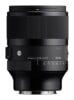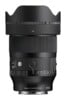
The Sigma 35mm f/1.4 DG II Art is the latest incarnation of one of my all-time favorite prime lenses. I was an early adopter of the original edition for DSLRs, the next in line was even better for mirrorless cameras, and this one is the best yet.

The Sigma 35mm f/1.4 DG II Art is the latest incarnation of one of my all-time favorite prime lenses. I was an early adopter of the original edition for DSLRs, the next in line was even better for mirrorless cameras, and this one is the best yet.
The replacement Sigma 35mm f/1.2 DG II Art is better in every way. It’s a relatively downsized delight that takes some of the weight off, while image quality and overall performance are improved to exceptional levels.
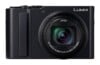
I like the image quality and overall performance but feel shortchanged that Panasonic has ditched the (albeit small) viewfinder from preceding models, and that the fixed touchscreen isn’t conducive to travel selfies and vlogging.
It’s also blisteringly fast, handling demanding edits with ease. However, lens-to-lens color inconsistencies, a mechanically clever but modest zoom range, and slightly weaker macro hold it back from being the complete package.
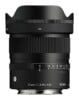
I like that the Sigma 15mm f/1.4 DC | C is just a little slip of a thing. Ideal for walkabout and travel photography, it combines a generous viewing angle with a cut-down, compact and lightweight yet robust build.
If you don’t have a huge budget but want a genuinely usable long-range zoom, then the V70 offers a stylish Android phone that is easy to recommend, its just a shame its not more widely available.
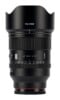
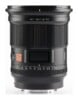
It’s a ‘pro’ style lens through and through, with image quality and all-round performance to match. And at the price, this Viltrox lens is a real bargain.
The full-frame compatible 16mm F1.8 is pricier than most of its stablemates but still exceptional value for money, considering its superb image quality, refined handling and its host of features that even includes a color LCD display. For me, the lens is an absolute keeper.
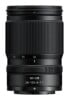
I feel that the Nikon Z 24-105mm f/4-7.1 is a neat travel buddy to take along for the journey. It’s compact, lightweight, and delivers sufficient zoom range to cover a wealth of shooting scenarios, from tourist attractions to sweeping landscapes in the great outdoors.
As it stands, it’s the new yardstick by which other hybrids will be measured.
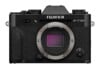
Internally, the spec update list is a short one, but the addition of the X Processor 5 unlocks the latest in Fujifilm’s autofocus and video capabilities – although the two-way tilt screen will still limit videographers.
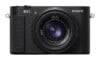
The Sony RX1R III is the most compelling compact camera on the market. Yes, there are drawbacks – the fixed screen being the biggest one for me – but its strengths are such that I would be perfectly happy using this as my everyday snapper or travel camera.
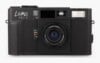
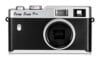
The Lomography Lomo MC-A is a genuinely surprising compact film camera. It feels far more premium than Lomography’s usual output, delivers characterful images with solid sharpness, and is a joy to use day to day.
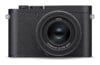
The sensor produces remarkably clean and undeniably beautiful black-and-whites, with the 60.3MP resolution delivering enviable image quality along with a digitally adaptable focal length.
It's hands down the strangest camera that I've ever used, but that's what makes it so highly entertaining. I'm holding off on my final verdict, however, as I came across a few annoying bugs.
The Kodak Snapic A1 is a perfectly fine point-and-shoot camera. But comparing it to other, cheaper point-and-shoots makes me feel like someone is trying to upsell me a fancy cake where all they’ve done is add extra icing and flowers, without changing the underlying sponge.
All in all, I think Panasonic has come up trumps with this one. I like the Panasonic Lumix S 24-60mm f/2.8 more than some other alternative f/2.8 ‘trinity’ standard zooms.
All in all, it’s simply a superb lens that delivers spectacular results.
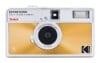
The newer model of Kodak's H35 has a noticeably improved lens that increases my hit rate. It's lightweight, affordable, and its ability to double shots from a roll feels like a real saving.
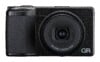
The Ricoh GR IV refines a proven design with meaningful updates to image quality, handling, autofocus, and storage, while keeping its trademark compactness.
The Camp Snap CS-Pro is still a cheap camera with retro vibes and no screen, but there's a new digital filter dial along with better resolution and less shutter lag. It's not going to compete with higher-priced cameras (or smartphones), but this is my new sub-$100 favorite.
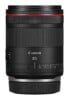
I think the sample images speak for themselves: the Canon RF 85mm f/1.4L VCM is an extraordinary lens for portrait photography and people videography.
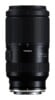
[T]he G2 is a top performer and a real step up from the original (and rather excellent) lens.
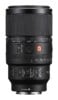
The stabilization and autofocus deserve a shout out, too, making this a legitimate option for handheld shooting. This is every inch a GM-caliber optic and hands-down the finest E-mount macro lens on the market.