The Olympus PEN E-PL10 is a compact and capable camera that's tailor-made for travel, blogging, vlogging and content creation.

The Olympus PEN E-PL10 is a compact and capable camera that's tailor-made for travel, blogging, vlogging and content creation.
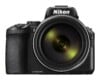
The Nikon Coolpix P950 excels for its colossal zoom range and lens quality, but its image quality is disappointing in 2020. Only if you absolutely must have this much zoom reach is it worth considering, and even then the price is tough to justify.
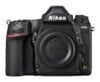
The Nikon D780 is an exciting development in DSLR design that incorporates the on-sensor autofocus and video capabilities of mirrorless cameras and closes the gap between these two types of camera.
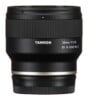
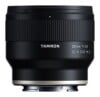
As an everyday lens, the Tamron ticks all the right boxes. It’s small and lightweight, has refined handling and a tough, weather-sealed construction, along with a fairly fast f/2.8 aperture rating. It also delivers impeccable image quality, all at a very affordable price.
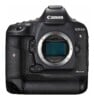
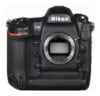
The Canon EOS-1D X Mark III is every bit the professional powerhouse camera you would expect it to be.
The Leica rangefinder, in the digital and autofocus era, is definitely an acquired taste – but one which still has a serious following. The Leica M10 Monochrom takes this specialism a huge step further by only shooting in black in white.
The Canon EOS Ra is physically identical to the regular EOS R, so we found the same combination of handling likes and dislikes. But this camera is designed for a very specialised field, and some of these quirks hardly matter here.
It pales against the new Mark III, to be sure, but judged in isolation, the Mark II is still an extremely powerful camera, and as prices start to fall, its appeal will only grow.
A replacement for the Nikon D5 is imminent, so not surprisingly this has led to some useful discounts on this model. But is it still desirable after all this time?
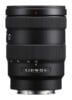
If you’ve already got a 28-70mm or even a 24-70mm zoom lens for your full-frame Sony E-mount camera, and want something that gives a greater viewing angle without bulking up your kit or weighing you down, this Tamron 20mm f/2.8 Di III OSD M 1:2 should prove the perfect fit.
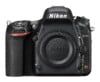
The Nikon D750 is a great camera, even by today's standards. Its Matrix-metering system is very capable, delivering correct exposure in a wide range of situations, and it produces images that have natural yet vibrant colors.
Handling is very refined, with the addition of a customisable focus hold button, strong build quality and weather-seals.
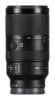
Image quality is very impressive overall, and the maximum ‘effective’ focal length of 525mm is truly remarkable for such a compact and lightweight lens, making it a perfect match for Sony’s mirrorless APS-C camera bodies.
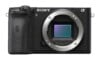
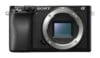
The Sony a6600 looks an excellent camera for video and vlogging, and its stunning AF, in-body image stabilization and large battery make it suitable for demanding stills photography.
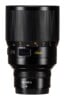
The Nikon Z 58mm f/0.95 NOCT is a big lens - but is not nearly as big as we had imagined, or as heavy.
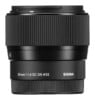
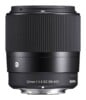
It’s another winner from Sigma’s Contemporary line-up of f/1.4 primes for mirrorless crop-sensor cameras.
[The] improvements don't come cheap, as the A6100 is nearly twice the price of the original A6000, somewhat limiting its appeal as an entry-level camera.
Lightweight in build and selling price, this is a high-performance standard prime that combines very good build quality and nice handling characteristics with solid all-round performance.
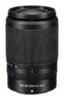
The Nikkor Z DX 50-250mm f/4.5/6.3 VR is a great little lens that will be perfect for enthusiasts looking to make the jump into mirrorless, or content creators excited to leave their smartphones behind for something with a bit more oomph.
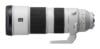
When you’re shooting wildlife, birds, aircraft or sporting action and you can’t get as close as you might like, this lens really covers the distance.
Much of the Nikon Z 50’s appeal is its petite form factor and the Nikon Z DX 16-50mm f/3.5-6.3 VR (35mm equivalent) doesn’t hamper that in the slightest.
The Fujifilm X-Pro3 set out with a mission: to keep photographers shooting, rather than chimping (checking your photos as you shoot them). [...] However, by challenging you to shoot in a traditional way, at times it impedes your ability to shoot in a modern one.
Everything’s packed into a compact and lightweight package that’s utterly in keeping with the mirrorless crop-sensor cameras for which it’s designed.
The X-Pro2 has been around since 2016, and is a worthy update to the original X-Pro1, a camera whose unique hybrid viewfinder and classic design challenged our ideas about how digital cameras should work.