The tweaks and refinements to the Z7 II are certainly welcome, but we think Nikon could have done even more. As it stands it feels a little like a stopgap before we see an all-new model.

The tweaks and refinements to the Z7 II are certainly welcome, but we think Nikon could have done even more. As it stands it feels a little like a stopgap before we see an all-new model.
Ultimately, there’s a lot to like in this camera except for the price point. Then again, it is a Leica and expensive materials and great quality images come at a price.
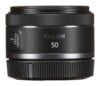
The Canon RF 50mm f/1.8 STM is everything you want a nifty fifty to be. It's cheap, compact and capable, delivering great image quality (on par in some areas with the RF 50mm f/1.2L, which costs over ten times as much!) in a truly pocket-sized lens.
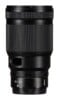
There are two reasons you might want a Nikon Z 50mm f/1.2 S - faster shutter speeds, and a tighter depth of field.
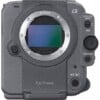
The Sony FX6 answers a real need for filmmakers that Sony's mirrorless Alpha cameras do not.
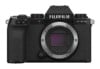
The Fujifilm X-S10 has more 'consumer' controls than the higher-level X-series cameras, but its build quality and handling stand out straight away.
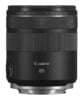
The Canon RF 85mm f/2 Macro IS STM is a stunning bang-for-buck lens, and stands next to the RF 35mm f/1.8 as one that every EOS R camera owner should have in their camera bag.
Its specifications are unambitious to say the least, particularly in terms of its video capabilities, but its practical performance, from its handy vari-angle screen to its excellent AF system, make it very effective at what it’s designed to do.
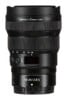
Ultimately, the Nikon Z 14-24mm is a great lens but it’s not the greatest value for money.
In and of itself, the Z6 II is a formidable stills camera with impressive image quality, solid stabilization, incredible ISO performance, accurate autofocus, sturdy 12fps burst shooting with tracking AF (or 14fps with single-point) and respectable video.
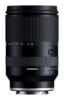
The lack of optical image stabilization can be an issue when using Sony mirrorless camera bodies that lack IBIS (In Body Image Stabilization) but, overall, this Tamron superzoom is a real triumph.
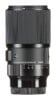
For revealing ultra-fine levels of detail in anything from insect and bug photography to extreme close-ups of all things small and smaller, this is a fabulous macro lens.
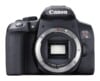
For Canon enthusiasts looking to take the next step in creative photography, and those with older entry-level EOS cameras looking to upgrade, the Canon EOS Rebel T8i is a lightweight yet powerful DSLR that captures detailed, colorful images.
Indeed, unless you REALLY need the 61MP sensor, the A7R III might be a much wiser purchase than the A7R IV – and it certainly comes with a much more appealing price tag.
Panasonic full-frame mirrorless cameras and their associated L-mount lenses have been neither compact nor lightweight so far.
The Panasonic S1R, or Lumix S1R to give it its full title, is big, hefty and solid and feels like it means business.
With straight fives for features, build & handling and performance, the Nikon Z7 is an instant classic. It’s a superb (and superbly made) mirrorless camera.
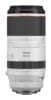
The Canon RF 100-500mm is a superb addition to the rapidly expanding range of RF-mount lenses for Canon's EOS R-series cameras.
At 1,260g, it’s perfectly viable for long periods of handheld shooting, aided by a highly effective optical image stabilizer.
The physically small size and light weight of the lens makes it excellent for handheld shooting and, overall, it’s a great choice for wildlife and sports photography, or any time you can’t get as close to your subject as you might wish.
If you're content with fewer megapixels, you'll enjoy one of the most advanced and impressive cameras we've ever seen.
There’s no denying that Nikon’s new Z 70-200mm f/2.8 zoom is a pricey beast.
The Z5 is competent, attractive and affordable, but its price pitches it against a host of cameras which can boast exactly the same thing.
It’s taken Sony five years to upgrade the video-centric A7S II to a Mark III, but the wait has been worth it for keen enthusiast and professional moviemakers.