If size and weight matter to you, it is worth consideration over its predecessor.

If size and weight matter to you, it is worth consideration over its predecessor.
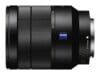
The Vario-Tessar T* FE 24-70mm F4 ZA OSS lens is impressive overall, and is built to the standards befitting the Zeiss name. However, to make it feel truly at home on Sony’s mirrorless cameras the inclusion of manual aperture and focus rings would have been the icing on the cake.
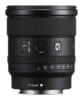
Ultimately, if you’re a Sony user looking for one of the best wide-angle prime lenses money can buy, the FE 20mm F1.8 G will serve you extremely well and should be seriously considered.
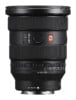
With the FE 16-35mm F2.8 GM II, Sony has made it a hat-trick of excellent updates to its trio of pro-spec zooms. In fact, there’s barely anything not to like about this lens.
For macro shooters, the Sony 90mm macro is a fantastic lens. For everyone else, it’s a short telephoto lens that is very difficult to beat in terms of sheer resolution and image quality.
The FE 70-200mm GM OSS II lens simply performs exceptionally well, producing sharp images at both ends of the zoom range.
This is far from the sharpest lens on the market, but, all things considered, it’s an excellent buy and represents great value for money.
It’s taken a while for Nikon to start producing anything other than basic kit lenses specifically for the DX format, so it’s good to see a prime lens launched which caters to this market.
DJI Mavic 3 Pro is a versatile drone with three different focal length Hasselblad cameras Photo credit: Angela Nicholson L2D-20c · f/2.8 · 1/1600s · 12.29mm · ISO120.
If you could take just one lens with you, and wanted some telephoto reach, then this lens could be one of the most versatile, whilst also offering impressive image quality, so you don’t need to be worried that you’re making any kind of compromise on your photos.
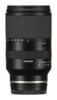
The Tamron 20-40mm F/2.8 Di III VXD is a unique lens with an interesting blend of features. It’s compact and lightweight, while still offering a bright maximum aperture, and its image quality is more than respectable.
There’s an awful lot to like about the Xiaomi 13 Pro if your main concern is the quality of the on-board cameras.
Canon and its engineers must be praised for constructing one of their finest L-series lenses, and for the way they’ve created one of the best, if not the best, rectilinear wideangle zooms ever made.
The Sigma 20mm F2 DG DN | C looks and feels like a high-quality precision-engineered optic. [...] The image quality is excellent.
On the evidence of using it on the 42-million-pixel A7R II in our Sony FE 85mm f/1.4 GM review, I see no reason why it won’t meet the demands of even higher resolution sensors, and from that point of view, it may make a reasonable investment.
I could certainly see this lens becoming a firm favourite of landscape shooters who’d prefer to carry minimal kit.
With the A1, Sony has made one of the best cameras ever. Its autofocus is incredible, its 30fps shooting is ridiculously quick, and it performs phenomenally in even the most challenging situations.
The Air 2S is both fun and rewarding to fly and while not matching a good DSLR or mirrorless camera, its results are beyond those of an action cam whether you’re shooting stills or video.
[T]he 16-28mm DG DN C is highly recommended.
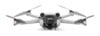
The DJI Mini 3 Pro offers a fantastic combination of features in a very compact and lightweight, easy-to-fly unit that produces superb video and stills.
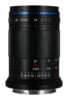
The Laowa 85mm f/5.6 2x Ultra Macro APO is a great example of what can be done when designers use their imagination to break away from existing conventions of what lenses should look like.
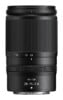
There’s a lot to be said for a versatile everyday lens, and with this optic, Nikon gives us something that ticks a lot of the requisite boxes.
Sometimes ‘good’ is good enough, and for many, that will be the case with the Tamron 18-300m f/3.5-6.3mm lens.
If you want a hybrid camera with genuine cine camera capabilities and functionality, this camera is tough to beat within its price bracket.