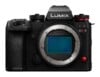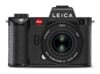
As a result, the attraction of the SL2 comes down to intangibles that can’t be found on a spec sheet.

As a result, the attraction of the SL2 comes down to intangibles that can’t be found on a spec sheet.
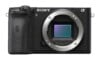
On the face of it, Sony has ticked all the boxes with the Alpha 6600. It’s small, fast, weather-sealed, and includes in-body stabilisation.
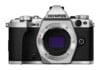
It can be tempting to think of Olympus’s E-M5 line as being all about nostalgia, given how consciously the retro styling pays homage to the firm’s OM-series 35mm film SLRs.
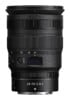
Advanced features like the control ring, L-Fn button and information panel are the icing on the cake. Although it’s far from cheap, it’s the best Z-mount zoom lens we’ve laid hands on and tested.
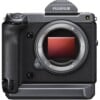
An astonishing technical achievement and the best ultra-high resolution camera yet, but let down by some handling flaws.
With the S1, there’s no doubt that Panasonic has produced a highly accomplished camera that’s a strong competitor to its 24MP rivals, the Nikon Z 6 and Sony Alpha 7 III.
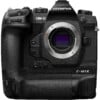
With the OM-D E-M1X, Olympus appears to have given its designers free reign to build the best camera they can, regardless of price.
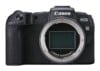
With the EOS RP, Canon has revealed its vision for how entry-level full-frame mirrorless should look. It’s got a lot right too, with a body design that handles much better than its odd-looking profile might suggest.
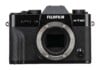
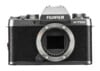
[T]he X-T30 is a marvellous mirrorless camera.
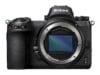
It was one thing for Nikon to outdo Sony’s A7R III with the magnificent Z 7, but to do the double and create the Z 6, which with all things considered is a better camera than the Sony A7 III, is quite a remarkable achievement.
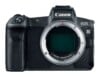
The EOS R’s arrival has been greeted with a great amount of interest from Canon users around the world.
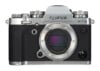
Fujifilm had a solid platform on which to build the X-T3 and has once again succeeded at turning a great camera into an even better one.
As a camera designed for first-time mirrorless buyers and those advancing from smartphones, it’s very appealing, from both an aesthetic and performance perspective.
The Panasonic G9 and its tack-sharp system lenses combine portability, high image quality and reliability to make it possibly the most capable adventure-orientated camera I’ve used to date.
A great entry-level DSLR, with notable improvements on Canon's previous offerings.
The camera is fantastic in almost every way. The drive speed, build quality and ISO performance are legendary and currently market-leading.
Panasonic’s GH range has long catered for those with a particular interest in video and the GH5 continues this trend. That said, its still image capabilities have also seen big improvements over the GH4.
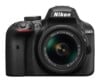
Judged on its own merit, there’s a lot to like about the D3400. It’s a well-thought-out and nicely designed camera that caters for the needs of first-time DSLR owners in a number of different ways.
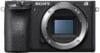
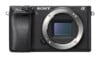
Taken as a complete package though, the A6500 remains an excellent all-round APS-C mirrorless model that offers something for everyone.
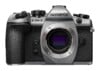
It’s unarguable that the E-M1 Mark II is the best camera Olympus has ever made; indeed, it gives the impression of being the best camera the firm could possibly make given current technology.
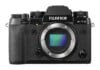
Apart from these, the X-T2 is a dream camera. It’s the most appealing model in the X-series to date and will certainly change people’s perception of speed associated with mirrorless cameras.
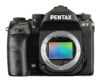
A model as anticipated as the K-1 has to work hard to meet expectations, but those who have waited patiently are likely to be very pleased.
With the Sony Alpha 6000 being one of the company’s most popular cameras of recent years, the Alpha 6300 has a lot to live up to.
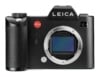
From the moment you set eyes on the Leica SL, it’s clear this is no ordinary camera.