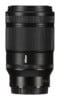
The Nikon Nikkor Z MC 105mm f/2.8 VR S, however, is a professional-grade lens with a few extra features to help justify its higher price. It more than qualifies as one of the best Z-mount lenses you can buy.

The Nikon Nikkor Z MC 105mm f/2.8 VR S, however, is a professional-grade lens with a few extra features to help justify its higher price. It more than qualifies as one of the best Z-mount lenses you can buy.
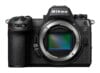
[T]he Z6III’s impressive capabilities and lack of any serious vices make it at least a match for any other camera in its class, and a great choice for serious enthusiast photographers.
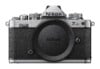
With its two-tone retro styling and analogue top-plate dials, the Nikon Z fc represents a radical departure from the firm’s previous Z-mount models.
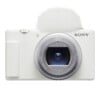
[T]here’s plenty to like about the ZV-1 Mark II, but some question marks too.
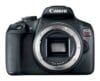
There’s no doubt that the Canon EOS 2000D / Rebel T7 is a solid enough entry-level camera, yet there’s little about it that really stirs the senses. While it is an affordable entry point into the Canon EOS DSLR system, it provides only an incremental upgrade over the 1300D.
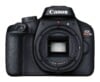
In its favour the EOS 4000D is very easy to use and capable of good image quality.
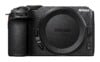
The Z30 offers more to vloggers than its Nikon counterparts, the Nikon Z50 and Z fc, or even the best smartphones.
Easy to use, lightweight, and consistent. If you want a good camera that is a step up from a basic point-and-shoot, this is a great option.
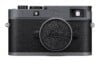
Its groundbreaking “Leica Content Credentials” provenance checking features distinguished the M11-P from all others. Apart from that it is another superb feat of photography engineering.
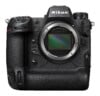
Its flagship Nikon Z9 is right up there as most accomplished of them all and one of the best cameras for photography you can buy.
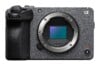
In case it wasn’t already apparent, this is a Cinema camera. I wouldn’t recommend using it for still images.
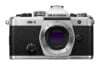
It’s a triumphant return to form from OM System that’s destined to be seen as an outright classic.
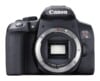
Ultimately, the EOS 850D / T8i is about as good as you’ll get from a DSLR at this level, but feels outdated compared to its smaller, slicker mirrorless competitors.
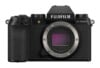
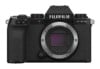
With a proven track record of exceptional image quality from the 26.1MP X-Trans CMOS 4 sensor, the X-S20 builds on this success by providing a camera that is both highly skilled for stills photography, as well as videography.
Strongly recommended. Its high resolution images, with improved selfie camera and 4K video recording make the Google Pixel 7a perform better than more expensive alternatives.
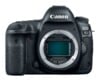
The Canon EOS 5D Mark IV did bring along some enticing features to its DSLR line-up, but arguably it was the 30.4-million-pixel sensor that stole the limelight.
Production of this model ceased in 2022, but samples are available on the used market and worth seeking out as a rugged yet portable APS-C format DSLR.
If you’re really keen on a folding phone, the Pixel 9 Pro Fold is an excellent option. However, for photographers, you’ll take a hit on image quality compared with the regular, cheaper Pixel 9 Pro.
A joy to use. With superb APS-C sensor, IBIS, and lens range, the X-S10 reliably produces gorgeous images across a wide range of conditions – (and needs good care in bad ones as lacks sealing).
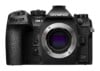
Without doubt, the OM System OM-1 is the best Micro Four Thirds camera currently available for stills photography.
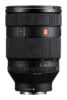
The Sony FE 28-70mm F2 GM is pretty large and very expensive, but it’s an absolutely stunning optic that redefines what standard zooms can look like. It’s a great option for wedding and event shooters.
The lens combines image quality befitting a 100MP sensor with excellent build and genuine versatility.
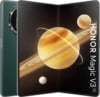
[I]t’s hard not to be seduced by the ability to view and edit your shots on a tablet sized screen, to use the cover screen as a preview monitor for your subject, to shoot selfies with the main 50MP camera, and to be able to open it to 90 degrees [...]
The Sigma 28-105mm F2.8 DG DN Art stands out for its combination of a large maximum aperture and 105mm telephoto. It’s quite large, but handles well and delivers very good image quality.