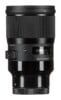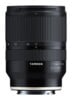
This is a lens that really needs to be paired with a 24mm or 28mm standard zoom for everyday shooting, whereas some photographers might be just about happy carrying the Sony 16-35mm f/4 on its own.

This is a lens that really needs to be paired with a 24mm or 28mm standard zoom for everyday shooting, whereas some photographers might be just about happy carrying the Sony 16-35mm f/4 on its own.
The less common 28mm focal length isn’t for everyone, but for those who find a 35mm a little too long and 24mm a fraction too wide; it fits the bill nicely. If you’re after a fast 28mm prime the number of options available to you are quite limited.
With the S1, there’s no doubt that Panasonic has produced a highly accomplished camera that’s a strong competitor to its 24MP rivals, the Nikon Z 6 and Sony Alpha 7 III.
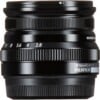
The XF16mm F2.8 R WR is a great walkabout lens on small mirrorless cameras like the X-T3.
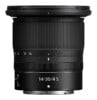
An advantage of choosing a wideangle zoom with a maximum aperture of f/4 as opposed to f/2.8 is that they’re typically smaller, lighter and more portable.
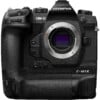
With the OM-D E-M1X, Olympus appears to have given its designers free reign to build the best camera they can, regardless of price.
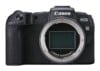
With the EOS RP, Canon has revealed its vision for how entry-level full-frame mirrorless should look. It’s got a lot right too, with a body design that handles much better than its odd-looking profile might suggest.
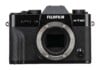
[T]he X-T30 is a marvellous mirrorless camera.
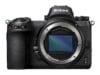
It was one thing for Nikon to outdo Sony’s A7R III with the magnificent Z 7, but to do the double and create the Z 6, which with all things considered is a better camera than the Sony A7 III, is quite a remarkable achievement.
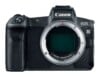
The EOS R’s arrival has been greeted with a great amount of interest from Canon users around the world.
Fujifilm had a solid platform on which to build the X-T3 and has once again succeeded at turning a great camera into an even better one.
As a camera designed for first-time mirrorless buyers and those advancing from smartphones, it’s very appealing, from both an aesthetic and performance perspective.
The Panasonic G9 and its tack-sharp system lenses combine portability, high image quality and reliability to make it possibly the most capable adventure-orientated camera I’ve used to date.
The M.Zuiko 12-40mm f/2.8 PRO falls into the last category and is essentially Olympus’ top-of-the-line standard zoom.
A great entry-level DSLR, with notable improvements on Canon's previous offerings.
On the whole this approach does a good job of placing lots of control at your fingertips, while keeping the camera small and approachable to novice users. But it’s a very different experience to using conventional physical controls, and I can’t say I particularly warmed to it.
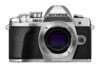
[T]he Olympus OM-D E-M10 Mark III offers a strong feature set in a compact, charismatic body at a very keen price point.
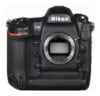
The camera is fantastic in almost every way. The drive speed, build quality and ISO performance are legendary and currently market-leading.
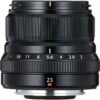
We knew that if the 23mm f/2R WR XF followed in the footsteps of the much-loved XF 35mm f/2 R WR, we’d be looking at another great lens, which this is.
After testing this lens extensively and putting it through its paces to shoot portraiture, a wedding and street scene images, I’m left utterly bowled over by its performance.
The Olympus OM-D E-M10 Mark II is undeniably a handsome, well-built and highly specified camera that’s capable of taking fine images.
Panasonic’s GH range has long catered for those with a particular interest in video and the GH5 continues this trend. That said, its still image capabilities have also seen big improvements over the GH4.
You could look at the X-T20 as a baby X-T2 and for all intents and purposes that’s what it is and was always designed to be.
For the price, the K-70 is hard to beat.