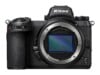
With full-frame cameras such as the Z series being suitable for travel and every day usage in a way we might once have only dreamed of, having a flexible, versatile and easy-to-transport lens will be extremely important to some photographers.

With full-frame cameras such as the Z series being suitable for travel and every day usage in a way we might once have only dreamed of, having a flexible, versatile and easy-to-transport lens will be extremely important to some photographers.
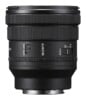
Sony has overcome the usual irritation of clunky, imprecise zoom controls and delivered a lens that works just as well for shooting still images. I’ve been really impressed by its implementation of power zoom, and can imagine many more lenses being made this way in future.
For some photographers, that’ll be reason enough to buy it.
Sorry, Sony, but the Sony Xperia PRO-I needs some serious improvement if it’s going to compete with other smartphones.
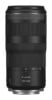
If you are a Canon EOS R system user and don’t want to spend the thousands required for the L series 100-500mm f/4.5-7.1, and you are prepared to accept a bit of give and take, this RF 100-400mm f/5.6-8 IS USM will make you very happy indeed.
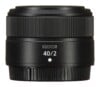
Ultimately the Nikon Z 40mm f/2 comes highly recommended, not only to Z system users who don’t already have a native standard prime, but also to those who’d like a smaller and lighter alternative to S-line optics.
The Pixel 6 Pro is the most pleasing Android device to capture images on and in the rare scenarios where it doesn’t surpass the competition, it at least holds its own.
Ultimately I’ve been far more captivated by what the Z7 II can do for me, than what it can’t. And in the 10 months I’ve been shooting with it, its benefits have vastly outweighed any small gripes.
The size and weight of a camera and the lens attached to it has a huge impact upon many photographer’s enthusiasm for carrying their kit ‘just in case’ or on a day out with the family.
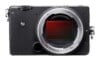
Like its 24MP stablemate, the Sigma fp L is a curious, quirky beast that’s difficult to compare to other cameras.
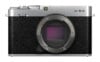
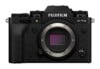
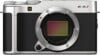
The X-E4 has good and bad going for it. Starting with the positives, you get the same core features as Fujifilm’s flagship X-T4, albeit without in-body stabilisation.
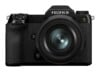
With each successive generation of GFX body, Fujifilm has made significant advances, but the GFX100S is by far its most tempting yet.
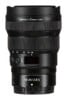
Nikon has picked up great momentum and released some truly sensational zooms over the last eighteen months. After thorough testing and close examination I regard the Z 14-24mm f/2.8 S to be up there with the finest examples.
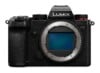
Although not perfect, the Lumix S5 is an impressive full-frame camera for the money.
It would make a great choice for keen enthusiasts and professionals who are conscious of size and weight and would like to build a smaller, lighter system.
In many ways, the X-T200 is a likeable little camera. With its three top-plate dials and focus-area joystick, it sports probably the best control layout of any entry-level model for users who harbour ambitions beyond the basic point-and-shoot.
Ultimately, choosing a camera is all about compromises, and Olympus has prioritised mobility over raw image quality, then thrown in as much technology as possible to compensate.
If you demand full-frame image quality and interchangeable lenses in the smallest possible package, this is it. As long as you can live with the fixed screen and lack of a viewfinder, it’ll do the job and deliver excellent images.
We’ve been eagerly awaiting the X-Pro3’s arrival to find out how Fujifilm’s eccentric idea of doing away with a traditional rear screen has affected what it is like to use.
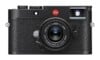
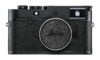
I’ve been lucky enough to spend a week shooting with the Leica M10 Monochrom before its official launch, and there’s no denying that it’s an absolutely beautiful camera.
When we reviewed the X-A5 in 2018 we came to the conclusion that it was a good option for first time mirrorless buyers, however it wasn’t without its pitfalls.
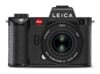
As a result, the attraction of the SL2 comes down to intangibles that can’t be found on a spec sheet.
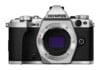
It can be tempting to think of Olympus’s E-M5 line as being all about nostalgia, given how consciously the retro styling pays homage to the firm’s OM-series 35mm film SLRs.
Advanced features like the control ring, L-Fn button and information panel are the icing on the cake. Although it’s far from cheap, it’s the best Z-mount zoom lens we’ve laid hands on and tested.