Vivo X500 Series Smartphones Take Photography Extremely Seriously
It was only in May that PetaPixel reviewed the Vivo X300 Ultra smartphone, then the company’s flagship handheld. Now the X500 Series has landed in China, bringing the debut of a brand-new Pro Max model dripping with cutting-edge camera technology.
While Vivo announced three phones today in China, the vanilla X500, the X500 Pro, and the X500 Pro Max, PetaPixel‘s focus here is the two Pro models. Each features a new 50-megapixel main camera powered by Sony’s Type 1/1.28 Lytia 910 image sensor. This LOFIC-equipped image sensor was formally announced in June and promises nearly 17 stops of dynamic range.
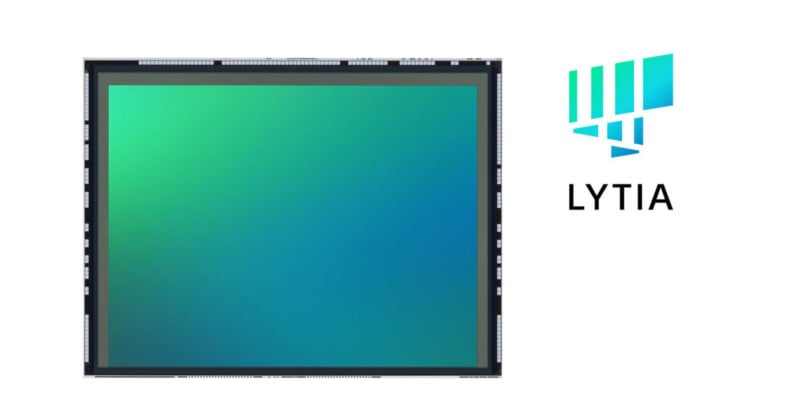
As PetaPixel has discussed before, LOFIC, which stands for Lateral Overflow Integration Capacitor, is the next big thing in mobile imaging. Not only do some of the newest smartphones feature LOFIC sensors, but so does the DJI Osmo Pocket 4P, which delivers incredible image quality that can, at times, rival that of full-frame cameras.
While the intricacies of LOFIC are beyond the scope of this article, the basic idea is that LOFIC image sensors have a physical mechanism to store excess photoelectric charge. Because a LOFIC sensor can use excess charge where traditional image sensors discard it, a LOFIC-equipped camera can handle more light and deliver a wider dynamic range.
That’s a gross oversimplification, but the primary takeaway is better image quality and more dynamic range, all else equal.
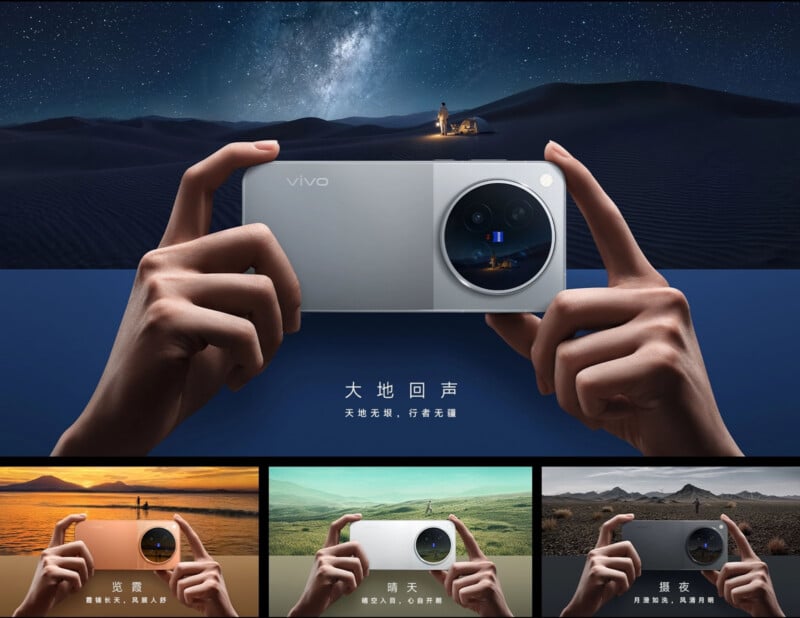
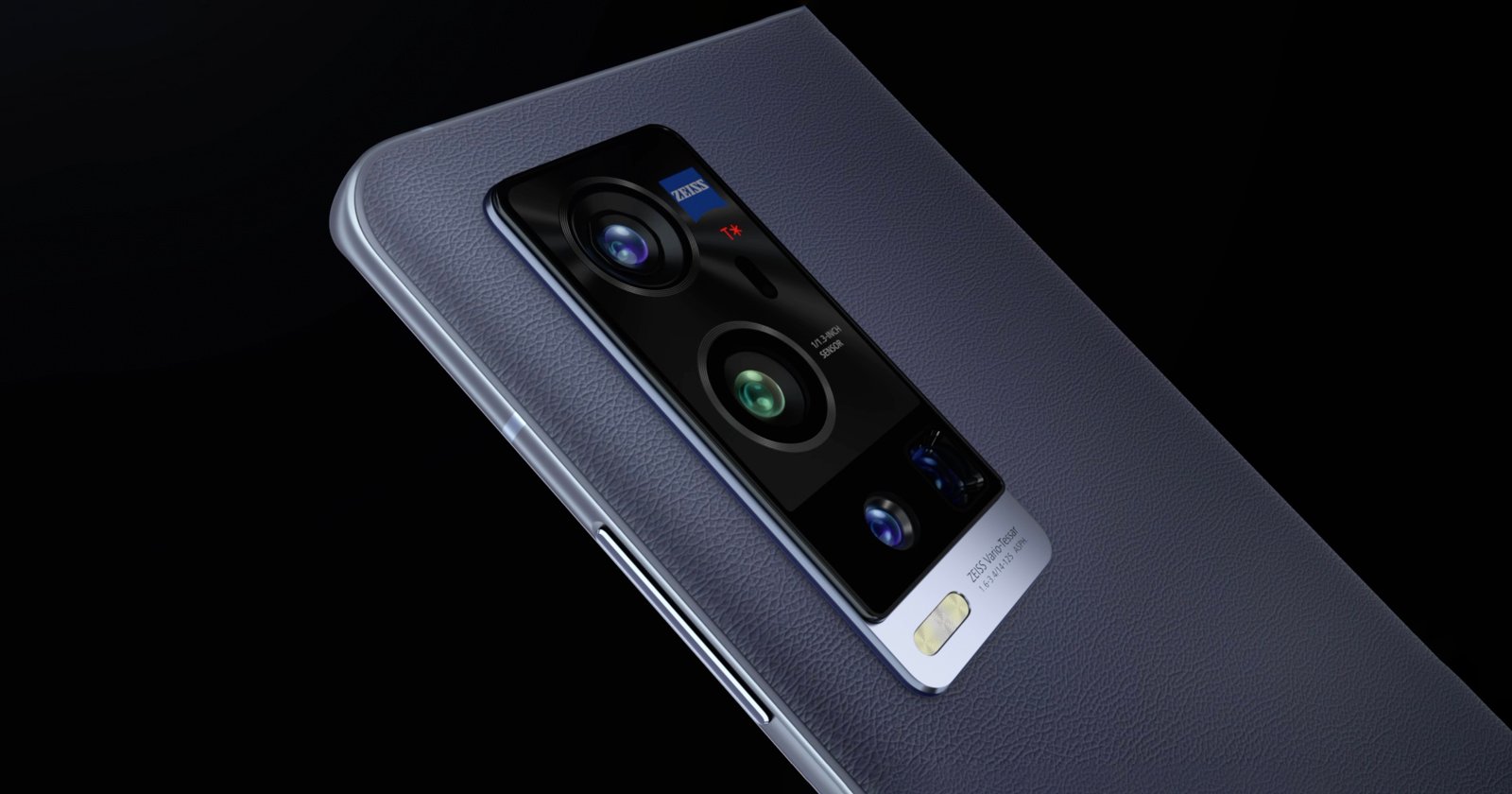
Both the Pro and Pro Max pair their 50-megapixel Lytia 910 image sensors with a 24mm equivalent f/1.57 lens with Zeiss T* coating. It’s a fixed f/1.57 aperture, by the way, unlike some other recent photo- and video-focused smartphones.
While the main cameras are the same, the Pro and Pro Max differ slightly in optical image stabilization. Vivo describes the Pro Max’s OIS as “gimbal-grade,” while the OIS on the X500 Pro is rated about half as effective.
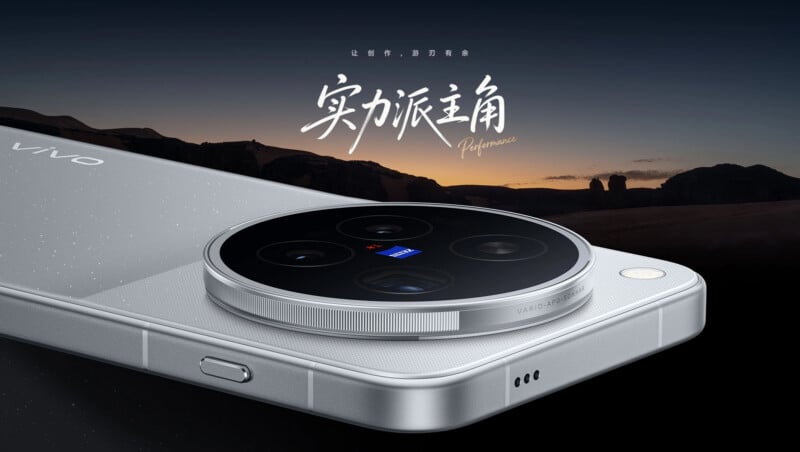
From here, the two phones separate further. The X500 Pro has an 85mm equivalent telephoto lens and a 64-megapixel Sony Lytia 610 image sensor. It’s a Type 1/2 sensor. Meanwhile, the Vivo X500 Pro Max has a 200-megapixel 85mm camera with Samsung’s relatively fresh ISOCELL HP0 image sensor, a Type 1/1.4 sensor. In both cases, the telephoto cameras look impressive on paper.
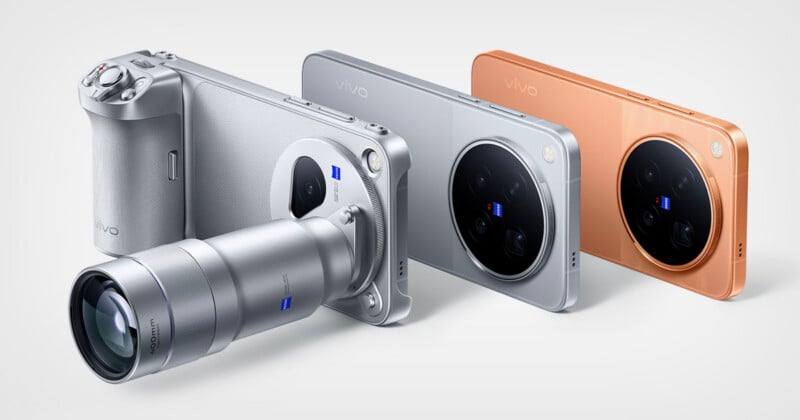
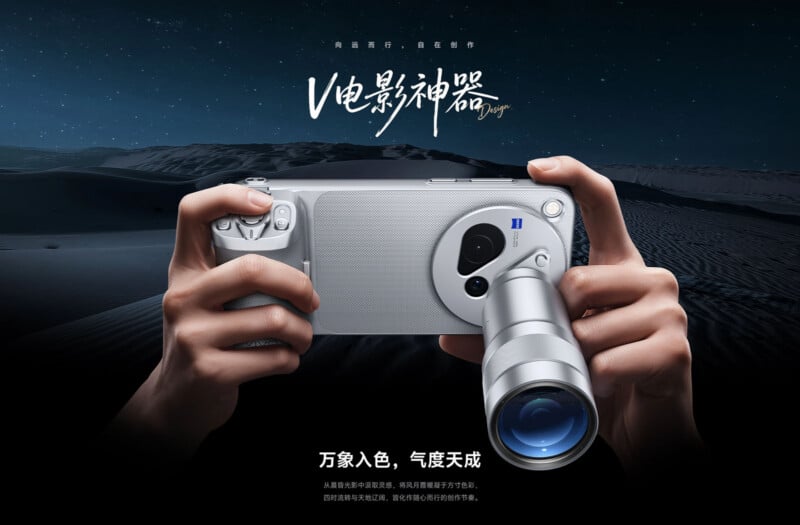
For mobile photographers who need even more reach, the Zeiss Telephoto Extender Gen 2 Ultra, introduced alongside the X300 Series, promises a 400mm equivalent focal length and remains fully compatible.
On the ultra-wide side, both phones share the same 50-megapixel, 15mm equivalent setup. These cameras use a Samsung ISOCELL JN5 sensor, which is a relatively small Type 1/2.75 imager.
The Vivo X500 Pro and X500 Pro Max promise high-end video recording capabilities. Both phones capture 8Kp30 and 4Kp240 video and offer 10-bit 4:2:2 recording. Vivo is also serious about color management, and the phones support ACES color management.
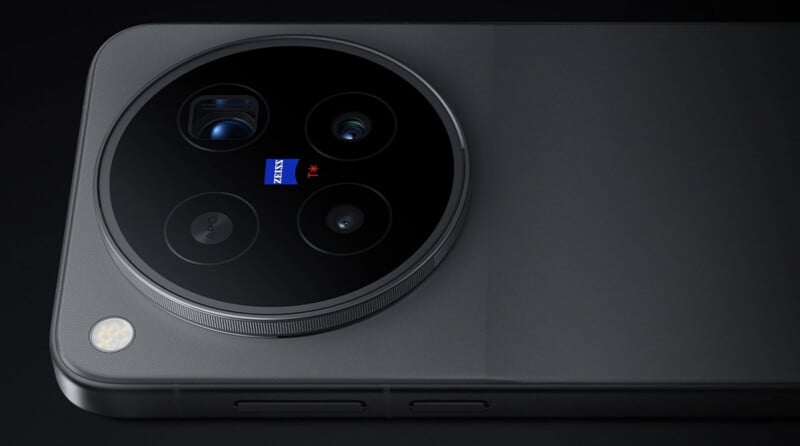
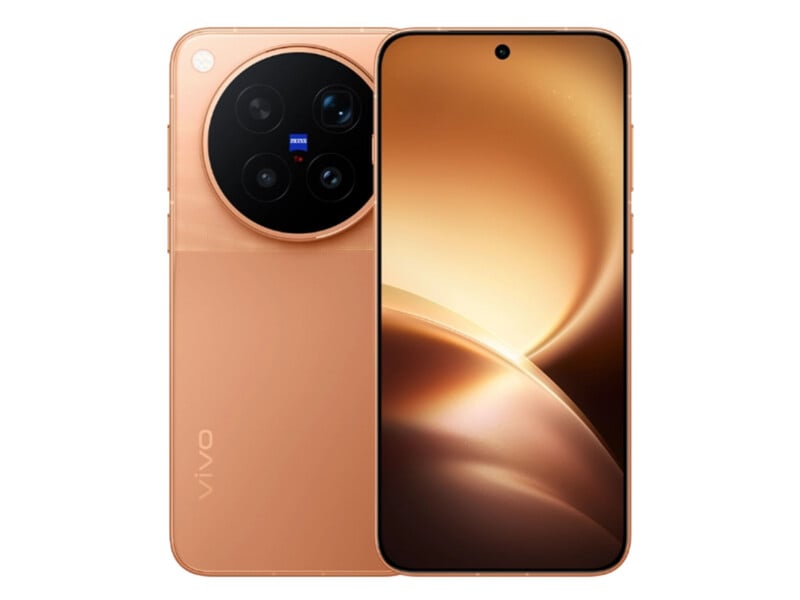
Both the Vivo X500 Pro and Vivo X500 Pro Max run on the MediaTek Dimensity 9600 Pro. This marks that chip’s debut in a commercial release. The X500 Pro has a 6.36-inch OLED screen while the Pro Max has a bigger 6.85-inch display. In each case, the screen has a 144Hz refresh rate and a peak maximum brightness of 4,500 nits.
Although photographers will most likely choose between the Vivo X500 Pro and Pro Max, the base X500 has some chops. The 6.59-inch phone has a 50-megapixel main camera (23mm equivalent) with a Sony Lytia 828 (Type 1/1.28) sensor. It also has a 64-megapixel telephoto camera (72mm equivalent) and a 50-megapixel ultrawide that appears to match the other two phones in Vivo’s refreshed lineup.
Pricing and Availability
The Vivo X500 Series smartphones are available now in China, starting at CNY 5,499 for the X500, CNY 6,499 for the X500 Pro, and CNY 6,999 for the X500 Pro Max. These prices work out to around $820, $970, and $1,045 at current exchange rates. (CHECK)
There is no word yet on a global release, although one is expected.
Image creditsVivo