Apple Explains Why the iPhone 18 Pro Has a Variable Aperture
The Apple iPhone 18 Pro and 18 Pro Max have arrived, and their familiar outward appearance belies a major change to the main camera. For the first time, an iPhone features a variable aperture, and PetaPixel spoke with Apple to learn firsthand why it was created, how it works, and what it means for how people capture photos and videos on Apple’s latest flagship phone.
This was a rare chance to have a candid, unscripted conversation with Apple and gain valuable insight into how the company approaches the engineering and design decisions of one of its most important and valuable product lines, the iPhone Pro.
Why Is Now the Right Time for a Variable Aperture on iPhone?
Perhaps the most pressing question about the iPhone 18 Pro series’ new variable-aperture main camera is, “Why now?” Apple has had plenty of opportunities to introduce a variable aperture before, and many of its competitors have done just that.
“Especially on our Pro line, we really want to make it as simple as possible for anyone to get the best shot possible, all while giving really technically advanced capabilities for pros, people who may be experienced in photography and videography,” says Jeremy Hendricks of Apple’s iPhone Product Marketing team.
“Our Pro line over the years has really had to evolve and balance both of those sides,” Hendricks continues.
As it happens, it was less about why introduce the variable aperture now, and much more about how to improve image quality. The new variable aperture was, at least at first, a means to an end.
“So we really started from sensitivity, actually. We’re always trying to make our cameras better, bring better image quality to customers,” Matt Waldon, Senior Director of Camera & Depth Hardware at Apple, tells PetaPixel. “And in this case, we really wanted to improve the sensitivity. And there’s a few ways to do that.”
As Waldon explains, you can increase the image sensor size; that’s a surefire way to improve sensitivity, all else equal. However, this has drawbacks. Bigger sensors require more physical space, bigger lenses, and more processing power, for starters.
For Apple, the better solution was to make a faster aperture. In the iPhone 18 Pro and Pro Max’s case, that meant going from an f/1.8 aperture to an f/1.48 one.
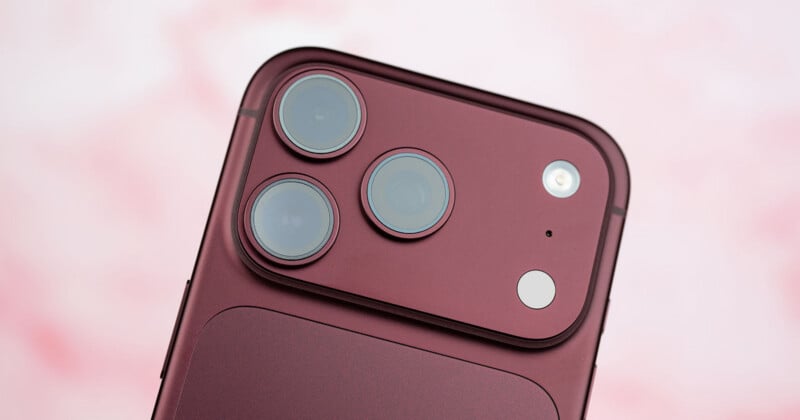
“So this camera now has an f/1.48 lens,” Waldon says. “And if we did that without variable aperture, in some shots, for example, if you’re shooting somebody close and you have something in the background you want to capture… you would really lose sharpness and not necessarily be able to take the shot you want to take.”
Variable aperture then became a necessary engineering challenge to overcome because Apple wanted to increase the speed of the iPhone’s lens without worsening image quality when a faster aperture isn’t needed.
Giving Photographers More Creative Control
As Hendricks says, though, variable aperture offers many benefits to the end user beyond better photo and video quality. It also gives serious photographers and videographers more creative control over how their content looks, and that’s right up Apple’s alley.
“So when you look at something like aperture, that seemed like the next natural thing to bring to the Pro camera system, [to] be able to expand that overall creative range for everyone,” Hendricks explains.
Waldon remarks that Apple got really excited about the creative possibilities the variable aperture system offers.
“Being able to shorten the depth of field even beyond what you can shoot with today at f/1.8. Being able to close down the aperture gives you more things you can do when it comes to video. You can have more flexibility in shutter speed. Even in stills, you can have more flexibility in shutter speed. When you want it, you can get this very cool starburst effect,” Waldon says.
Six Aperture Blades Struck the Right Balance
Speaking of that starburst effect, the stepless variable aperture mechanism incorporates six precisely designed, equally rigorously engineered blades. Why six?
“So six blades was really a combination of things. One is just the physical dimensions of it. The more blades you add, given the size constraints, it becomes difficult to fit them all in, frankly. So there’s, there’s a physical constraint,” Waldon tells PetaPixel.
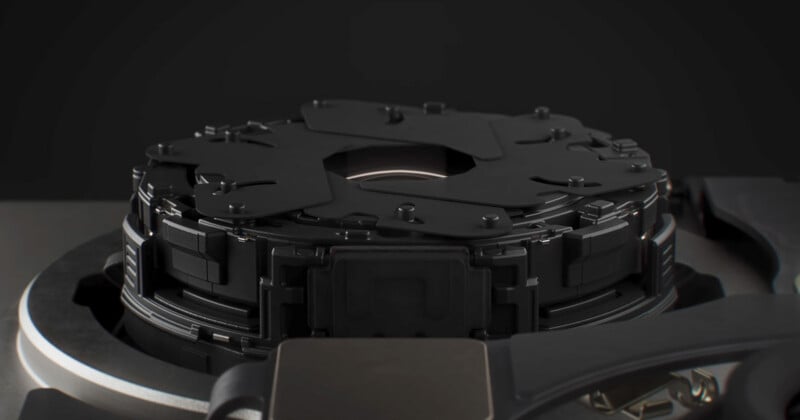
“Obviously we want enough blades to give sort of a nice, smooth aperture at every setting. So we did a lot of optimization around the shape of the blades and at every aperture setting,” he continues. “You sort of see how the blades have a big impact on how bokeh and out of focus areas look. It impacts how the starburst looks. So for this particular design, six was really the sweet spot.”
Each of the six laser-cut aperture blades is constructed from a specialized polymer composite Apple designed to strike the right balance between mass, flexibility, and durability. Each blade is thinner than a human hair and works alongside a new compact rotor mechanism.
“So it’s amazing that you have this incredibly complex camera module, let alone with the rotor mechanism, with all of these different things that enable variable aperture in a really smart way on something that you have just in your pocket all the time with you,” Hendricks says.

Of course, in typical Apple fashion, each aspect of the new variable aperture is described with hype-generating language. Still, there’s no question that no detail is too small when it comes to the iPhone 18 Pro’s key new camera feature. Every millimeter of space inside the phone is precious, and conflicting goals often come into play. Fitting a stepless variable aperture system into a relatively small smartphone camera module is no easy feat, as evidenced by the fact that many companies that have done it before ultimately stopped doing it in subsequent models.
Each Aperture Value Has Its Place
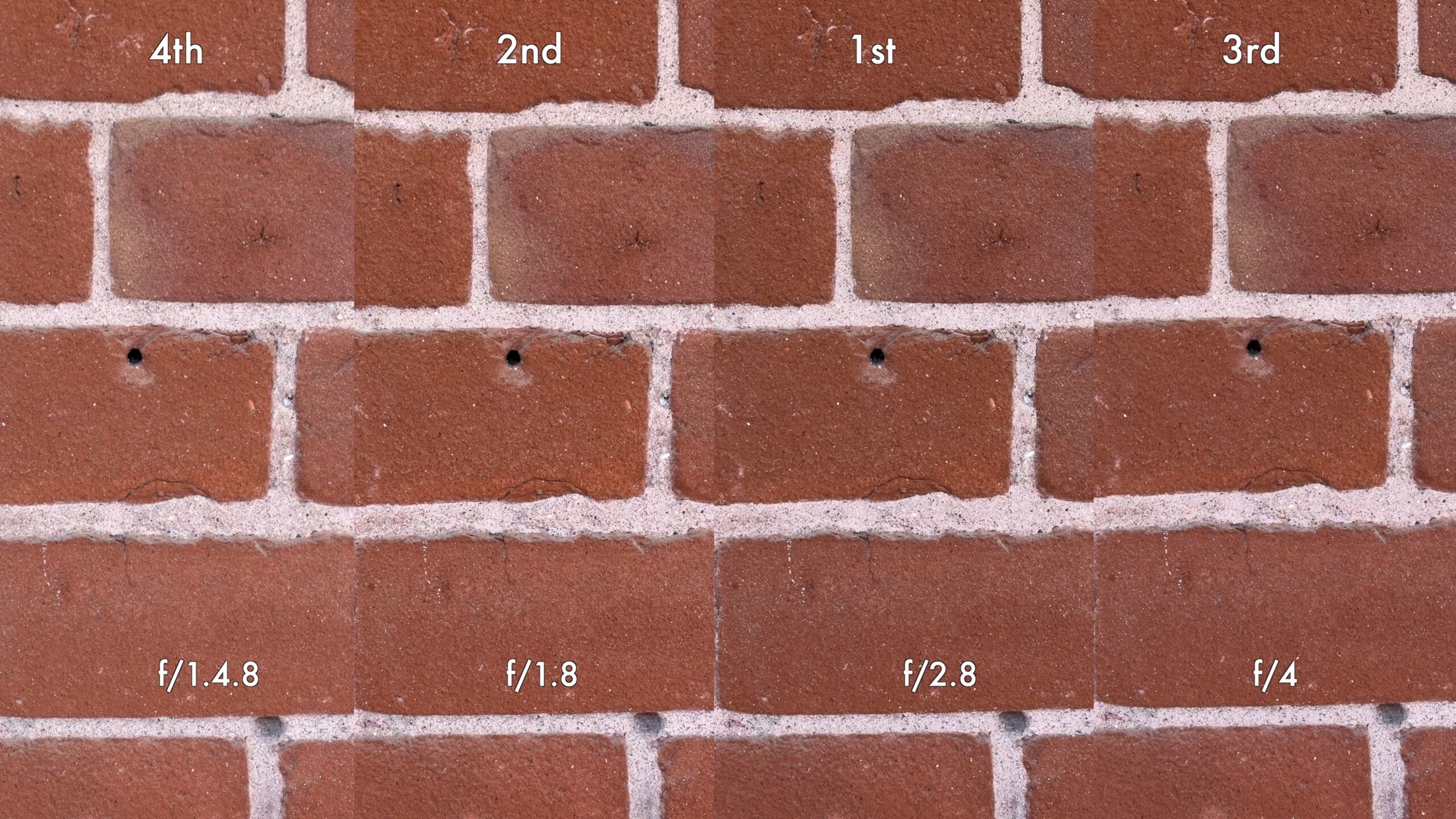
As for the stepless design, the users themselves, at least for now, only have access to four aperture settings. Mobile photographers and videographers can switch between f/1.48, f/1.8, f/2.8, and f/4, though the default is f/1.8.
Apple says f/1.8 remains the best overall choice because it is very sharp, still delivers some background blur when the subject is close to the camera (as it often is), and is familiar to users. It strikes a good balance between sharpness and speed.
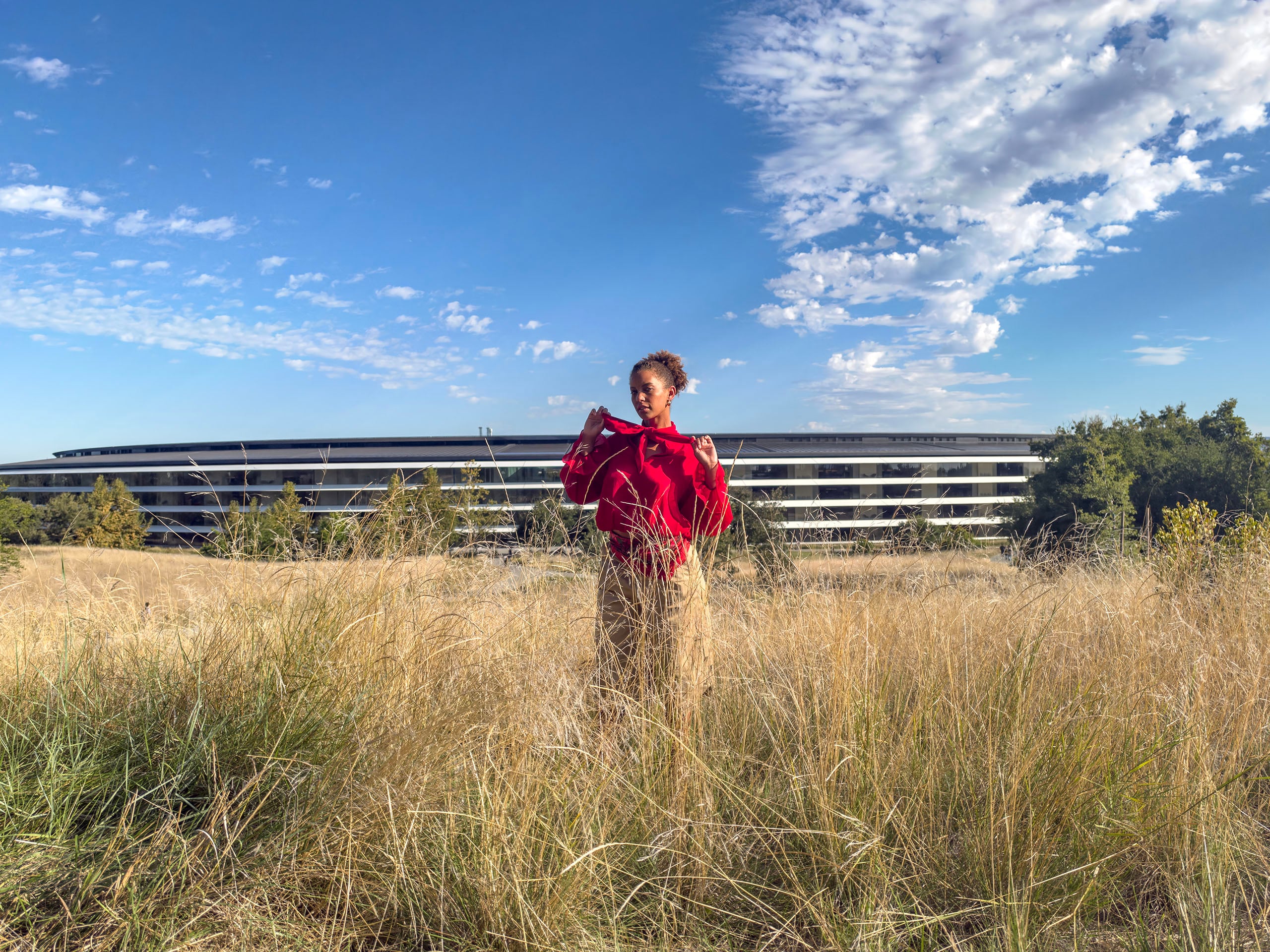
“So there is a little bit of trade off as you go to to higher or lower apertures, where you sacrifice a little bit of sharpness [at f/1.48 because of aberrations] and on the long end, [f/4], because of diffraction,” Waldon explains.
Even if f/1.8, or at least near it, is the optimal aperture in many situations, Apple is committed to giving users more choice. Hendricks and Waldon are especially interested in how videographers use the variable aperture to dial in the perfect shutter speed for the look they want.

Pro Controls
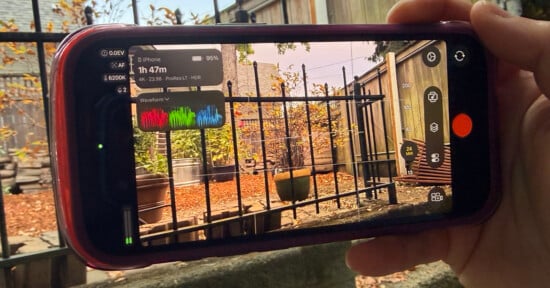
For Apple, the variable aperture plus the new Pro Controls on iPhone 18 Pro and Pro Max are a perfect pairing for creativity. Until now, iPhone owners had to use a third-party app to get granular camera control. While those third-party apps still offer a lot and may remain the right choice for some, Apple believes that Pro Controls will both introduce more people to manual camera controls as a general concept and also satisfy more serious users like us, who have been asking for advanced controls inside Apple’s Camera app for years.
“[Pro Controls] kind of invite people to learn about manual controls and try to experiment with them, even if you don’t have a deep background in that,” Hendricks says.
“The incredible thing with the Camera app and Pro controls is everything is by default automatic. So you don’t have to know how to use a camera. Just as has always been the case, you just go in, press the shutter button, let the camera do the work,” Waldon adds.
“But at the same time, once you start playing around with it, I think it’s actually really fun and almost a little bit hard to put down when you start playing around with all the different settings,” he continues.
“The amazing thing now is that now that you do have the full control, you take advantage of the computational image pipeline. So you get the image quality, you get the Styles, you also get on the video side, that flexibility that we have with editing, like audio mix, for example,” Hendricks adds.
“The more flexibility that you give people upfront, like in our Camera app, the more creative range that they’ll have,” he says.
A Cascading Series of Events That Changed the iPhone 18 Pro’s Camera System
Apple is far from the first company to experiment with a variable aperture in its smartphone camera system. However, Apple is exhibiting a distinct amount of care in its approach.
“We went into this very intentionally,” Waldon says. “You’ll see that it does make a real difference when you’re shooting in scenes, when you have something close and you have something far and you want more depth of field. It’s a real thing.”
Waldon says he’s aware of how Apple’s competitors have implemented variable apertures before, and he thinks that in many cases, “the difference isn’t really there.”
“For [our] optical format and f-number, this is the right time to maintain fantastic quality and also give this creativity.”

Unlike some other companies that quickly abandoned variable apertures for a variety of reasons, Waldon says Apple is all in on the design decision.
“We think this is something that is super important for our Pro cameras and it’s part of our plan going forward.”
It’s interesting to consider that everything that has changed about the iPhone 18 Pro camera system ultimately started from a single, relatively simple desire: Improving image quality in low light.
There were multiple ways to achieve this goal, and Apple ultimately settled on a faster aperture. But you don’t always want a fast aperture, so it needed to be variable. And if the phone has a variable aperture, then the user should be able to control it, right? Enter Pro controls.
Each of these changes taken individually may not seem like a big deal, and arguably we weren’t totally convinced out of the gate that much had truly changed with the iPhone 18 Pro’s camera system. However, in real-world use, all of these tweaks add up to a significantly better camera experience for both photography and video.
Image creditsApple. iPhone 18 Pro product photos by Erin Thomson for PetaPixel. Real-world samples by Jaron Schneider.