
Delkin’s New Valor Pro Memory Card Is Wicked Fast and Reliable
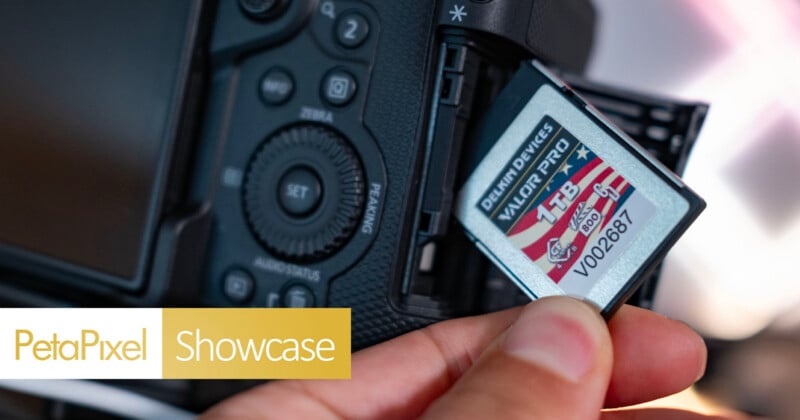
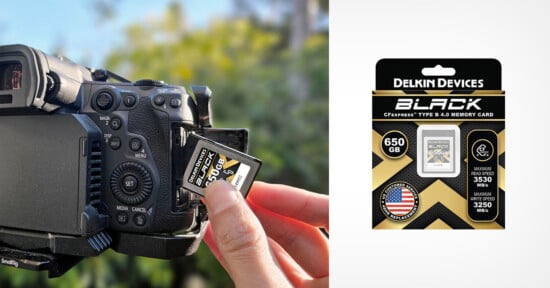
When Delkin announced the Valor Pro memory card last week, I had to admit the branding is certainly bold, but ultimately what matters is whether the performance backs it up. It was a lot, but in the end it doesn’t matter what the card looks like, it matters how it performs.
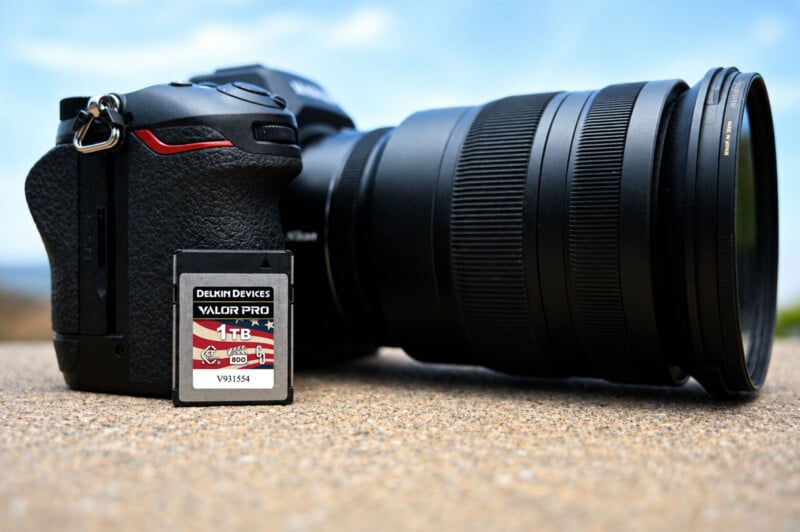
I’m happy that Delkin sponsored this Showcase so we could dedicate the time necessary to really put this 1TB CFexpress Type B card (DCBVP1T) through its paces, which is not something we typically have the time or budget to do. I was doubly happy because Delkin really put a lot of emphasis on the capabilities of this card: VPG800, sustained write performance of 1,840 MB/s, and peak transfer speeds of 3,700 MB/s read and 2,800 MB/s write. Those numbers are at the top of what we expect from the most expensive memory cards available, so $590 for a proudly assembled-in-USA, 1TB memory card felt like a pretty good deal.
But it would have to live up to those expectations.
Stress Testing
Via Computer
Right now, there is no camera on the market that takes advantage of the CFexpress 4.0 standard, which is a crying shame. The standard was announced back in 2023 and doubled the theoretical max on card speeds, resulting in the Compact Flash Association creating new VPG certifications that went beyond the previous maximum VPG400.
What this would mean in a practical sense is that the new speed performances will enable cameras that are equipped to take advantage of them the ability to offload photos much faster and shoot longer bursts at higher resolutions. But that will require new hardware, and no camera on the market currently has it, even now three years later. So, current cameras can’t take advantage of these speeds and will be capped at the previous CFexpress 2.0 speeds (luckily, CFexpress 4.0 is backward compatible).
What we do see is a much faster post production workflow as long as you’re using a Type 4.0 card reader, which most manufacturers — Delkin included — make. It is very nice to be able to offload a full 1TB memory card in less than 10 minutes.
So that’s where we started: we checked how the new Valor Pro performs when connected to a computer. To do so, we used our standard process: testing speeds brand new, when fully loaded with data, and then again when fully emptied. This time, however, we expanded the test to include Crystal Disk Mark (called Amorphous Disk Mark on Mac), which gives us even more information about the card’s performance.
Starting with Blackmagic Disk Speed test, we saw a sustained write speed of 1,717.8 MB/s and a sustained read speed of 2,951.9 MB/s. Once filled, the memory card continued to perform unimpeded. Write speed remained steady at 1,730.5 MB/s and read speed maintained at 2,962.4 MB/s. Once emptied and tested a third time, the Valor Pro maintained yet again, reading 1,739.8 MB/s write and 2,956.7 read.
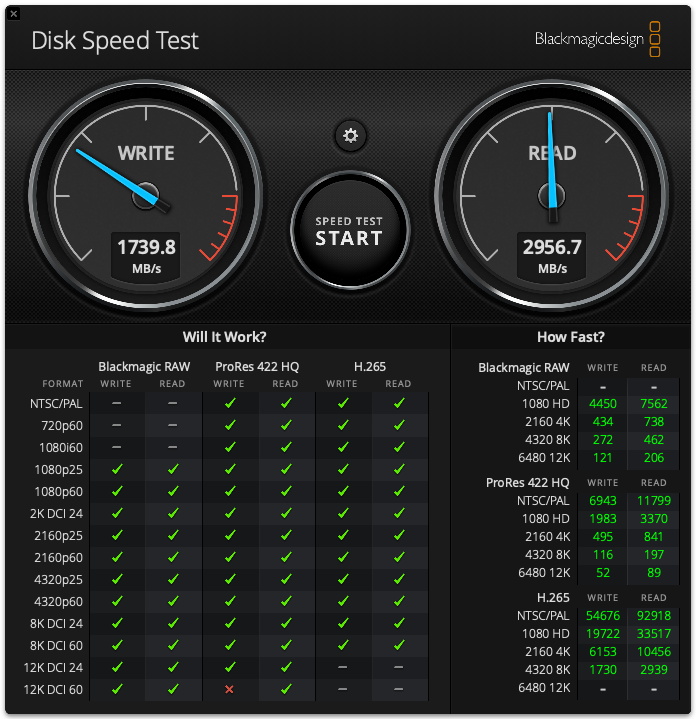
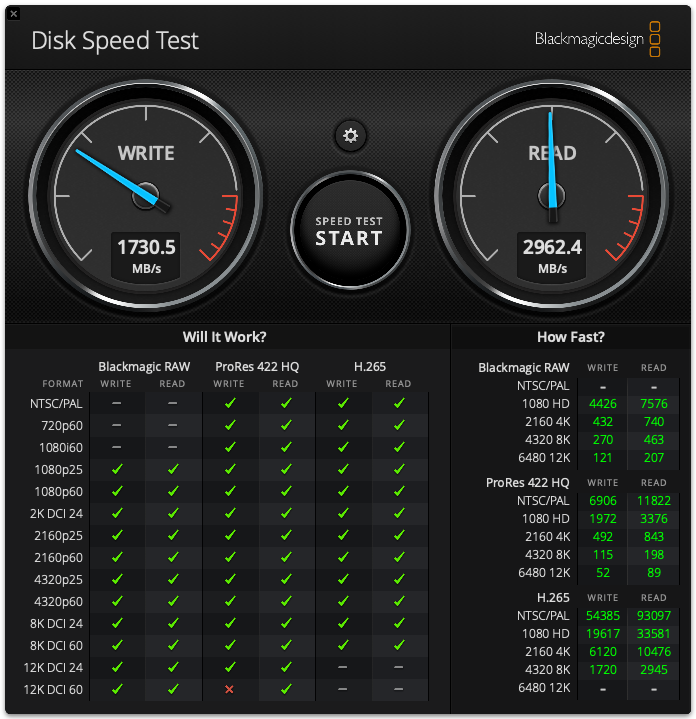
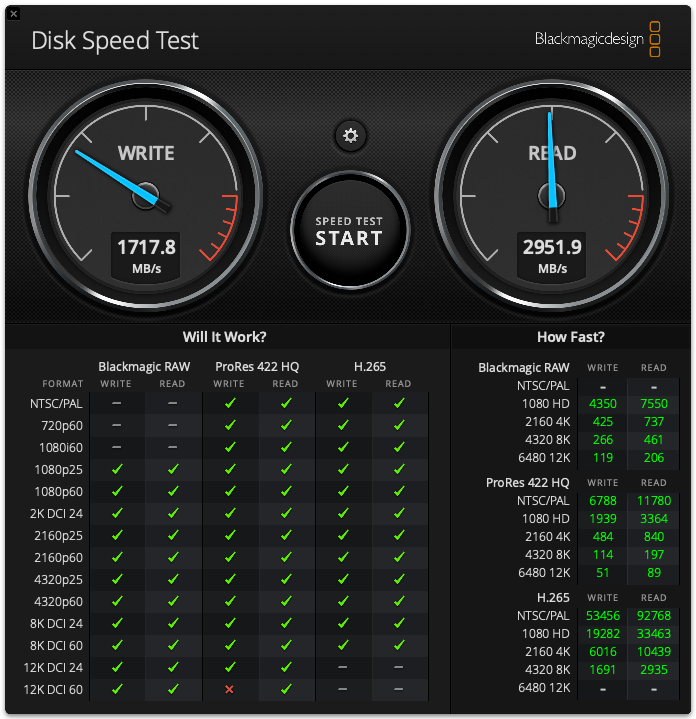
While these measured speeds are somewhat below Delkin’s published maximum specifications, the published numbers represent peak performance under ideal conditions, whereas these benchmarks reflect sustained real-world performance. However, not reaching advertised speeds is pretty common for any SSD as the numbers advertised on packaging are performed in the most ideal, laboratory environments. What we have here is more what is expected in the real world. More importantly, the sustained write performance substantially exceeds the VPG800 requirement of 800 MB/s, giving plenty of headroom for current and future professional video workloads. Overall, these are excellent results.
Moving over to Crystal Disk Mark, the numbers are just as impressive. This software tests both sequential and random file access, with each testing different simultaneous requests. The SEQ1M QD8, for example, is looking at sequential read and write speeds with eight processes simultaneously, queued for maximum throughput. That top result, therefore, is the one that is what you’ll typically see advertised on boxes.
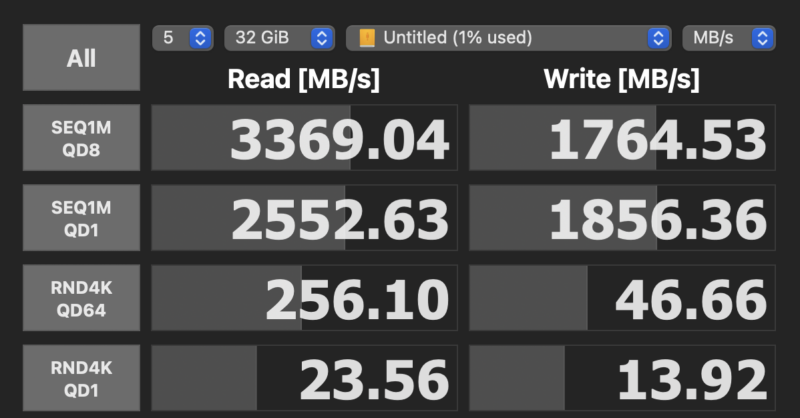
There, the Valor Pro reached peak speeds of 1,764.53 MB/s write and 3,369.04 MB/s read, fresh out of the box. Again, when filled to capacity and retested, those numbers held steady at 1,759.38 MB/s write and 3,366.43 MB/s read. When emptied, we got 1,765.29 MB/s write and 3,370 MB/s read speeds. Just like with the Blackmagic Disk Speed Test, the Valor Pro maintains its peak performance regardless of how much strain it is put under.
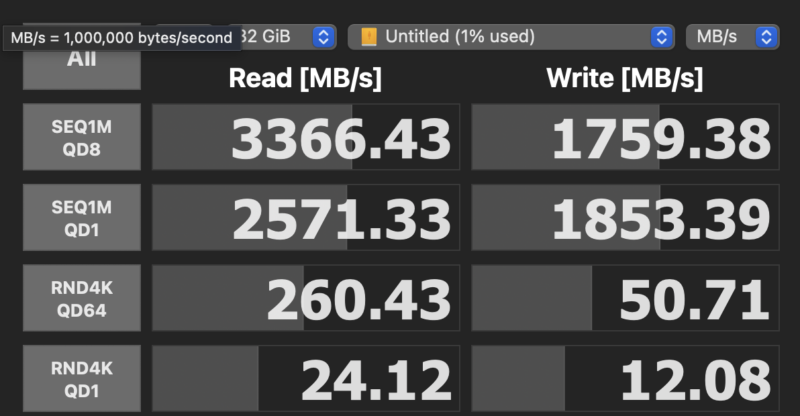
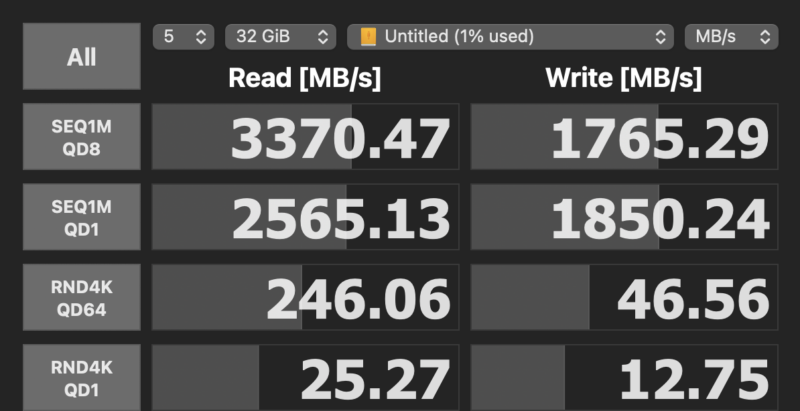
The second set of numbers asks the drive to process one large file instead of eight, and this is usually what you can look at to determine “real world” performance for a memory card, since they’re rarely going to be asked to do more than one dedicated task at a time as the camera pours data onto them. Here, we’re seeing even better write performance. From new, to full, to emptied, it gave results of 1,764.53 MB/s write and 2,552.63 MB/s read, 1,853.39 MB/s write and 2,571.33 MB/s read, and 1,850.24 MB/s write and 2,565.13 MB/s read, respectively.
The Valor Pro actually writes faster when it is only processing a single task at a time, which is a great result for a memory card.
The second two readings are less important for a memory card since they should not be used like a standard SSD as a working drive where random access would be needed, but those results along with the others can be seen above just as a point of reference.
In a Camera
These performance numbers are nice and while they do give us an idea of how the card performs, there isn’t really a better way to test a card than to actually make it record footage.
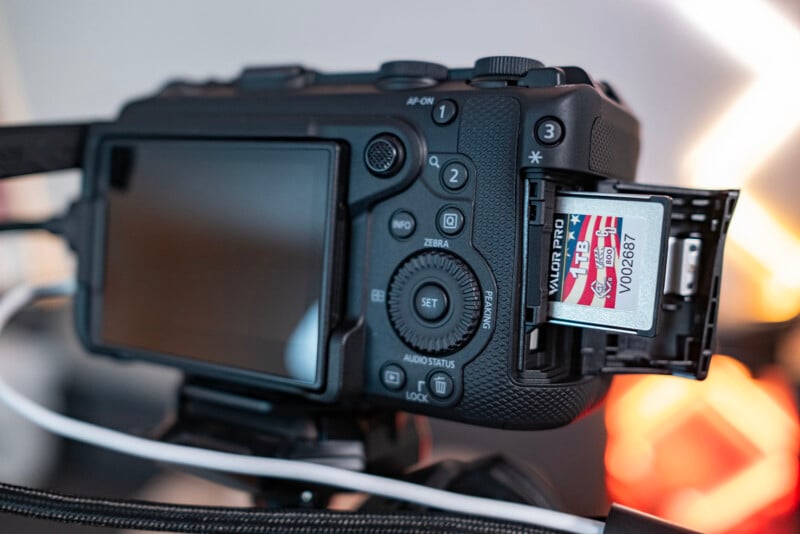
To that end, I put the Valor Pro in a Canon R6V, set it to capture 7K Open Gate in RAW, and let it go. Here, I wanted to see what would happen first: would the camera reach a thermal maximum and shut down or would the card fill?
Well, the camera’s fan didn’t even kick on during the recording, so thermals were most certainly not an issue. This is nice to know because not only does the Canon R6V have to manage heat from its own components during an intensive record session like this, but also heat from the memory card which will absolutely cook when pushed to record this much data for that long.
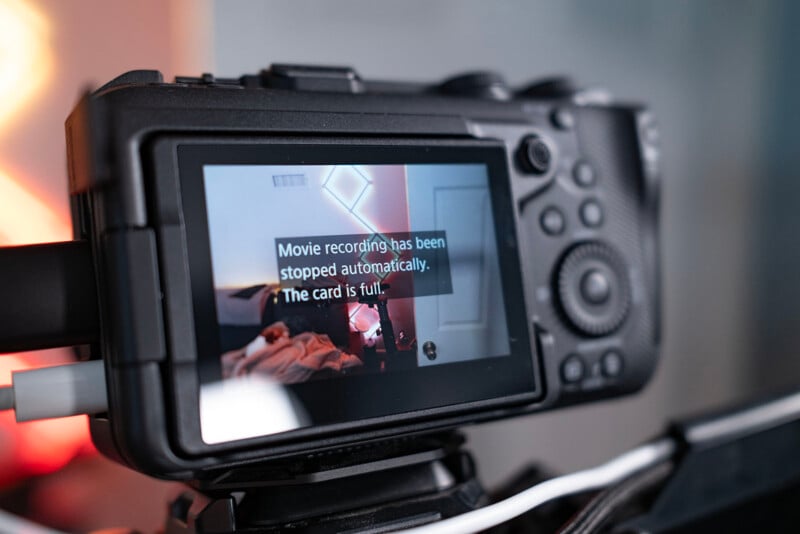
So, what we take from this is that the card absolutely performs even under strain and it also isn’t adding unnecessary heat to the equation while doing it. Throughout extended recording, we observed no dropped frames, recording interruptions, or performance degradation. This is a great result.
The Valor Pro is Future Proof
I said earlier that no camera on the market is currently capable of taking advantage of CFexpress 4.0, and that also means that there isn’t any camera that currently requires VPG800. There actually aren’t any mirrorless cameras that take CFexpress Type B that even require VPG400 — at least not yet. While today’s cameras don’t yet fully utilize CFexpress 4.0 bandwidth, investing in a card with this level of performance means photographers and filmmakers are less likely to need another upgrade when next-generation cameras arrive.
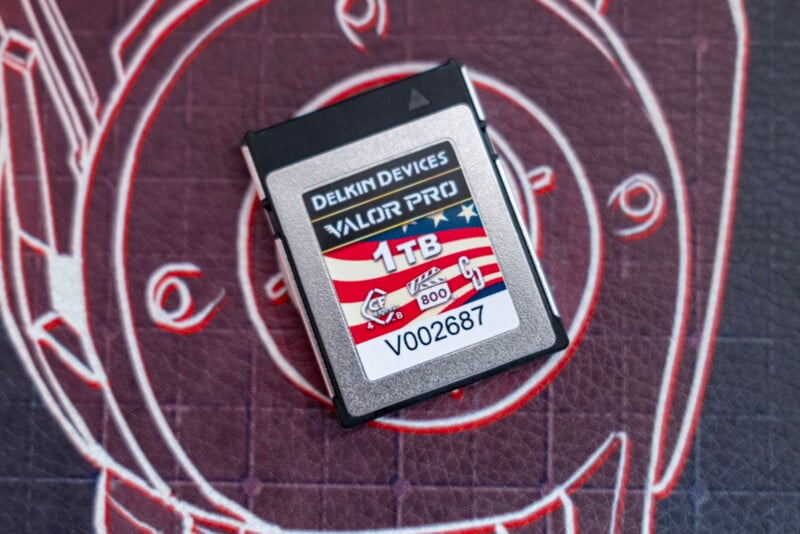
And that’s what is important to note about the Delkin Valor Pro and cards like it: these are expensive, so you’re going to want them to last. The VPG800 label is there to assure you about the future. This card will work really well now and will continue to work really well even looking ahead to cameras that don’t even exist yet.
After extensive testing, the Delkin Valor Pro delivered consistently excellent performance, maintained its speed regardless of capacity, handled prolonged recording without issue, and offers enough performance headroom to support the next generation of professional cameras. For creators looking for a premium CFexpress Type B card, it’s an impressive option.
Affiliate Disclosure PetaPixel articles may include affiliate links; we may earn a commission if you buy through one.