Why Capture One is Finally Supporting Hasselblad, and What It Means for Phocus
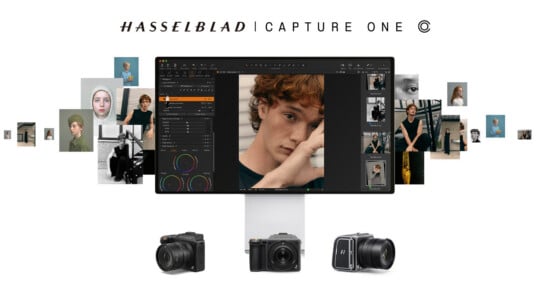
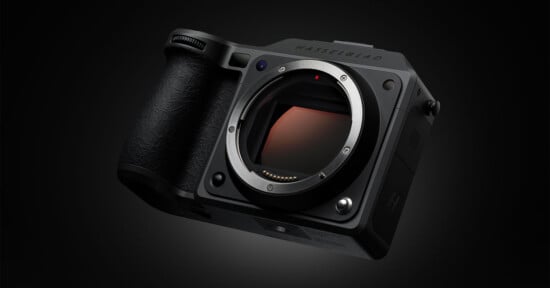
After many years of requests, Capture One has finally added support for Hasselblad .3RF RAW images. While support is limited to Hasselblad’s 100-megapixel medium-format cameras for now, this is a massive shift for Capture One that addresses years of user requests.
While Capture One’s CEO, Rafael Orta, chose not to delve deeply into the myriad reasons Capture One has never previously supported Hasselblad RAW image formats, veteran photographers can readily speculate.
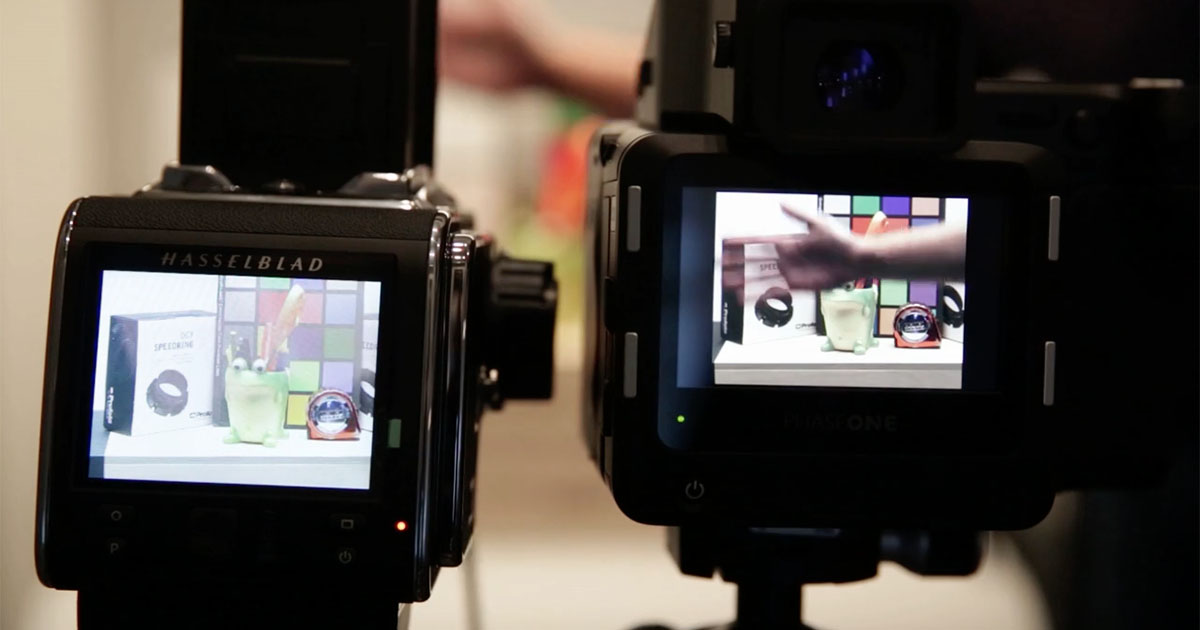
Capture One used to be owned by Phase One, a longtime competitor to Hasselblad. Phase One, a Danish imaging technology and camera company, and Hasselblad, a Swedish one, have long held deep-rooted animus toward each other. It’s like Ferrari and Lamborghini, or Sigma and Tamron, to borrow from photography. Phase One and Hasselblad’s rivalry runs so deep that the companies have long been happy enough to pretend the other doesn’t even exist.
“There is a well-documented history between Hasselblad and Phase One, and we’re not here to dwell on it,” Orta tells PetaPixel. “Capture One has operated as an independent company since 2020, and what matters to us is serving photographers.
“And they have asked us for this for years — on forums, in feature requests, in conversations. That’s why we’ve been working for a while with the Hasselblad team to deliver their shooters a native Capture One workflow.”
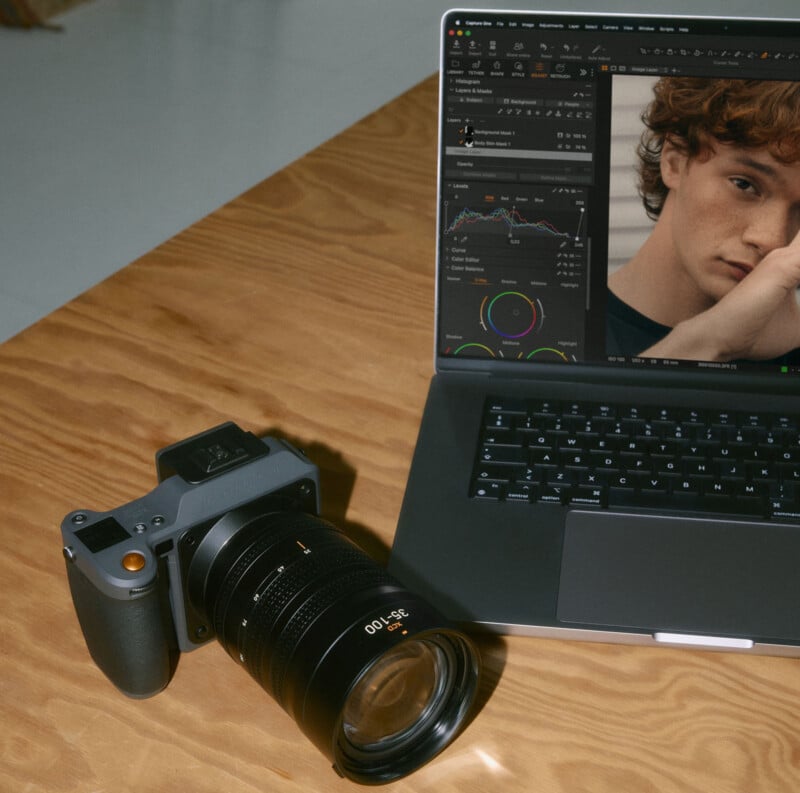
And it was quite a lot of work to bring .3FR support into Capture One. Orta says Capture One didn’t just want to ship a “generic file reader” but to deliver high-end, professional-grade RAW file processing for Hasselblad owners. That means the team built dedicated color profiles for each of the three Hasselblad cameras supported at launch: the X2D II 100C, X2D 100C, and CFV 100C. It also meant building out lens profiles for all of Hasselblad’s XCD lenses, ensuring proper optical distortion correction, reducing chromatic aberration, and eliminating vignetting.
“Our engineers worked closely with the team at Hasselblad to ensure the files render to the standard we need, and to make sure each team had all the information required to make that happen,” Orta says. “It’s been a collaborative process to ensure the unique nature of these cameras comes through in Capture One with the image quality we pride ourselves on — a genuine collaboration between both companies, focused throughout on getting the image quality right.”
From Hasselblad’s perspective, it also wanted to make this support happen, as it has been a consistent request from its customers.
“Over the years, we’ve seen more and more professional photographers choose Hasselblad, and we’ve received a great deal of feedback from our users,” Hasselblad tells PetaPixel. “One of the most consistent requests has been native support for Hasselblad RAW files in Capture One. This partnership is a direct response to that feedback, and we’ve been working with the Capture One team for some time to make it happen.”
Hasselblad is adamant, though, that Capture One support for its 100-megapixel cameras does not mean its own software, Phocus, is going away. It will be developed alongside this new Capture One support.
“This partnership isn’t a replacement for Phocus,” Hasselblad says.
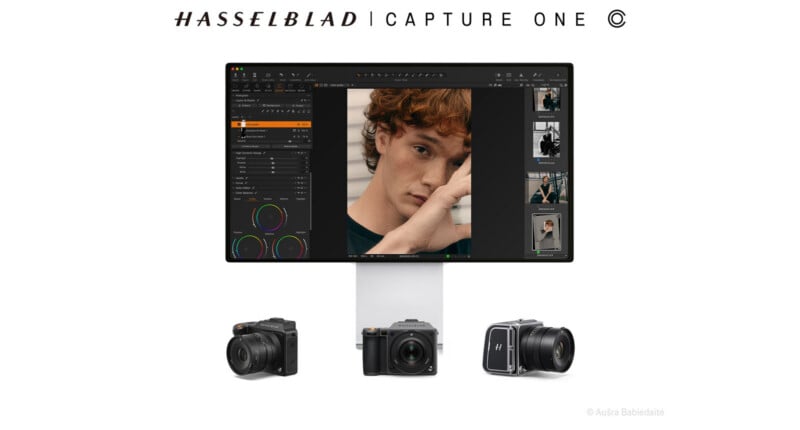
This support for professional photography workflows is very important to both Capture One and Hasselblad. Professionals are Capture One’s primary audience, although it also caters to enthusiasts and high-level amateur photographers who appreciate its color editing and post-processing tools.
“Our audience and our direction align closely with Hasselblad’s,” Orta explains. “Both of us are firmly rooted in the commercial and professional space, and that’s a big part of why this partnership makes sense.”
It does make sense, and it has been a very long time coming.