The 7 Spectacular Winners of the Hasselblad Masters 2026 Photo Contest
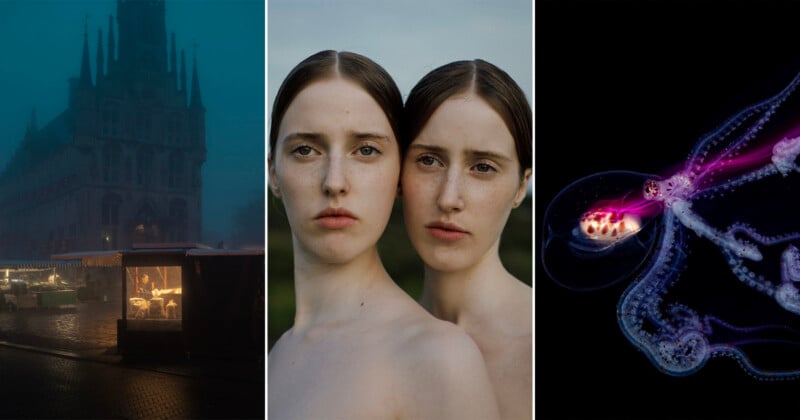
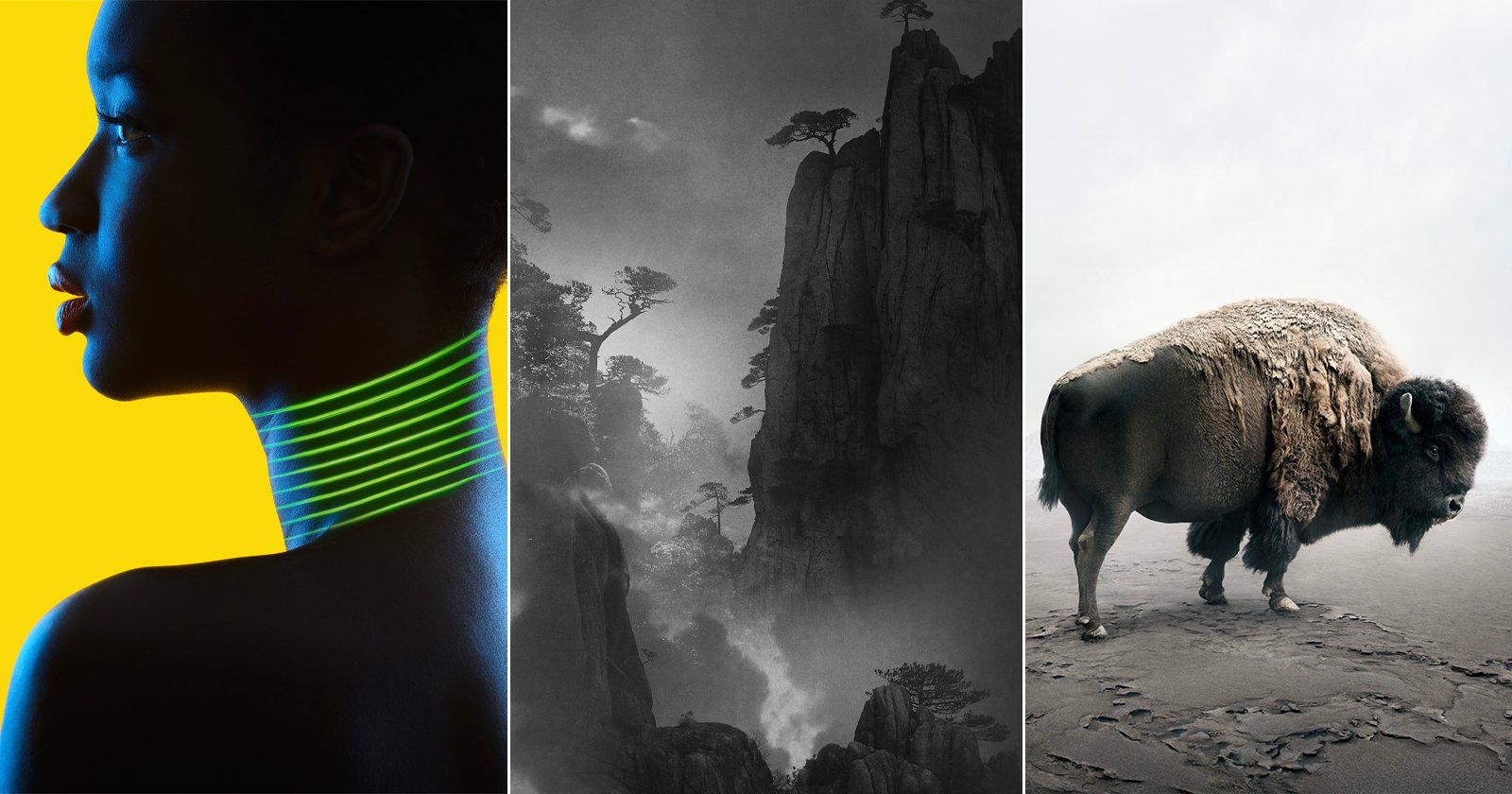
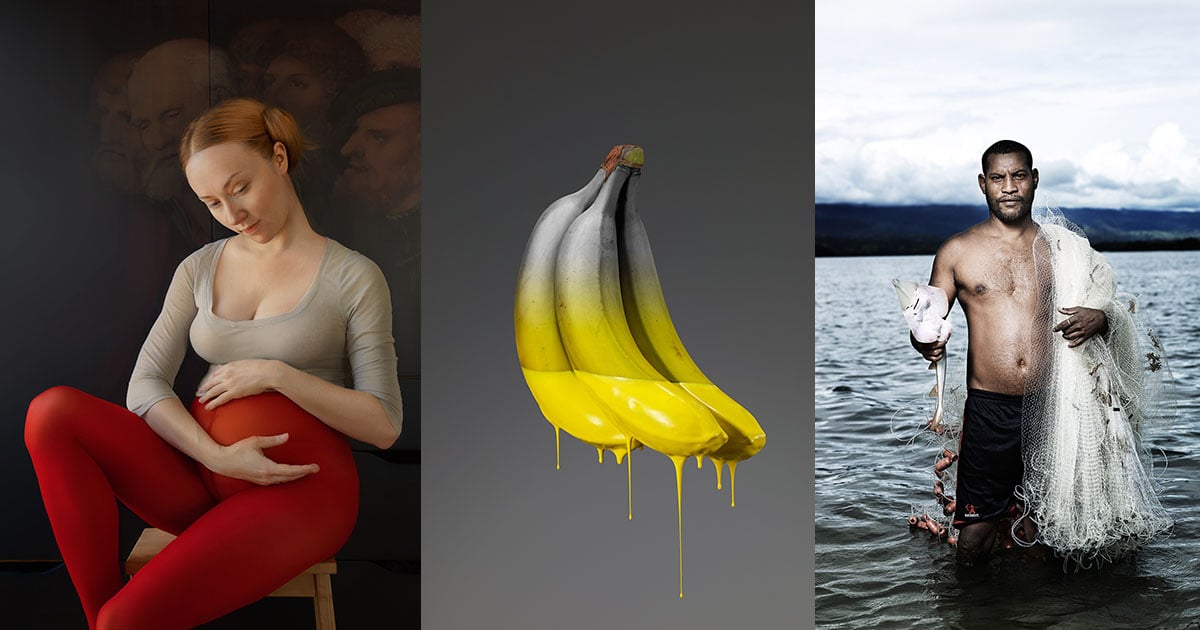
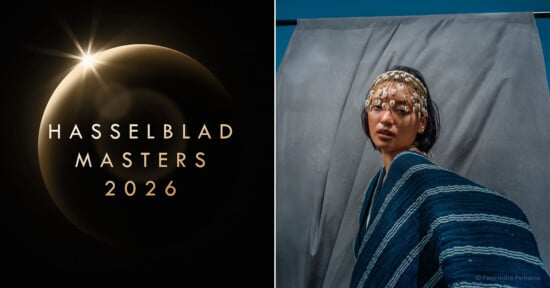
Hasselblad has announced the winners of the Hasselblad Masters 2026 photography competition, among the most prestigious photo contests in the world.
From 70 finalists, including a late addition following an AI-related disqualification, there are seven winners, one from each of the contest’s seven categories.
While an internal jury selected the finalists, a Hasselblad Masters Grand Jury picked the eventual winners, alongside input from a public voting process. The Grand Jury selected winners based on “conceptual strength, originality, creativity, and technical excellence,” Hasselblad explains.
“What this year’s Hasselblad Masters submissions demonstrated, with rare consistency, is that the most compelling photography does not simply record, it constructs,” says Kalle Sanner, Executive Director at the Hasselblad Foundation and Grand Jury Chair. “Across categories, the strongest work operated on more than one level simultaneously: legible on first encounter, yet resistant to easy interpretation. These are images that require attention, that continue to unfold the longer you stay with them.
“What unites the winners is a shared understanding that photography’s real power lies not in what it shows, but in what it withholds, reframes, and quietly insists upon.”
All seven winners below have earned the title “Hasselblad Master,” a 100-megapixel Hasselblad camera kit of their choosing, two XCD lenses, and 5,000 euros (just over $5,700). Each winner will also work alongside Hasselblad on a collaborative project and have their work featured in a commemorative Hasselblad Masters book.
The Hasselblad Masters 2026 Winning Photographers
Art
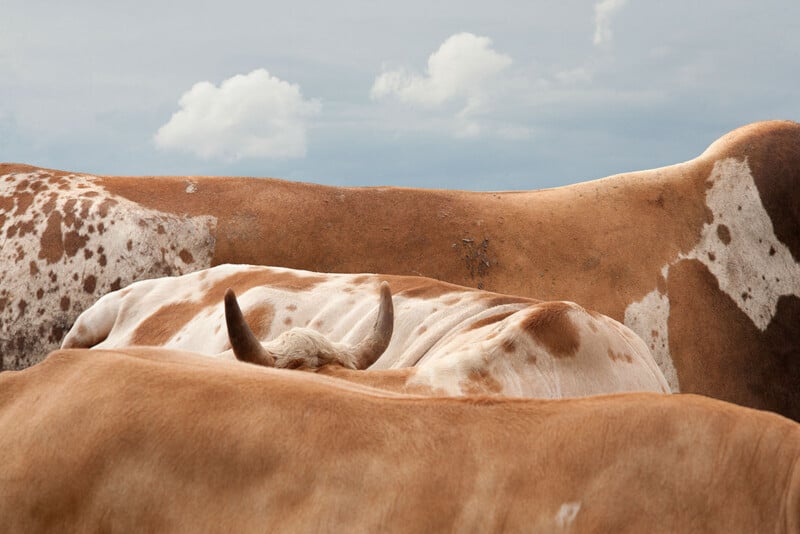
Indonesian photographer Yudha Kusuma Putera took home top honors in the “Art” category for his series, Waste Colonialism.
The winning series considers “social issues that hide in plain sight,” including the “tensions between humans, nature, and the systems we build around us.”
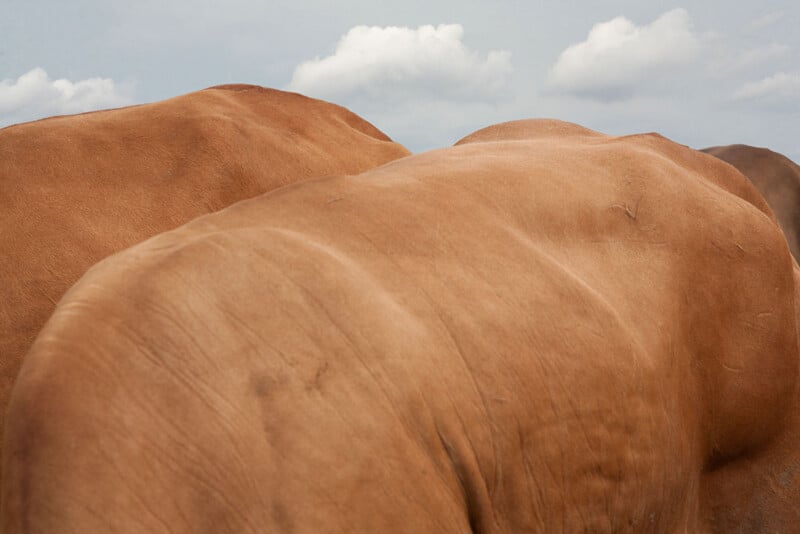
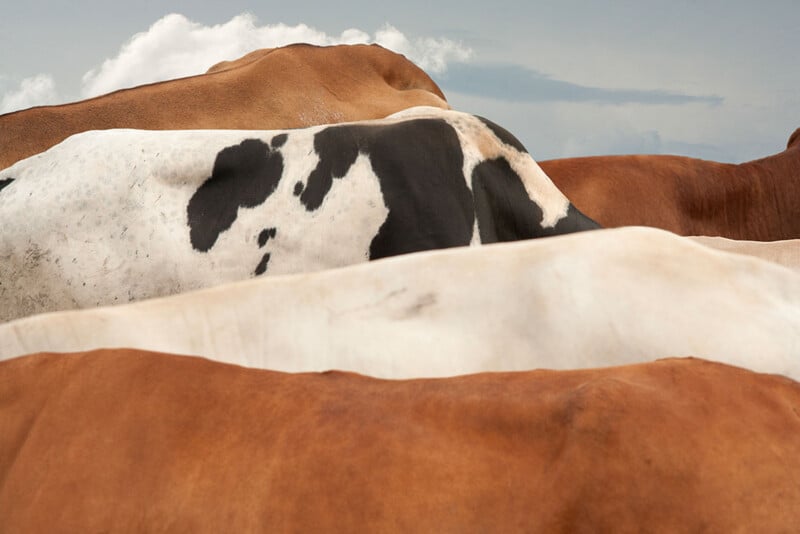
The winning photos focus on how developed nations export their waste to developing countries. At the Piyungan landfill in Yogyakarta, waste is sorted by scavengers and then consumed in part by cows, which then get expelled as another pile of waste.
“On the surface, the images appear direct and unambiguous, and yet they consistently resist easy reading, generating a sense of visual uncertainty that keeps the viewer engaged and questioning. The images do not announce themselves loudly, but reward sustained attention with a slow-building sense of strangeness that is both intellectually stimulating and visually striking,” says Sanner.
Architecture
Canadian photographer Kevin Boyle’s series, Daysleeper | Movieland, won the competitive Architecture category.
Boyle, who grew up in the vast Canadian prairies, a land of big skies and very tight-knit communities, returned home after his father passed away. Boyle found that many of the places he so loved as a child were now shuttered, boarded up, and abandoned.
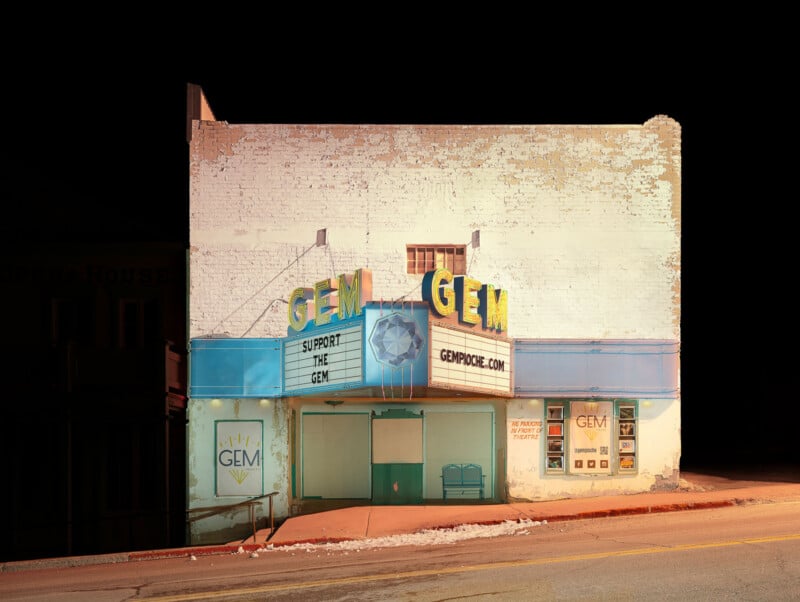
For over a decade, Boyle has traveled North America to document the abandoned architecture of small communities. The winning series comprises photographic montages. Boyle photographed each building multiple times, lighting areas by hand with a flashlight, and then compositing the different shots together in post-processing.
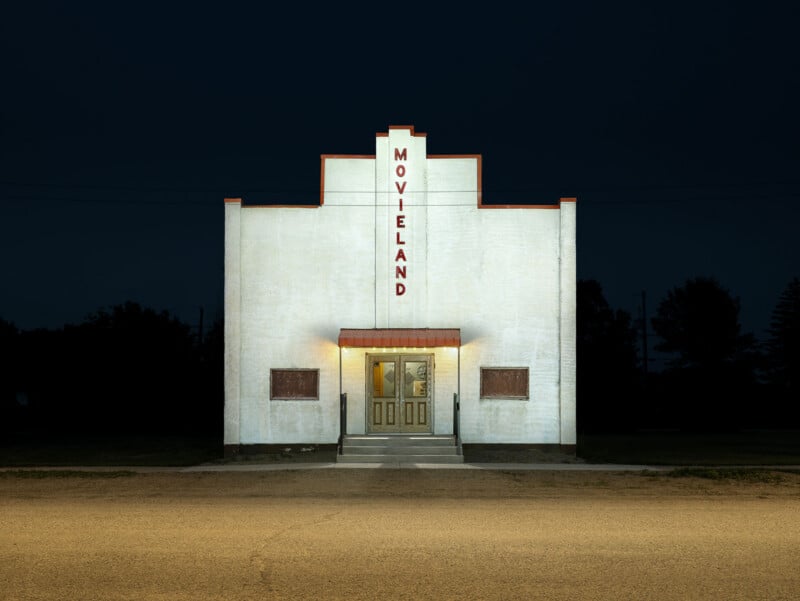
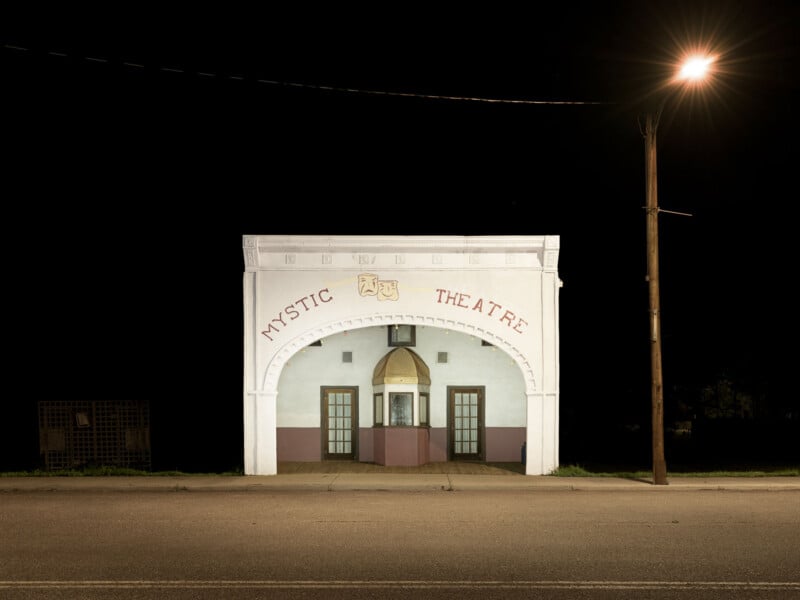
“The composition, and the fact that the images are empty of people, triggers our imaginations, taking us back to a time when these buildings would have thrived with the community meeting for evening entertainment,” says Sonia Jeunet, Photography Consultant and Education at Magnum Photos. “By making this series, the photographer invites us to consider the myriad of small venues that make up the social fabric of small communities.”
Portrait
Photographer Svetlana Jovanovic has a psychology background, and it shows in her award-winning portrait series, Otherness. The Dutch photographer is keenly interested in the concept of identity.
Her series explores identical twins and the interaction between individual and shared identity. As those who know identical twins are likely aware, two people who may at first seem so similar have minute differences that become more apparent over time.
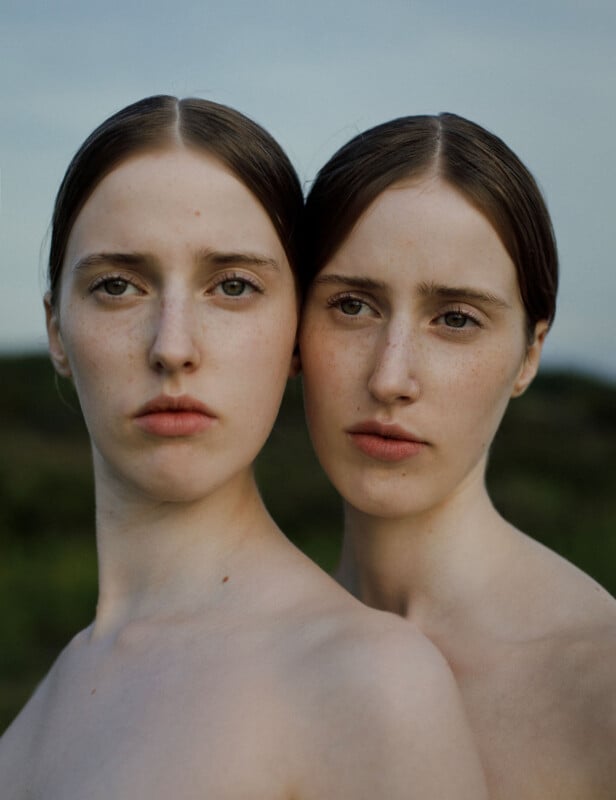
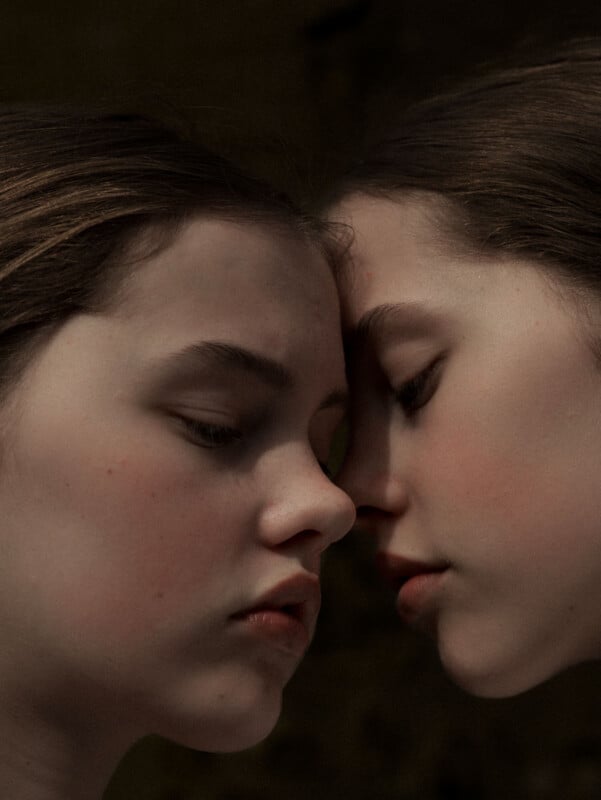
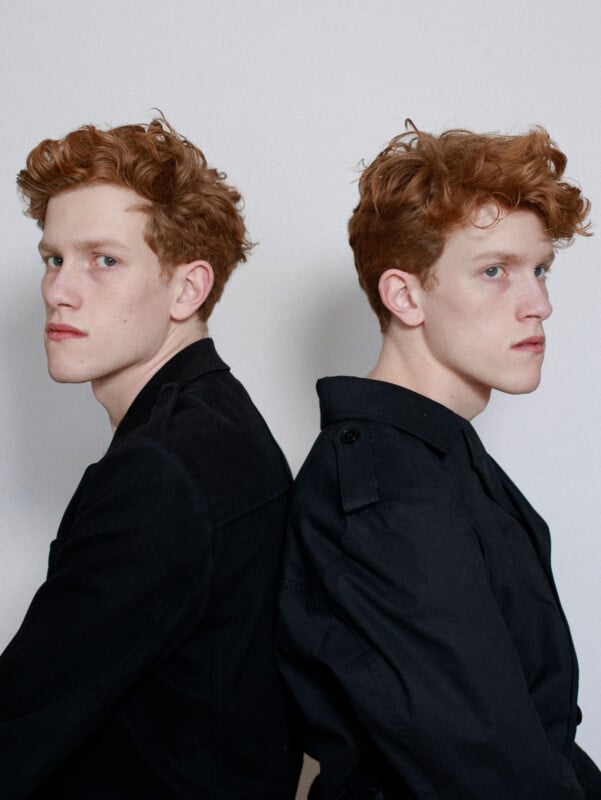
“Through precise use of light and composition, this portrait series explores the themes of mirroring and duality,” explains RongRong, Co-Founder and Artistic Director at The Three Shadows Photography Art Centre. ” Whether capturing two sides of the same face or the closeness of two kindred souls, the images reveal subtle layers of emotion with quiet precision.”
Landscape
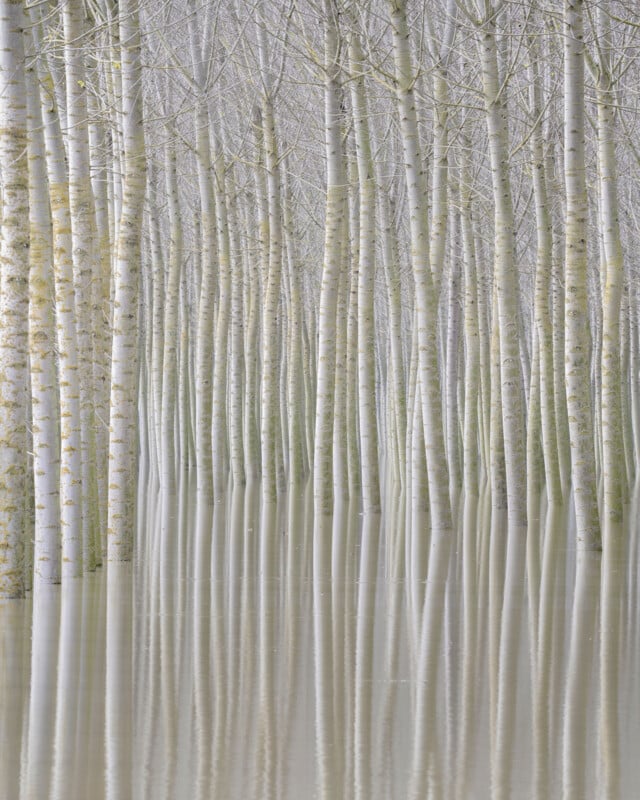
Irish photographer Rohan Reilly’s Ephemeral Visions strips landscapes down to their bare compositional essentials, including texture, tone, and shape. Reilly’s long-exposure techniques render moving landscapes as extreme still and quiet. His work relies heavily on negative space and much less on color than many contemporary landscape photographs do.
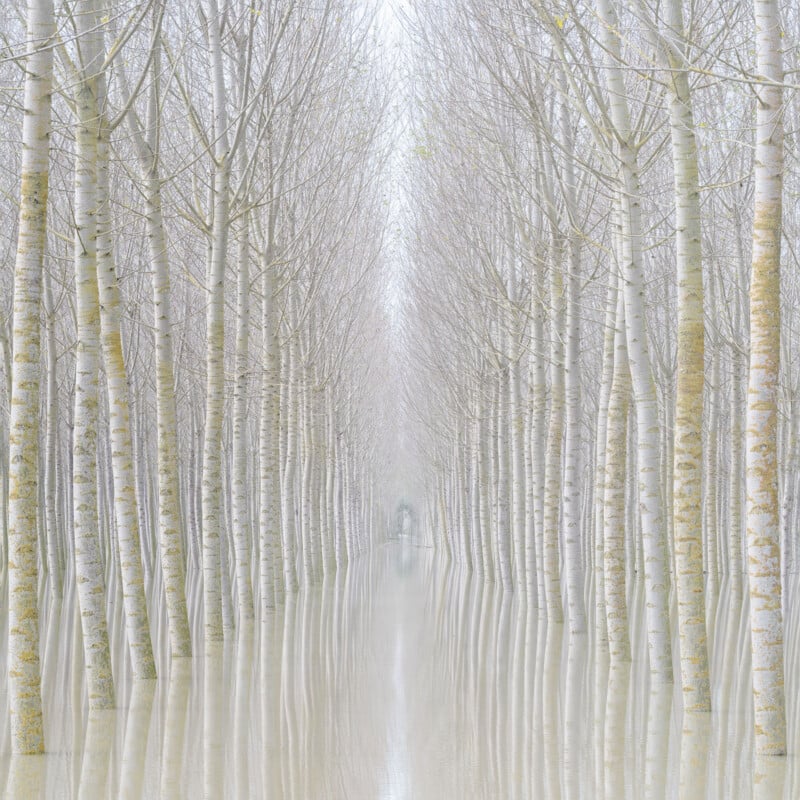
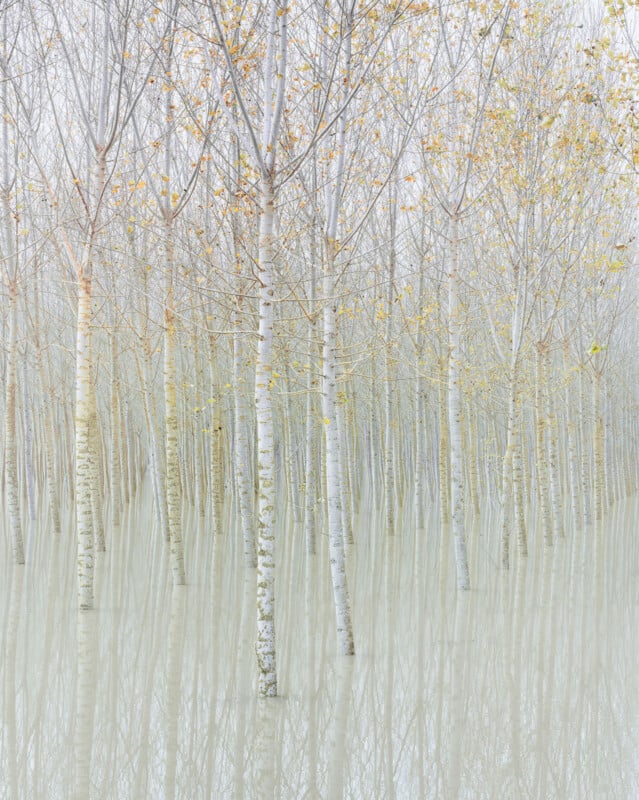
The winning series focuses on rows of poplar trees along the banks of the Po River in Italy. These trees are not only beautiful but also robust defenders against flooding along the river.
“A forest of poplar trees could be a monotonous subject,” says Zack Hatfield, Managing Editor at Aperture Magazine. “But these photographs are hypnotic objects of meditation, creating something expansive through repetition and ostensible sameness.”
Project//21
This special category, “Project//21,” is only open to photographers who were 21 years old or younger at the end of the competition’s submission period. Thai photographer Panitbhand Paribatra Na Ayudhya won for his series, Dwellers of the Night.
It is a vibrant, dream-like underwater photography series that reflects the photographer’s dedication to the ocean. Ayudhya captured the winning photos in the waters of Anilao, Philippines, where marine life migrates from the depths to the surface every night to feed.
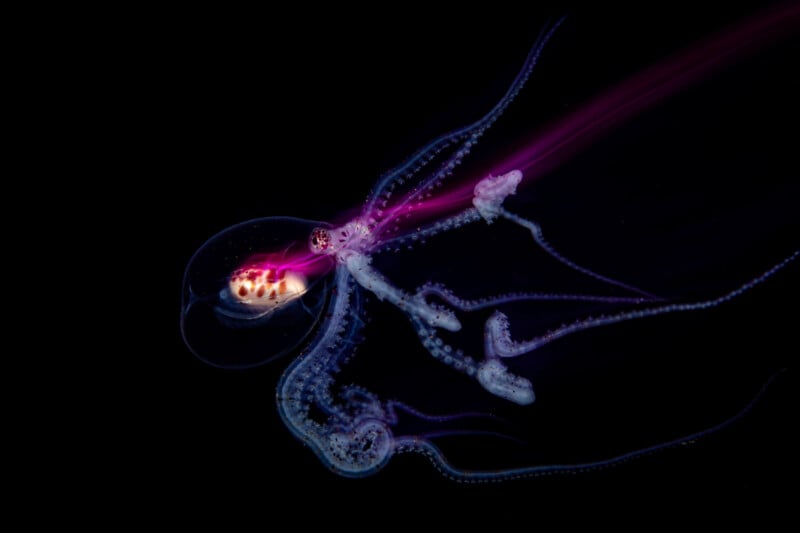
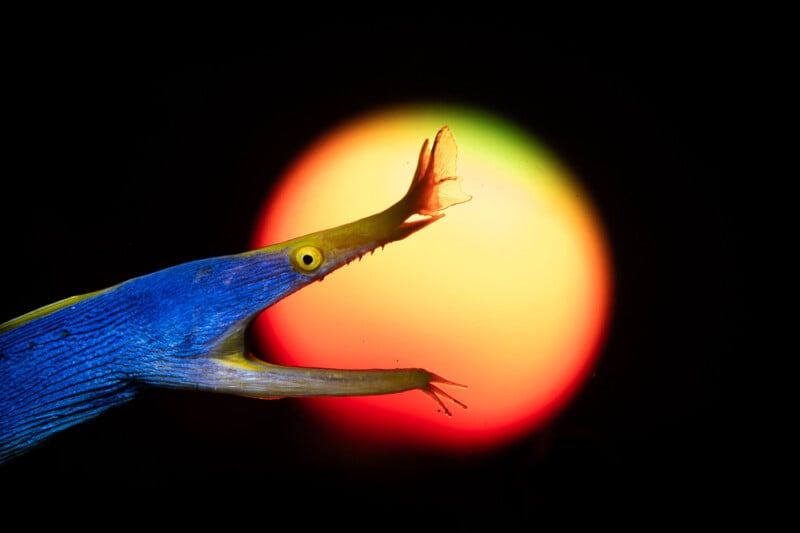
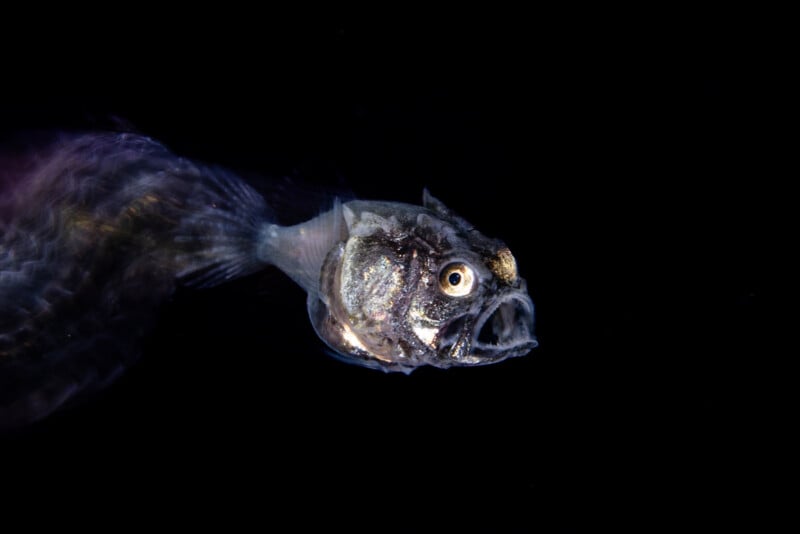
Ayudhya used colorful lighting and relatively slow shutter speeds to capture the motion of his subjects, resulting in a very distinct aesthetic.
“I’m drawn to the quiet whimsy of these sea creatures. Set against black, the creatures feel almost otherworldly — strange, delicate, and entirely captivating. There’s a simplicity to the presentation that allows their inherent oddness to shine, reminding us how unfamiliar and compelling the natural world can be when seen without distraction,” says Alex Pollack, Director of Photography at National Geographic.
Street
Another Dutch photographer won this year’s Hasselblad Masters competition. This time it is Gosse Bouma for the series Morning Ritual. Bouma used his distinct style to showcase street markets in a fresh, calm way.
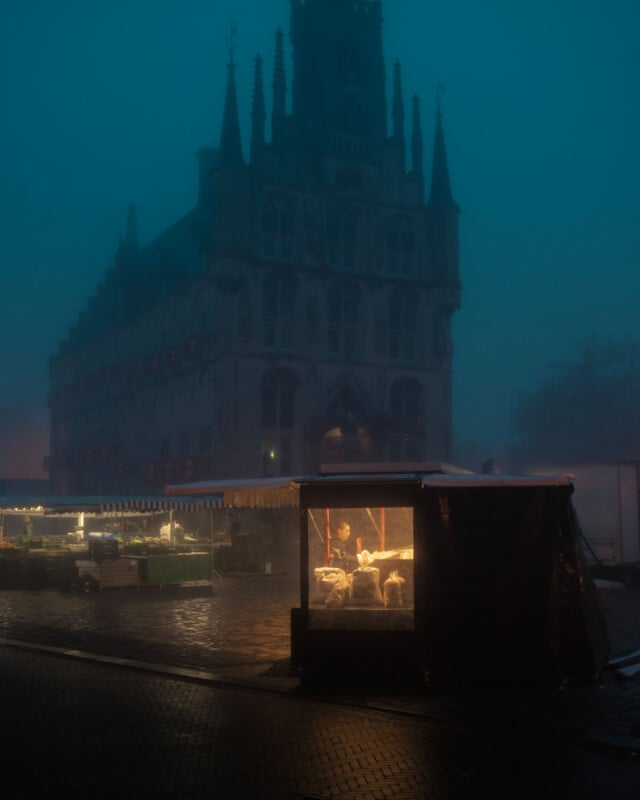
While city street markets are often bustling hubs of activity, in Bouma’s series, they are tranquil. The dim, cool weather and lighting conditions contrast with the warm glow of the markets themselves and the people who operate them.
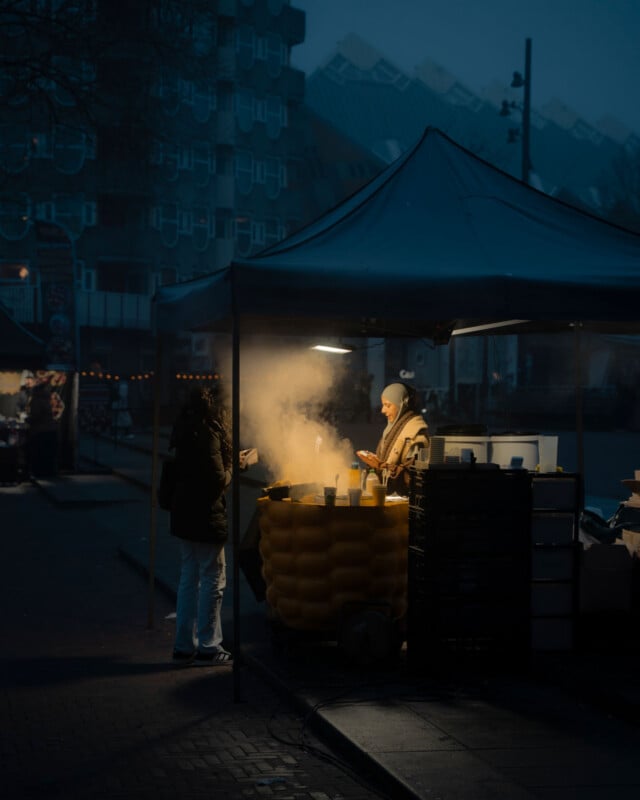
“The photographer understands atmosphere, scale and timing. The small lit kiosks within the vast blue urban emptiness create images that feel both intimate and monumental,” remarks Aya Musa, Senior Curator at Foam.
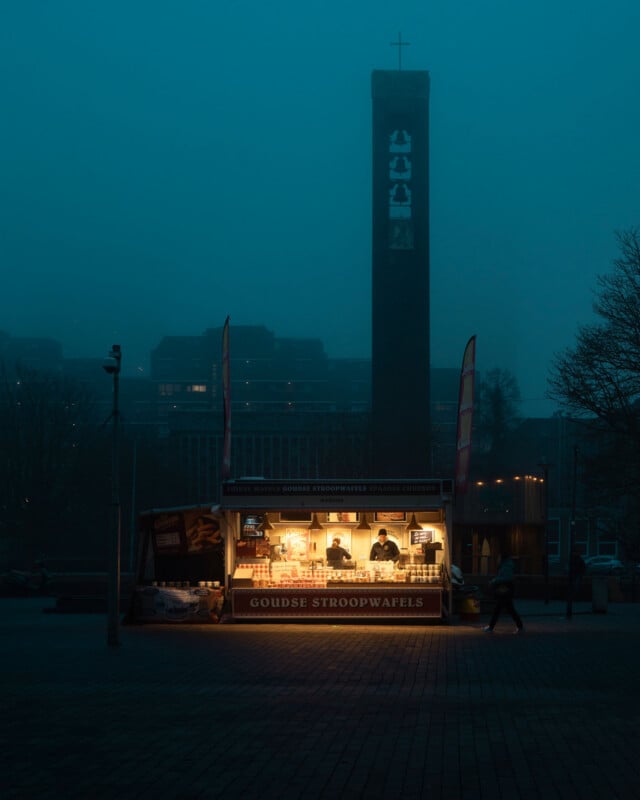
“Here, genuine photographic tension emerges. The series uses color structurally, not decoratively. Mist, artificial light and architecture form one coherent world.”
Wildlife
Alfred Minnaar of South Africa celebrates tiny creatures in his award-winning series, The Forest I Roam. Minaar’s patience and creativity are on full display here. The photographer has honed his artistic voice for conservation over the past decade, and this underwater series shows the very small animals that call coral their home.
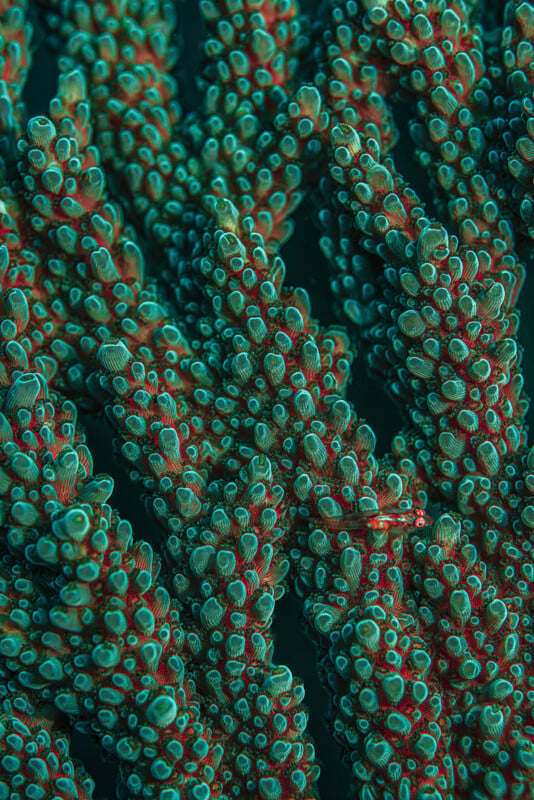
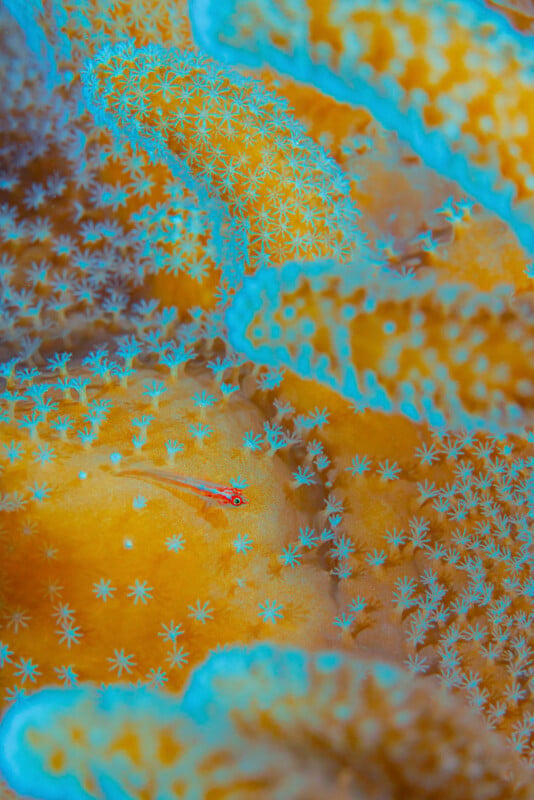
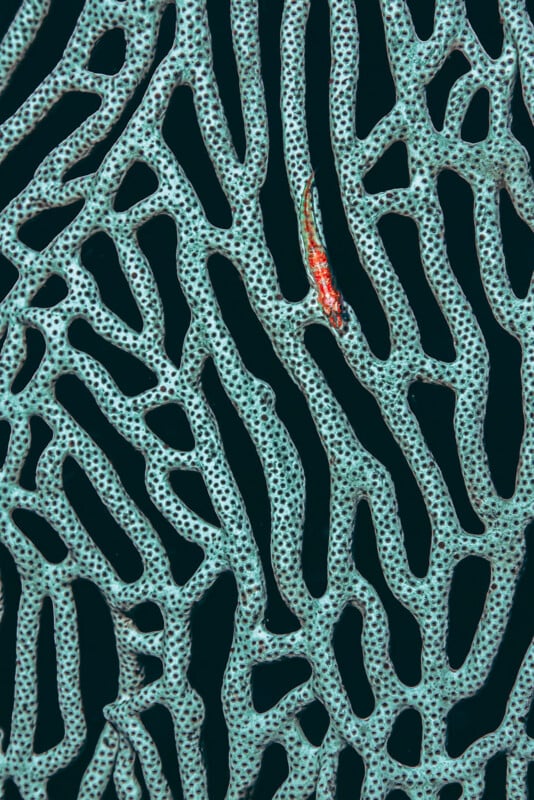
A tiny goby appears in each winning photo, providing a strong sense of scale against a colorful, textural backdrop of coral. The goby is a metaphor, a minute part of a much larger world.
“The vibrancy of the palette immediately draws you in, and the way the small fish are framed against their environments creates a sense of scale that almost reads as landscape. There’s a nice balance here between detail and composition, with the micro subjects holding their own within a larger, almost abstracted environment,” says Pollack.
Image creditsHasselblad Masters. Individual photographers are credited in the captions.