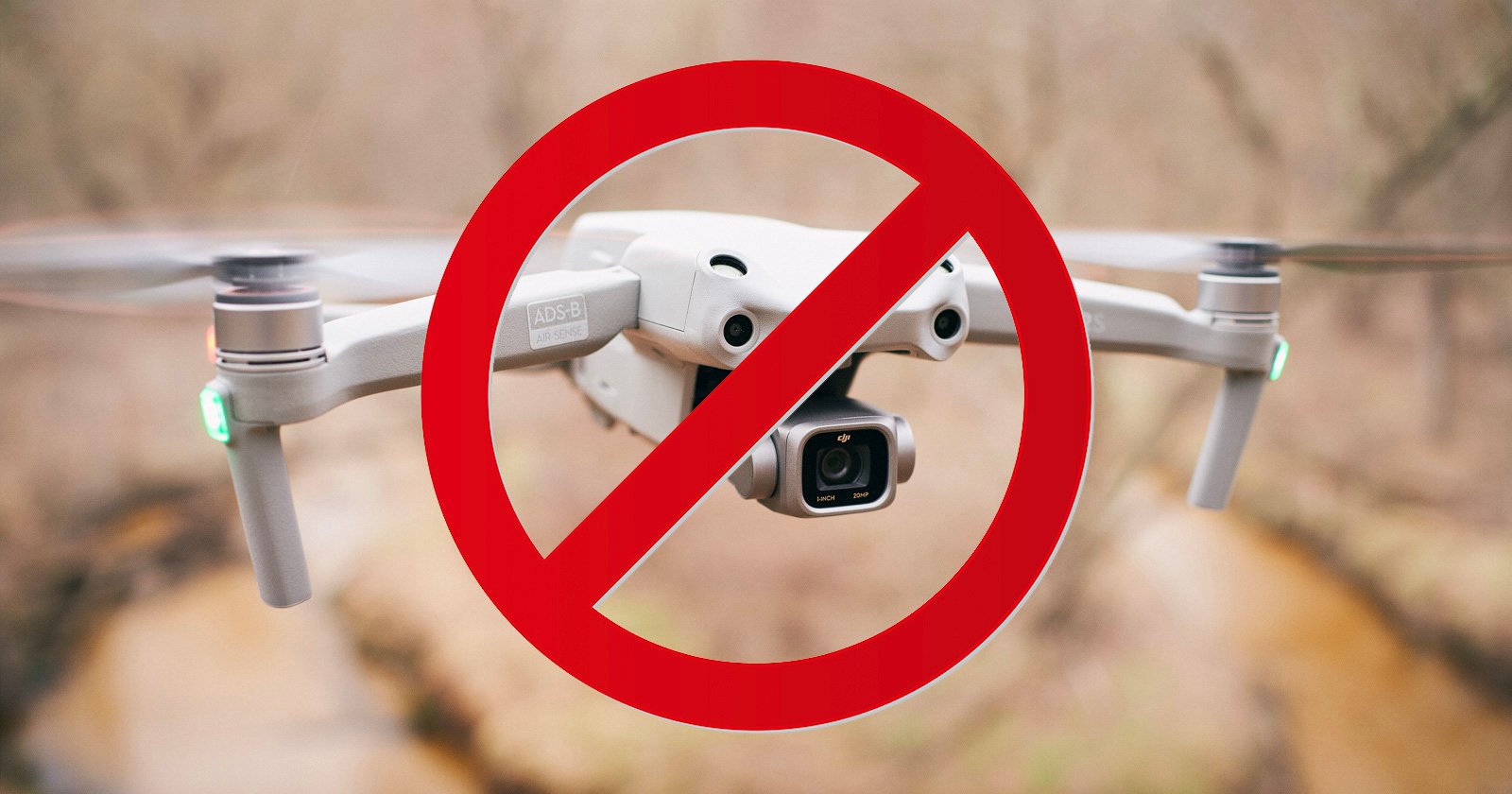
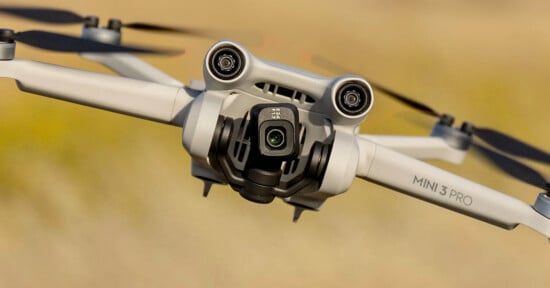
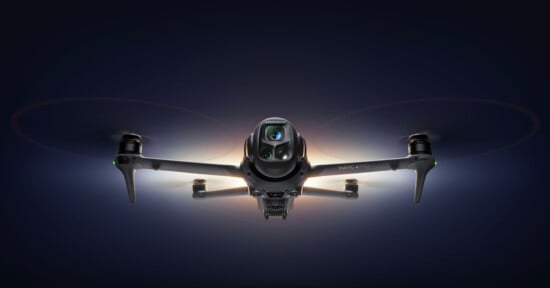
The FCC Is Weighing a Retroactive Ban on DJI Drones it Previously Allowed
The Federal Communications Commission (FCC) is considering expanding its already existing ban on new DJI drones to include drones that already exist in the marketplace, claiming it wants to “secure the drone supply chain” by preventing the sale of drones equipped with military technology.
Last year, DJI was added to the FCC’s Covered List after a congressionally-mandated audit of the company failed to take place. In short, DJI was never given the government-mandated chance to defend itself, which caused it to automatically be banned. As a “covered” entity, new DJI products were blocked from receiving FCC authorization, which is why DJI’s Osmo Pocket 4 and 4P are not available in the U.S., but products already existing in the market could still be imported and sold.
The FCC appears to want to close that loop and block the import and sale of even those products previously cleared.
“If adopted, it could amount to a ban on future sales of certified and currently available products. Products already cleared for the U.S. market could no longer be imported or sold, while covered replacement components could also become harder, or impossible, to obtain,” DJI says.
While the Covered List prospectively bans the authorization for import, marketing, or sale of new models of ‘covered’ equipment, the FCC has the discretion to prohibit the import, marketing, or sale of categories of ‘covered’ equipment if in the public interest,” the FCC writes in a notice today.
“Today, PSHSB and the Office of Engineering and Technology (OET) issued a Public Notice seeking comment on whether we should prohibit the import, marketing, or sale of certain military-grade foreign-made UAS and UAS critical components on the FCC’s Covered List. Given that these devices have been found to pose unacceptable national security risks, the FCC tentatively concluded there were strong national security reasons to do so.”
The national security risk technology that the FCC is talking about includes any drone with thermal imaging, LiDAR sensing, those equipped with aerosol dispensing capability, all drone docking stations, and drones that weigh more than 55 pounds.
“Before enacting this ‘retroactive ban’ on previously approved DJI products, the FCC has opened this proposal to public comments through September 2,” DJI tells PetaPixel in an email. Its full response can be found on the Viewpoints blog, where it argues that restricting products already cleared for sale would increase costs, limit choice, and put essential technology further out of reach.
“Although the proposal is framed as targeting “military-grade” drones, the FCC’s definition could include drones with thermal imaging or LiDAR capabilities, agricultural spraying drones, docking stations, and other products widely used by first responders, farmers, infrastructure inspectors, small businesses, and hobbyists,” DJI writes on Viewpoints.
“This could affect DJI FlyCart and agricultural drones, enterprise platforms, and dock stations — even though these are civilian and commercial tools, not ‘military-grade’ equipment.”
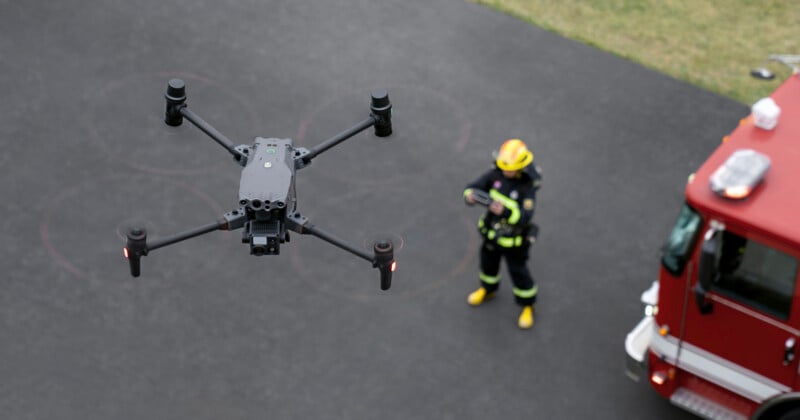
For example, search and rescue teams use DJI drones equipped with thermal imaging. LiDAR sensing is a critical component of DJI’s obstacle avoidance technology, the reason many users choose to select a DJI drone. Aerosol dispensing drones are used by U.S. farmers to spread seeds or spray pesticides. Heavy drones are used for materials transport in difficult-to-reach locations and can be especially useful during natural disasters.
“DJI does not design or manufacture military-grade equipment, nor has it marketed or sold its products for military use. DJI develops technology for commercial, agricultural, recreational, and public safety applications, and has consistently opposed the weaponization of civilian drones,” DJI says.
“Yet the FCC’s proposed definition is broad enough to capture many of the civilian drones Americans rely on every day. It could even include consumer models used by hobbyists simply because they use LiDAR to improve positioning and obstacle avoidance – a safety feature, not a military capability.”
The FCC is accepting public commentary on its proposal through September 2, 2026.
Affiliate Disclosure PetaPixel articles may include affiliate links; we may earn a commission if you buy through one.