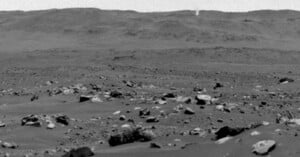
Perseverance Spots Large Dust Devil Tearing Across Mars
NASA's Perseverance Mars rover has captured an amazing sight on the Martian surface, a dust-filled twister.
NASA's Perseverance Mars rover has captured an amazing sight on the Martian surface, a dust-filled twister.
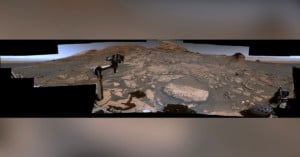
NASA's Curiosity Mars rover has captured a new 360-degree panorama that reveals the diverse terrain of Mount Sharp, a crucial part of the planet that plays an integral role in helping scientists study the region and learn more about its history.
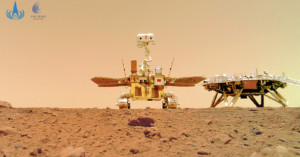
While NASA's Mars Perseverance Rover has been largely stealing the global spotlight, China's Zhurong rover has been making waves of its own. China has recently shared more photos, video, and audio of its Mars rover, and at least one clip has a rather unique perspective.
China's Zhurong rover, which landed on Mars as part of its Tianwen-1 mission, has sent back its first images which include a panoramic photo of the landing site as well as a "selfie" that the rover captured of itself using a detachable, wireless camera.
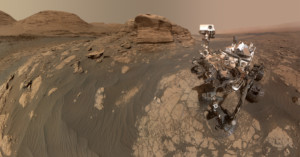
While NASA's Mars Perseverance Rover has been grabbing headlines lately, its Curiosity rover has been on the Red Planet since 2012 and just sent back a gigantic 318-megapixel selfie that depicts it in front of Mont Mercou, a rock outcropping on the surface of Mars.
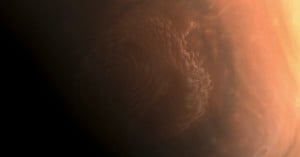
The China National Space Administration (CNSA) has published three new high-definition images of Mars taken by the Tianwen-1 probe that has been in orbit around the Red Planet for the last month.
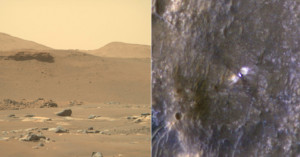
The Mars Perseverance Rover has been sharing thousands of images since it landed on the surface of the Red Planet on February 18. This past week, the rover sent back a few landscape photos of its position taken by its MastCam-Z, juxtaposed with an aerial view from orbit.
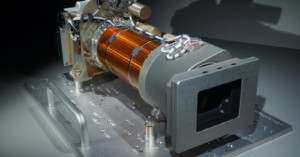
The Mars Perseverance Rover, which already has sent back some incredible images from the Red Planet, is equipped with 23 cameras designed for a host of tasks. Its main camera array is particularly impressive, able to see details as small as a tip of a pencil close by, and the size of an almond from a football field away in 3D.
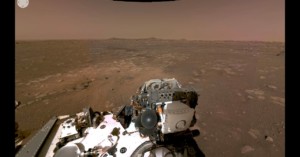
Last week, NASA's Mars Rover Perseverence landed safely on the Red Planet. After sending back a few initial images, NASA has followed up with a stunning 360-degree interactive photo that lets you get a full view of the area around the rover.
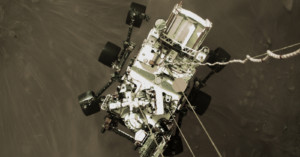
NASA's Perseverance has been on the surface of the Red Planet for about a day now and is already sending back images that are far superior to the original two published yesterday, including one photo of the drone midair captured from its "jetpack."
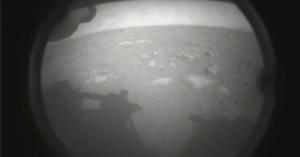
Yesterday, NASA's latest Mars Rover Perseverance safely touched down on the Red Planet and sent back its first images of the surface. The view is from one of the rover's hazard avoidance cameras and is partially obscured by a dust cover.
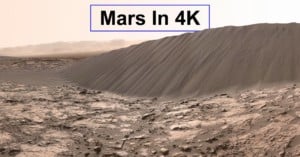
The folks over at ElderFox Documentaries have put together a "world's first." Using ultra-high resolution photo mosaics captured by NASA's various Mars Rovers over the years, they've created a 4K UHD 'tour' of the Martian landscape.
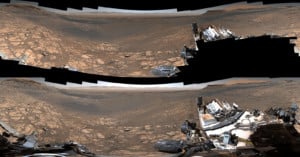
NASA's Curiosity Rover has just sent back the highest-resolution panorama its ever captured of the Martian surface. Made up of nearly 1,200 individual images stitched together, the 360° panorama weighs in at a whopping 1.8 billion pixels, AKA 1.8 gigapixels.
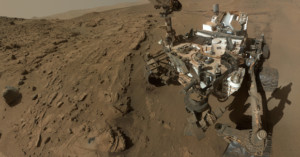
Last Tuesday, on June 24th, NASA's Mars Curiosity Rover marked the one Martian year anniversary since it touched down on the red planet and began exploring. And what better way to commemorate this occasion when you're alone some 57+ million miles away home than by taking a selfie?
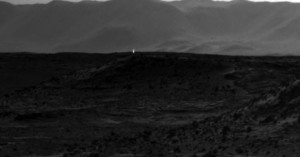
Take a look at the photo above. It was taken recently by the Mars Curiosity Rover and contains a 'light' in the top left that has caused such a fuss NASA actually had to come out and clarify that it wasn't, in fact, anything of consequence.
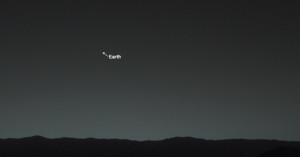
Someday, when the first humans walk on Mars -- after they've taken a commemorative "one small step for man" selfie, of course -- they will turn their iPhone 27's back towards Earth and snap a photo of their home planet that might look something like the image above.
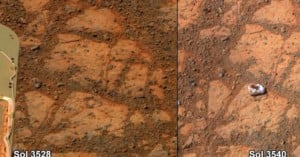
The Mars Opportunity Rover has found a jelly donut on Mars... man would that be an awesome headline. Unfortunately we couldn't run that unless we were intent on click baiting you (we're not...). What the 10-year-veteran Mars Rover did find (and photograph) is a mysterious rock that looks like -- and has been nicknamed -- the 'jelly donut.'
Why mysterious? Because it seemed to appear out of nowhere in pictures of the exact same spot on the Martian ground only 12 Martian days (or Sols) apart.
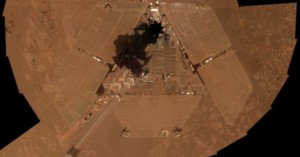
When the Mars Rover Opportunity landed on our planetary neighbor on January 25th, 2004 it was undertaking a three-month mission. Well, it's a full decade later and the little guy is still alive and kickin' (in a robotic kind of way).
And what better way to celebrate that achievement then by taking a good ol' fashioned, 2014-like selfie?
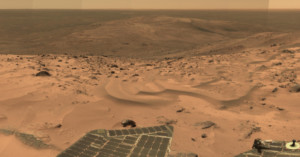
We love a good Mars panorama -- be it a this selfie panorama by Curiosity or this gorgeous mountain-top shot by Opportunity -- and now we have another one for you that is, arguably, the best of them.
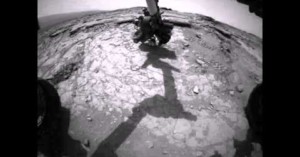
NASA's Mars Curiosity Rover has sent down a constant stream of images from the Red Planet. Ever since it landed on August 8th, 2012, it's spent every spare moment snapping selfies, panoramas and surveillance footage, and sending it back home from between 33.9 and 250 million miles away (depending on the relative positions of Mars and Earth).
The majority of Curiosity's photos that get picked up by the press are taken by the Mars Hand Lens Imager and Mastcam, but Curiosity is actually taking pictures each and every day. Equipped with Front Avoidance Hazard Cameras or "Hazcams," the rover has been snapping black-and-white images ever since it landed, and one YouTuber has decided to stitch all of those images into a time-lapse.
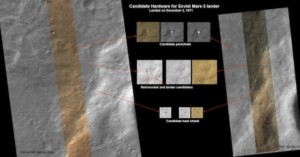
It turns out that the sharing of images taken by orbiters and rovers in space may have more of a purpose than just being cool to look at. According to a NASA press release published last Thursday, a group of amateur Russian space enthusiasts may have found a missing soviet Mars lander using nothing more than images from NASA's Mars Reconnaissance Orbiter.
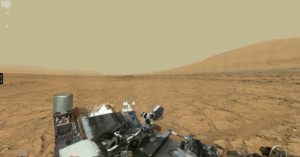
For a while now we've been sharing photos beamed home by NASA's rovers on Mars. From panoramas by the old timer Opportunity to selfies by the new kid Curiosity, we're starting to see more and more of the Red Planet many millions of miles away. Andrew Bodrov, however, has taken it to the next level.
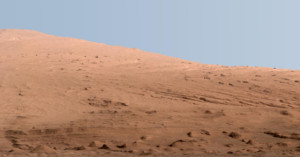
The latest panorama sent down by NASA's Mars Curiosity Rover is unique in more ways than one. Not only is it a panorama taken on another planet (still blows our minds), it's also been subjected to some post production. The photo -- a piece of which is seen above -- has actually had its white balance modified by NASA to make it look more like it was taken on Earth.
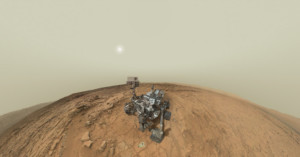
When the Mars Rover Opportunity was nearing its 9th year in the Martian sun, we shared a beautiful panoramic landscape shot of the red planet taken by the aging rover. It makes sense then that Curiosity would eventually send down a panorama of its own. But just like you would expect from a younger generation of rover, it couldn't help but make the pano a selfie.
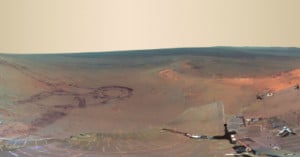
Mars rover Opportunity has spent more than 8 years on the Red Planet …