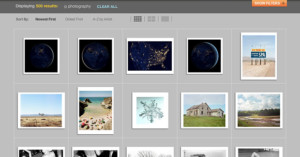
Since 2007, Jen Bekman’s 20×200 has become one of the leaders in the affordable art arena. Her business has printed and sold more than 200,000 collectible prints by more than 200 artists. ArtInfo writes that the affordable-yet-collectible photography market appears to be heating up:
[...] 20×200 founder Jen Bekman [...] works directly with artists, including established figures like William Wegman and Lawrence Weiner. She splits revenue with them down the middle after allowing for production costs, just as a traditional dealer would. On 20×200, prices range from $24 for an 8-by-10-inch print from an edition of 20 by an emerging artist to $10,000 for an 80-by-60-inch print by photographer Christian Chaize in an edition of two. “When I started, people were very skeptical about how selling a $24 print could be profitable,” Bekman recalls. “In fact a significant portion of our business—about 15 percent—comes from purchases over $500.” All told, Bekman has brought in approximately $15 million in cumulative revenue. Although several years in the red followed a profitable first year, 20×200 anticipates making a profit again in 2013.
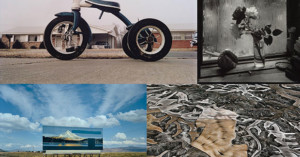
Every few months, it seems, a fine art photograph is sold at auction for an astronomical price and then takes its place among the world’s most expensive photos. The price tags are large, but pale in comparison to the hundreds of millions of dollar shelled out for the world’s priciest paintings.
One reason for the price discrepancy may be due to the fact that art collectors are more wary of fine art photography’s long term value, and the fact that any reprints of the same images made in the future could drastically affect the value of their investments. However, a new report has found that confidence in the photography market is steadily rising, meaning we’ll likely see prices continue to balloon. Read more…
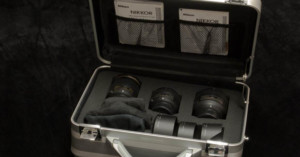
Behold: a box set of Nikon prime lenses. This unique kit is a limited-edition item currently being sold by Nikon exclusively in certain European countries (it’s available in France, Belgium, the Netherlands, and the UK). Inside the Nikon-branded aluminum case are three f/1.8 lenses: the 28mm, 50mm, and 85mm. Oh, and you get the manuals, lens hoods, and soft cases as well. Read more…
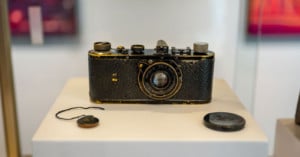
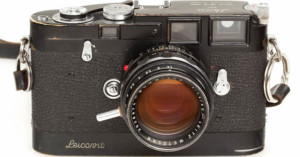
Back in May, a 1923 Leica O-Series camera became the most expensive camera on the planet after being sold for roughly $2.79 million at a WestLicht auction. That camera was a prototype camera, and just one of 25 made (only 12 of them exist today). If you’re wondering what the most expensive non-prototype camera is, look no further than the latest WestLicht auction that was held earlier today. The Leica M3D seen above fetched a staggering €1.68 million, or roughly $2.18 million, becoming “the most expensive camera from a serial production ever.” Read more…
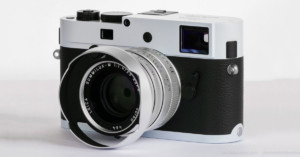
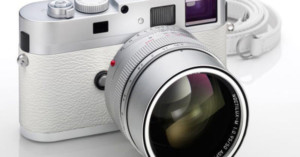
For those of you balking at the astronomical prices paid for photos in the art world, get this: Leica is releasing a special new white version of the M9-P digital rangefinder in Japan, and has given it a price tag of ¥2,620,000 (~$31,770). The regular version costs $7,995, so buyers will be paying an additional $23,705 for rarity (only 50 will be made), a slick kit lens (it comes with a 50mm f/0.95), and the color white.
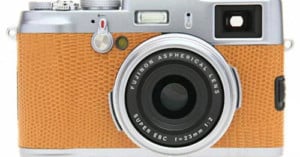
When the X100 was announced a year ago, some people accused Fujifilm of ripping off the look of Leica’s rangefinder cameras. The retro look worked though, and retailers have had a hard time keeping the camera in stock. Now Fujifilm is making another Leica-esque move by releasing a limited edition version of the X100.
Only 200 units will be sold in Hong Kong, and it looks like the only difference is that the black covering has been replaced with light brown leather. Maybe the next special edition will be wrapped in ostrich skin…
If you’re looking for a fun photography-related way to invest some money, you might want to look into photobook collecting. The Guardian writes that prices have been soaring in recent years, and not just for expensive rare editions:
Photobooks are expensive to produce and, while demand is too small to warrant long print runs or multiple reprints, it is large enough that the books remain desirable, soon become scarce and can eventually be very valuable. This means new editions costing between £20 and £60 can double or triple in price in as little as two to five years. In 10 or 20 years – and if the work of the photographer becomes particularly fashionable – the price may increase even more.
[...] one of the great things about photobook collecting is discovering the work of emerging photographers whose early books may become sought after. A good place to look is among the current boom in self-published titles.
They also list a number of currently in-print photobooks that can help you get started.
With a suggested retail price of £19,800 (currently about $32,000) and only 500 units in existence, Leica’s limited edition M9 Titanium probably isn’t a camera you’re ever going to lay eyes on in real life. When it was announced back in September of last year, we predicted that most of them wouldn’t see the light of day and would be placed immediately into collectors’ vaults. Luckily for us, someone decided to actually unbox (gasp!) one of these babies (camera #164), allowing us to see what it’s like to receive such an absurdly expensive camera. Read more…
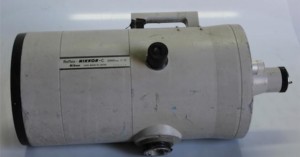
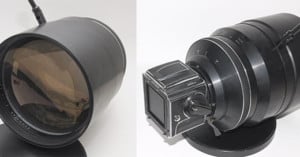
Most of the time we come across an absurdly large and expensive lens on eBay, it’s some sort of lens with focal lengths in the thousands of millimeters (e.g. this 5200mm Canon lens or this 2000mm Nikon lens).
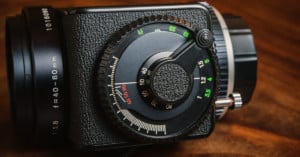
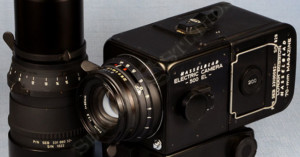
The lens shown above is the Kilfitt Zoomatar 250mm f/1.3 and is currently for sale on eBay. It doesn’t have an absurdly large focal length, but is pretty standard at 250mm. See the little box handing off the end of the lens? That’s the Hasselblad medium format camera this lens is designed for.
The price? A cool $33,751. Needless to say, walking around doing street photography with this lens would earn you some pretty strange looks.
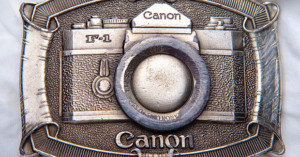
We featured a Nikon belt buckle here last month, and now here’s one by Canon. It’s a limited edition Canon F-1 belt buckle made by Lewis Buckles in Chicago for Canon in the 1970s. Charles Eves won the one above for $3 in an eBay auction. The seller was a former Canon salesman that was awarded the belt buckle for his high sales.
I wonder what Canon is awarding their employees nowadays…
Thanks for the tip, Lloyd!
Image credit: Photograph by Charles Eves and used with permission