Demystifying Log Formats: What Every Aspiring Colorist Needs to Know
One of the most exciting consequences of the advancement of technology is the democratization of tools that were once reserved for big-budget productions.
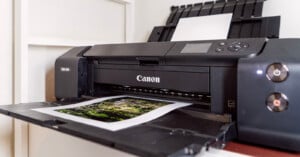
Printing your photos at home can get complicated and confusing rather quickly. Between choosing a printer and paper and problem-solving why the colors don't look like what you see on your display, it can be overwhelming, especially if you are just getting started.
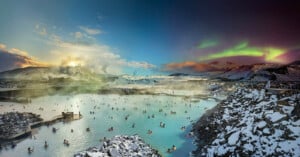
Professional photographer Stephen Wilkes has a multi-decade career that melds artistic and commercial photography and has taken him around the world. He's worked with National Geographic, Apple, and Netflix, among others.
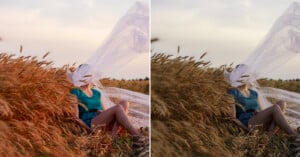
For most photographers, color is a crucial component of their images. As a result, it only makes sense to want the colors that you envision to come through in the same way when others view your photographs. That can be easier said than done, however.
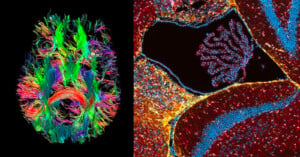
Although these images look as though they were created by an artist, they were actually taken by scientists trying to learn more about the human nervous system.
Up until recently, most introductory photography classes in colleges and universities still taught students the basics of the medium using film and darkroom processes. These days, though, the majority of schools have transitioned to digital since it is more affordable for students and doesn’t require a lab full of equipment and chemicals. But despite the obvious benefits of digital, analog photography still serves as a valuable tool for learning the medium.
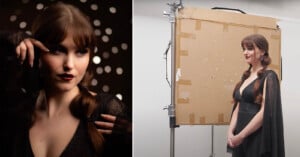
It's no secret that most photography equipment is expensive and typically highly specialized. But that doesn't always need to be the case. In the above video from Adorama, photographer Gavin Hoey walks viewers through how to create studio portraits using a simple sheet of cardboard and some studio lights.
HDR photography may seem complex, but it is a surprisingly simple tool that can open new photographic doors. Most people have encountered HDR photography without thinking about it since smartphones automatically produce HDR images.
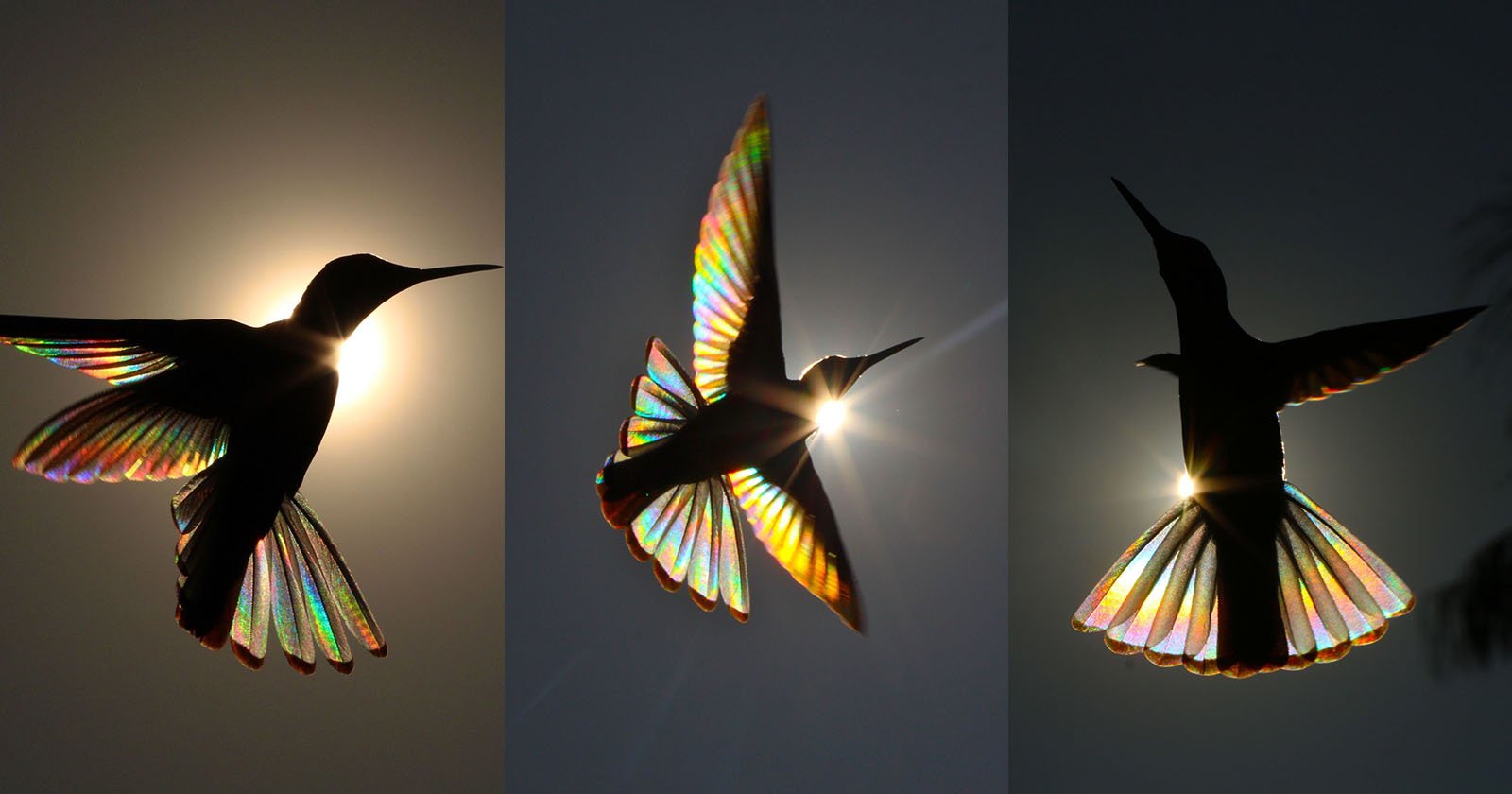
Christian Spencer became well-known for his stunning photos of hummingbirds that show rainbows in their wings, it's a specialized technique of shooting the amazing birds, one which Spencer pioneered.
Where has the time gone? It's been ten years since Jordan and I started our annual roundup of the best and worst products in our industry. Every year we give our opinions on the cameras we feel deserve the top spot as well as any honorable mentions that have also made a positive impression. Perhaps even more exciting, though, is our vote for the most infamous photo and video products of the year.
Wherever you are right now, take a moment to look around. What patterns and shapes do you see? What objects, scenes, buildings, or other designs just look like they “make sense?”
Drones are awesome. Much more than just being fun novelties you might see buzzing around your neighbor’s backyard piloted by a young child, they are amazing creative tools that allow for camera shots that you simply cannot get in any other way, and are used in everything from music videos to live sports to the biggest blockbuster films.
Film prices have been on the rise, it’s no secret. For some, the prices they are reaching can still be seen as justifiable. But for many others, it isn’t always that simple.
Hasselblad needs no introduction. Ever since the launch of its 500C, the boxy, modular medium-format waist-level SLR has defined the output of genres ranging from street to fashion photography throughout the mid-20th century and beyond.
While cleaning one of my camera sensors, I noticed my incredibly pocketable and convenient 12mm f/2.0 Olympus lens developed a fatal flaw. A rather large reflective fragment became dislodged inside the lens and was robbing me of precious photons. I couldn't fully clean the rear element with compressed air and a microfiber cloth, so I decided to dig a little deeper and disassemble the lens.
It’s not often that you get your hands on a Hasselblad, so when we received the $5,750 Hasselblad X1D II 50C in the office, to say we were excited would be an understatement. According to Hasselblad, the medium format camera is described as compact, powerful, and enhanced, and we can attest to it.
Sometimes, having an original idea isn’t everything. Innovation can strike at the wrong moment, fizzing out before it has a chance to materialize.
I write about a lot of things here at PetaPixel -- reviews, guides, technical articles, opinion pieces -- but one of my favorite topics to write about is the history of photography. As an avid user and collector of vintage cameras and lenses, I have passionately absorbed as much knowledge about their history as possible over many years. Like studying world history, there is much value in understanding where we came from and what got to us where we are now.
When making PetaPixel’s documentary about Blair Bunting’s U2 photo shoot at the edge of space (which you should really watch now if you haven’t), one thing we decided not to focus on was the camera gear. But we love talking about cameras and lenses, so Chris sat down with Blair the evening before his epic shoot to discuss the equipment he was bringing up in a U2 spy plane.
Throughout the history of photography, few names have endured for as long and few have left as significant of an impact on the medium as Olympus.
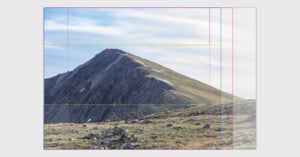
With the recent excitement surrounding the release of the film Oppenheimer, there have been lengthy discussions about the best way to watch it – mostly because of something called an aspect ratio and the way that it affects the viewing experience. This is a term that is used widely in film, and it’s just as important for photographers to understand.
Today, most of the consumer-grade camera landscape is dominated by less than half a dozen brands. Canon, Sony, and Nikon take the lion’s share in terms of sales and public recognition, while almost all the gaps are filled by smaller companies like Fujifilm and Pentax.
Photographers of all skill levels should strongly consider insuring their camera equipment. Whether you are an amateur who cannot afford to replace damaged to stolen gear or a working professional who cannot risk missing out on paying jobs, you should consider protecting your equipment with photography insurance and/or camera insurance.
Many photographers will say that your camera lens is as important (or even more important) than your camera body. All of the light that your camera body captures has to go through some sort of lens, which affects sharpness, distortion, amount of light, perspective, and many other variables.
The context and process behind a photograph can be interesting on a technical level when it comes to the gear, film, lighting setup, and any artistic emotion or guidance that may have gone into it from a photographer with an interesting backstory to them.
It's no surprise that smartphones have become the new everyday camera that we all use and love and they absolutely are legitimate creative picture-taking tools. So why even consider getting a more traditional camera with its bulkier size and expensive lenses?
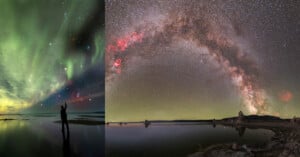
Photographers wanting to capture beautiful Milky Way photos need the right plans, the appropriate gear, and some basic knowledge of optimal camera settings.
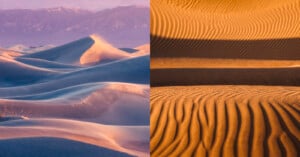
It’s never a bad day to capture landscape photography on the dunes. This day, in particular though, was truly one to remember and I share a variety of techniques for how I take photos of sand dunes.
Finding subjects for wildlife photography in summer is a challenge. As I look forward to arguably my favorite time of the year – the fall mating season for big mammals such as elk, moose, bighorn sheep, and so on – I first have to make it through the summer. Long days filled with harsh light provided by the sun directly overhead and heat, that unbearable heat.
In traditional landscape photography, context is important in visual storytelling, especially in grand scenic images. Context helps anchor a scene by including foreground, midground, and background (i.e., the sky).
To reveal the real colors of the night skies, you need to find good dark skies. The best sky quality for astrophotography is found in locations classified as Bortle Class 1 on the Bortle scale, which measures night sky brightness.
There are some tough photography-related words to pronounce, but which ones trip up the most photographers? SimpleGhar used the online pronunciation resource, Forvo, to find out. Which photo words did Forvo users look up the most?
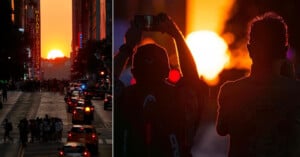
Twice each year, the setting Sun aligns perfectly with Manhattan's street grid, illuminating the north and south sides of every cross street on the island. The event, called "Manhattanhenge," delivers beautiful vibrant colors and, unsurprisingly, is a major draw to locals and tourists alike in New York City.

In his latest video, landscape photographer Michael Shainblum shares five of his favorite techniques for using Adobe Lightroom's powerful masking tools.
Although many photographers approach it in different ways, understanding white balance is a key to getting better at photography. Like other camera settings, it’s possible to have your camera set white balance automatically, but it doesn’t always produce the best results.
Lens flare can appear as spots or streaks of light and color or as a washed-out hazy look in your photographs. Some photographers and filmmakers like to use it creatively, but it usually shows up as an unpleasant surprise that can ruin your picture.
Award-winning landscape and nature photographer Greg Boratyn is known for combining brilliant photography with a penchant for educating photographers through presentations and his international workshops.
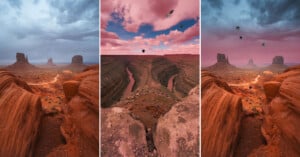
The American Southwest is an enchanting realm brimming with extraordinary shapes, mesmerizing textures, and captivating patterns. Amidst a symphony of vibrant colors and diverse textures, capturing the essence of such a place can initially feel overwhelming.
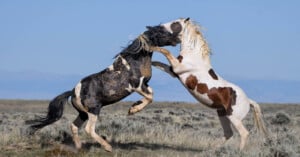
Growing up in the crowded European country of Belgium, few things symbolized the American Dream as much as the iconic Mustang. No, not the Ford muscle car. The wild horse!
We have all marveled at the latest imagery artificial intelligence (A.I.) produced. This remarkable technological tool enables the swift creation of imagery by providing the algorithm with concise textual prompts.
The recording of the patterns made by static electricity date back to the invention of the technique in 1777 by Georg Lichtenberg. Since he was the first to observe the patterns they are referred to as Lichtenberg figures.
Insta360 recently released the Insta360 Flow smartphone stabilizer, and it can do some amazing things for stop-motion video creation. However, users don't need the AI-powered Flow gimbal to take advantage of these awesome stop-motion and hyperlapse video tips.
Capturing wildflowers can be an incredibly enriching experience that allows you to immerse yourself in the vibrant colors, delicate petals, and the intoxicating scent of nature in full bloom.
According to some spiritual beliefs, an aura, sometimes called an energy field, is an atmosphere or quality surrounding something, often a person or other living thing.
As a creative, it is very likely that you have at least once, shot photographs the analog way and used a film camera of some kind. But how much do you know about how that film camera works, or better yet, how the film is made?
When watching movies, some viewers like to look for errors, such as finding evidence of cameras and crew in the final cut of a film. One situation that should be ripe for spotting mistakes is when a scene includes mirrors and reflections. However, as YouTuber Paul E.T. shows in a pair of videos, filmmakers have incredible tricks to make cameras disappear.
"This is the ISO wheel on your camera, and sometimes, it does nothing," says Syrp Lab in its newest video. Syrp Lab takes a deep dive into ISO, explaining what it is, discussing Dual Native ISO and ISO variance, and providing the information people need to shoot the cleanest possible video.
When I first started doing landscape photography, visiting new locations used to intimidate me a lot. I think part of me would feel the anxiety and pressure of needing to get a good shot, and oftentimes, I would not use the proper tools to set myself up for success.
Portraying injustices is not something novel. From the beginning of the twentieth century to the present day, many photographers have been concerned about leaving their mark. But can we try to change the world – even make it a better place – through a photograph?
If you are not responsible for the meaning behind your photographs then who is?