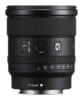
[T]he new Sony FE 12-24mm F2.8 GM is the one to go for.

[T]he new Sony FE 12-24mm F2.8 GM is the one to go for.
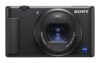
Designed from the ground up for content creators and vloggers, the ZV-1 combines easy-to-use features with uncompromising imaging technology, making this the perfect tool for any content creator at all skill levels.
Photographers may find it hard to get excited about standard zoom lenses with a modest maximum aperture, such as the new Panasonic S 20-60mm f/3.5-5.6 lens.
[U]nless you really, really need the extra 20mm reach of a "true" 70-200m zoom, the new Tamron 70-180mm F/2.8 Di III VXD is a truly unique lens that performs exceptionally well in almost every regard, and is therefore a deserved winner of our coveted Essential award.
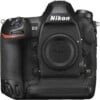
With full frame mirrorless cameras having come on in leaps and bounds these past few years, the Nikon D6's DSLR housing and operation feels like a bit of a throwback to traditional, less complicated times.
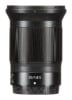
Here we have a lens that produces excellent quality images, is as impressively sharp as other Z series lenses and displays pleasing and attractive bokeh.
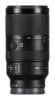
The E 70-350mm F4.5-6.3 G OSS is simply a must-buy lens for all Sony Alpha shooters who are even remotely interested in super-telephoto subjects.
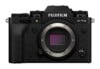
Sure, the X-T4 is a little bit bigger and heavier than the X-T3, but we'd definitely trade that slight loss of portability for the greater shooting flexibility that IBIS provides for both stills and video.
If you can look past the price-tag, though, the new Fujifilm X-T200 is an even better step-up camera than its predecessor, successfully bridging the gap between complete beginner and more experienced enthusiast without too many compromises in either regard.
It’s almost irrelevant what any reviewer will say, because it’s one of those cameras that you either want and will seriously consider, or you don’t.
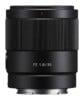
The Sony FE 35mm f/1.8 is a very welcome addition to Sony's full-frame mirrorless camera lens range, offering a moderately wide-angle, fast prime lens for the first time.
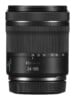
[D]espite that off-putting F7.1 maximum aperture, we can still strongly recommend the new Canon RF 24-105mm F4-7.1 IS STM as a surprisingly versatile partner for the EOS R and especially the EOS RP camera.
The new Nikon D780 is a new kind of DSLR for creators that retains the rugged reliability of the highly-revered D750, while inheriting features from the Nikon Z series, making it powerful and versatile to capture anything from fast-action sports to beautiful night skies.
The Sony FE 20mm f/1.8 G is an outstanding ultra-wide-angle prime lens with a fast maximum aperture at a more attractive price-point than the comparable FE 24mm F1.4 GM lens.
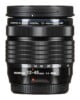
As a smaller, lighter, simpler and cheaper alternative to the flagship M.Zuiko Digital 12-40mm f/2.8 Pro zoom, the new M.Zuiko Digital ED 12-45mm f/4 Pro makes perfect sense for a lot of enthusiasts.
The OM-D E-M1 Mark III is a smaller, cheaper alternative to the flagship E-M1X model, offering many of the same features at a lower price-point in a much more compact, lighter body.
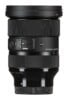
[T]he new Sigma 24-70mm f2.8 DG DN Art is a very well-built, very fast standard zoom lens that delivers superb image quality at a frankly unbelievable price, and is therefore a more than worth winner of our highest award.
The new Tamron 20mm F/2.8 Di III OSD M1:2 is a unique ultra-wide-angle lens for Sony shooters, but some notable optical issues prevent us from recommending it more highly.
The long-awaited Fujifilm XF 16-80mm F4 R OIS WR is a great addition to the extensive Fuji lens line-up, offering a very versatile, optically stabilised focal range in a compact, lightweight package.
The new Tamron 35mm F/2.8 Di III OSD M1:2 lens for Sony Alpha mirrorless cameras is something of a mixed bag.
As with the 50mm, the new 85mm f/1.2 is an incredible lens with an incredible price-tag, putting it out-of-reach of most photographers.
The Canon RF 24-240mm f/4-6.3 IS USM is the most versatile all-in-one lens currently available for the EOS R camera system, and thankfully it bucks the trend of most super-zooms by actually being a good performer in terms of the image quality.
The new flagship A6600 begs, borrows and steals features from further down Sony's extensive range of APS-C models and also further up from the A7 full-frame cameras, but it doesn't quite get the balance right between old and new.
It ticks almost all of the must-have boxes for a pro-level standard zoom lens, with the one main exception being the lack of built-in optical stabilisation.