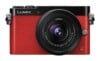
Despite these caveats, the GM5 packs a huge amount into its small form factor and perfectly combines the advantages of a small compact with the adaptability of interchangeable lenses.

Despite these caveats, the GM5 packs a huge amount into its small form factor and perfectly combines the advantages of a small compact with the adaptability of interchangeable lenses.
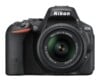
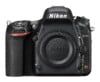
Nikon's D5500 is an upper entry-level DSLR aimed at photographers looking for a step-up from a budget model without the expense or complication of a higher-end camera.
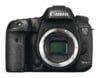
Canon's EOS 7D Mark II is one of the toughest, fastest and most confident DSLRs for sports, action and event photography.
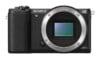
The Sony A5100 is a fantastic entry-level camera for anyone who wants a step-up in quality, control and flexibility over a point-and-shoot or phone.
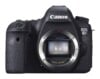
Despite those shortcomings, the 6D is a solid, dependable, affordable full-frame DSLR that is ideally suited to the kinds of photographer Canon has pitched it to.
The result is a camera that handles confidently and delivers great quality images in a variety of conditions.
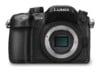
The Lumix GH4 is Panasonic's flagship mirrorless camera, and the first of its kind to offer 4k video recording.
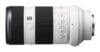
A great choice if you want a decent telephoto zoom but don’t need an f2.8 focal ratio or a super reach. It’s a lens I reach for whenever shooting action all day long.
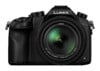
The Panasonic Lumix FZ1000 is a DSLR-styled superzoom with a 16x 24-400mm f2.8-4 lens, 1in sensor and 4k video recording capabilities.
None of these downsides are huge issues, and following a very successful shoot across five days at the 2014 Tour de France, I’m happy to upgrade my initial rating of the A6000 to Highly Recommended!
The Sony A3000 is a budget, entry-level mirrorless camera that currently offers one of the most economical routes into photography with interchangeable lenses.
None of this however changes the fact the T5 /1200D is a decent, if basic and somewhat uninspiring, DSLR and still a good choice for photographers on a tight budget looking to step up from a phone or point-and-shoot compact.
The Sony A5000 is a very tempting prospect for anyone buying their first interchangeable lens camera.
The Nikon 1 AW is an excellent choice for picture taking either in or out of the water.
When it introduced the D3300’s predecessor, the D3200, Nikon established a new benchmark for resolution on entry-level DSLRs.
It’s one of the best cameras around at this price point whether mirrorless or DSLR and one I can highly recommend.
The RX10 is clearly head and shoulders above its bridge rivals in every respect and a compelling alternative to a DSLR or mirrorless camera for certain photographers.
I’ve said it before and I’ll say it again: the Olympus OMD EM1 is a triumph, a highly satisfying camera that I can highly recommend to anyone who wants semi-pro performance and handling without the heft of a traditional DSLR.
The D610 shares all the attributes of its short-lived predecessor, it’s is a class act and a tough one to beat. So it will come as no surprise that it gets the Cameralabs Highly Recommended award.
The EOS T5i / 700D is basically a T4i / 650D with some very minor tweaks, arguably produced to make this end of Canon's range look a bit fresher against the competition, but ultimately an unnecessary move in my view.
[O]ther improvements, including a bigger 3:2 proportioned flip-out screen, larger viewfinder and better quality video complete the picture, making the D5300 a tempting upgrade proposition [...] as well as a very compelling alternative to Canon’s EOS T5i 700D.
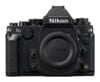
The f in Df may stand for Fusion between old and new, but there's not enough of the latter for my liking here.
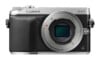
I said it before and I’ll say it again: the Panasonic Lumix GX7 is a very satisfying and capable system camera that will delight most enthusiasts.
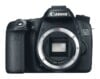
Considering the minor refresh that became the EOS T5i / 700D, the EOS 70D represents a significant move forward by Canon.