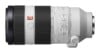
The Sony FE 100-400mm f4.5-5.6 G Master is a telephoto zoom for its e-mount mirrorless cameras, and corrected for use on full-frame bodies. [I]t delivers the longest reach of Sony's native e-mount lenses to date.

The Sony FE 100-400mm f4.5-5.6 G Master is a telephoto zoom for its e-mount mirrorless cameras, and corrected for use on full-frame bodies. [I]t delivers the longest reach of Sony's native e-mount lenses to date.
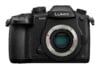
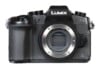
Panasonic's Lumix GH5 is a worthy flagship body, greatly extending the quality and capabilities of the earlier GH4.
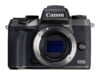
Canon's EOS M5 is a mid-range mirrorless camera featuring a 24 Megapixel APSC sensor, Dual Pixel CMOS AF for smooth and confident refocusing with native or adapted EF lenses, a built-in OLED viewfinder and a tilting 3.2in touchscreen which can angle forwards to face the subject.
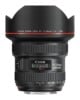
Luckily there's plenty of cheaper - and smaller - alternatives, but if you're a wide-angle aficionado, the EF 11-24mm f4L USM is your dream lens.
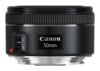
Canon's EF 50mm f1.8 STM finally upgrades the 24 year old EF 50mm f1.8 II with smoother focusing, more rounded aperture blades, closer focusing and a tougher lens mount.
Panasonic’s Lumix G80 / G85 is a feature-packed camera that stacks-up very well against its rivals.
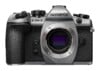
The Olympus OMD EM1 Mark II takes the popular weatherproof Mark I, deepens the grip, adds twin memory card slots and employs the most generous battery of any mirrorless camera.
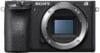
The Alpha A6500 is Sony's best all-round mirrorless camera with an APS-C sensor to date.
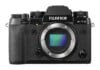
All-in-all, the XT2 is a highly satisfying and very capable camera for all styles of photography.
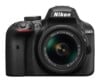
The Nikon D3400 is an update to Nikon's entry-level DSLR, replacing the two year old D3300.
[I]t represents a significant step-up from the Mark III, but high-end videographers will be frustrated by the tight crop and high bit-rate when filming 4k, and the lack of Log profiles, peaking [...]
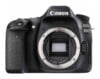
The EOS 80D takes the flexibility of the earlier 70D and upgrades a number of key aspects. As such you get the confidence of a mid-range DSLR coupled with arguably the best movie focusing system around, now with a higher resolution sensor and improved viewfinder AF system.
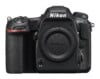
Ultimately though I think like Canon’s 7D Mark II, the D500 finds itself appealing to an increasingly specialist audience.
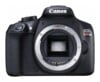
The abundance of alternatives to the EOS 1300D / Rebel T6, both DSLR and mirrorless, highlights the need for Canon to keep pace with its competitors if its entry-level DSLRs are to continue to be attractive options for aspiring photographers.
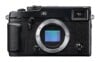
Fujifilm's X-Pro2, like its predecessor, occupies a unique position in the market.
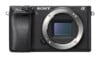
Sony's A6300 is a mid-range mirrorless with an AF system that's the envy of pro cameras costing up to twice the price.
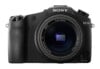
[T]he FZ1000 is an ideal super-zoom for someone who wants the benefit of a 1in sensor and a longer zoom range but doesn’t need the higher-end pro features of the RX10 series.
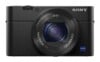
The RX100 IV becomes one of the smallest traditional compacts with 4k video, and the slow motion modes from 4x to 40x are simply fantastic.
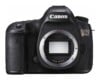
The Canon EOS 5DS R is essentially an EOS 5D Mark III with double the resolution: no fewer than 50 Megapixels, making it the highest resolution full-frame DSLR to date.
The Canon EOS 5Ds is essentially an EOS 5D Mark III with double the resolution: no fewer than 50 Megapixels, making it the highest resolution full-frame DSLR to date.
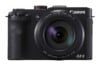
The Canon PowerShot G3X is Canon's first big zoom, big sensor compact. Traditional super-zoom cameras have a lot to offer but, their typically small sensor size prompts many buyers to migrate upwards to a DSLR or mirrorless.
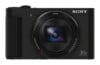
Sony's Cyber-shot HX90V is one of the smallest compacts with a 30x optical zoom.
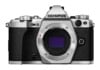
The Olympus OMD EM5 Mark II is one of the most satisfying all-round cameras I’ve tested to date.
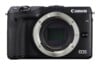
The EOS M3 is Canon's most serious mirrorless camera to date. It takes on board many of the issues with the original EOS M, makes a raft of improvements and ends up delivering an experience that's so much more satisfying [...]